Donald Trump's Leg Swelling Could Signify Congestive Heart Failure, Top Cardiologist Warns
Beneath the staged photo-ops and tightly worded medical notes, Donald Trump's own body has become the latest battleground over truth, image and the limits of political denial.
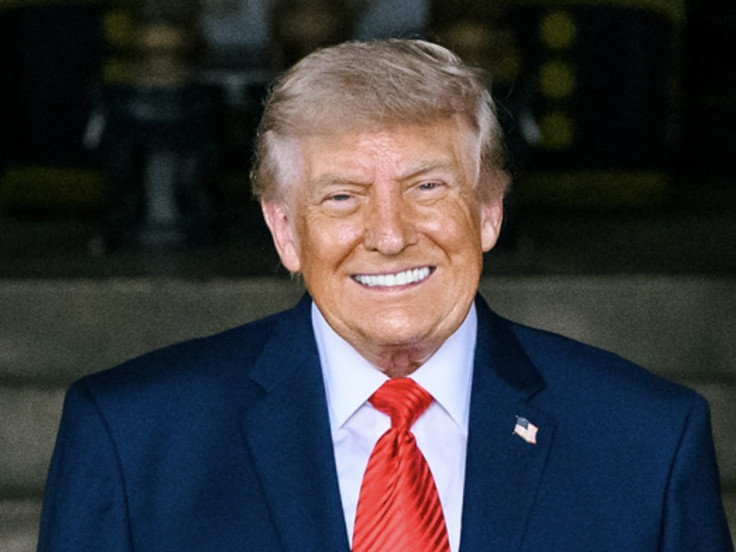
Donald Trump will undergo fresh medical and dental checks at Walter Reed National Military Medical Center on Tuesday, as a leading cardiologist warns that the 79-year-old president's increasingly swollen legs could point to congestive heart failure.
The news came after months of speculation about Donald Trump's physical and mental fitness, questions that began on the fringes of US political media and have steadily edged into the mainstream.
The Daily Beast has repeatedly highlighted a series of visible changes in Trump's appearance and mobility, while recent polling suggests voters are now far less confident about his health than they were even a year ago.
Cardiologist Warns Trump's Leg Swelling Needs Deeper Probe
The sharpest alarm has been sounded by Dr Jonathan Reiner, a prominent cardiologist best known as the longtime physician to former vice president Dick Cheney. Reiner, who is a professor of medicine and director of the cardiac catheterisation laboratory at The George Washington University Hospital, told The Washington Post he had been struck by how swollen Trump's lower legs now appear in public images.
'This White House just doesn't seem to want to acknowledge any physical ailment, but older people develop medical issues, and the president is almost 80 years old,' Reiner said. 'There just seems to be a lack of candour from the White House.'
US President Donald Trump has been diagnosed with a "chronic condition that undermines the flow of blood from his heart."
— Sprinter Press Agency (@SprinterPress) July 19, 2025
The White House says this is why his ankles looked severely swollen lately, and some people speculate this is also why the bruises on his hands were covered… pic.twitter.com/aPXJ4XbrcR
In July, the administration made a rare concession by confirming that Trump had been diagnosed with chronic venous insufficiency. It is generally described as a mild, age-related problem in which the veins struggle to push blood back to the heart. Gravity and poor circulation allow blood to pool at the ankles and calves, leading to puffiness and the now widely discussed photographs of Trump's 'cankles.'
We all want him to pay the price for his actions. He is in pain, has swollen ankles, wears diapers, wears leg braces. He’s suffering everyday. #Karma pic.twitter.com/LFpyVNU9CB
— 💙 Sheila Stewart 💙 (@sheila_linstrom) May 24, 2026
What troubles Reiner is not only the swelling itself but the paper trail around it. According to the Post, Trump's official medical summary from April 2025 made no reference to chronic venous insufficiency at all. Nor did the report from a second Walter Reed visit that October, when the president underwent a CT scan after initially suggesting he was having an MRI.
yikes! a day ahead of his visit to Walter Reed, Trump's discolored hand is looking rough
— Aaron Rupar (@atrupar) May 25, 2026
(Ken Nishimura/AFP via Getty) pic.twitter.com/J91Oxx8JsJ
For a White House already accused by critics of treating basic health information as politically sensitive, that omission is not a small clerical error. Reiner argued that if the venous condition existed at the time, Trump's doctors either failed to detect it or chose not to disclose it.
If it developed after April, the sudden onset of such pronounced swelling could indicate acute oedema, a red flag that 'usually warrants an in-depth evaluation to make sure that you don't have conditions like congestive heart failure.'
Swelling in ankles and he is in pain walking up stairs. pic.twitter.com/coXZiYZhQI
— 💙 Sheila Stewart 💙 (@sheila_linstrom) May 23, 2026
Nothing in the available documents confirms that Trump has heart failure, and no such diagnosis has been reported. For now, those concerns remain medical interpretation based on public images and the gaps in official paperwork, so they should be taken with a grain of salt. The White House has not publicly addressed Reiner's comments.
Visible Changes Feed Broader Concerns About Donald Trump
In case you missed it, Trump's legs and ankles have been drawing attention for some time. Photos from overseas trips, including meetings with Russia's Vladimir Putin and China's Xi Jinping, show his ankles bulging over his shoes as he sits with foreign leaders. Another widely shared image captured a similar swelling as he spoke with World Economic Forum chief Børge Brende.
US President Donald Trump is under fresh scrutiny as a rash appears on the side of his neck. Earlier health concerns included a bruised hand and swollen ankles, keeping the spotlight on the president’s well-being.#Trump #USPresident #HealthWatch #USPolitics #IndiaTodayGlobal pic.twitter.com/ac8gT7lUKs
— India Today Global (@ITGGlobal) March 3, 2026
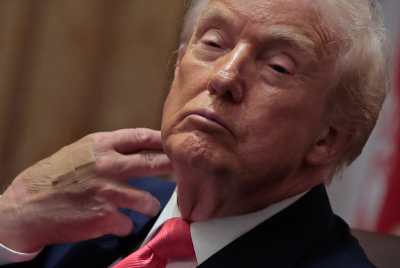
They are not the only visible changes. Observers have noted repeated bruising across the backs of Trump's hands, which officials have casually attributed to vigorous hand-shaking and, at times, to aspirin use. Reiner was openly sceptical, pointing out that if aspirin were genuinely causing such bruising, the sensible step would be to reduce the dose. 'That explanation doesn't make a lot of sense to me,' he said, adding that similar marks have been seen on Trump's left hand, which would not typically bear the brunt of political grip-and-grin sessions.
The pattern of medical visits has also raised eyebrows. Presidents normally make a single trip to Walter Reed each year. Trump went twice in 2025, in April and October, and also had an extra evaluation in July over his leg swelling and hand bruising, when the chronic venous insufficiency diagnosis was made public. In May this year, he turned up for what the press office later described as a 'scheduled dental appointment' at his local dentist in Florida, a visit that had not been pre-flagged on his public schedule.
Donald Trump is once again sparking health concerns after being spotted with noticeably swollen ankles while returning to the White House following a weekend trip to Florida. Click the link below for details. (📸: MEGA) https://t.co/npNYWvdFd6 pic.twitter.com/WfTvmotWhO
— OK! Magazine USA (@OKMagazine) March 11, 2026
Despite that, the administration insists there have been no secret hospital runs. 'He has never made an undisclosed visit to Walter Reed,' press secretary Karoline Leavitt said last month, pushing back at claims of hidden emergencies.
Outside the clinic rooms, Trump himself has leaned into a defiant narrative, frequently boasting about having passed 'very difficult' cognitive tests and rebuking any suggestion of decline. Yet he has also been filmed hesitating on steps, appearing to favour one leg, and at times struggling to walk in a straight line as he disembarks from Air Force One, minor stumbles, perhaps, but ones that have taken on new weight amid the drip of medical intrigue.
Donald Trump is once again stirring up concern about his health.
— OK! Magazine USA (@OKMagazine) October 8, 2025
The 79-year-old president was photographed revealing his noticeably swollen ankles while meeting Canadian Prime Minister Mark Carney in the Oval Office.
More details: https://t.co/5k90zOIBtQ pic.twitter.com/Q0wpoRo84P
Public opinion appears to be shifting. A Washington Post–ABC News–Ipsos poll in April found only 40 per cent of Americans believed Trump had the mental health required to serve effectively as president, down from 47 per cent in September. Confidence in his physical health slipped from 54 per cent to 44 per cent over the same period.
IBTimes UK has asked the White House for further comment on the president's upcoming Walter Reed assessment and on Dr Reiner's concerns about possible congestive heart failure. At the time of writing, no new explanation has been offered.
© Copyright IBTimes 2026. All rights reserved.
- Recommended For You