

Scientists 'Fully Engineer' World's First Cell Built from Scratch, as Experts Debate on What Counts as Life
The creation of 'SpudCell' marks a significant advancement in synthetic biology, sparking debate over the definition of life
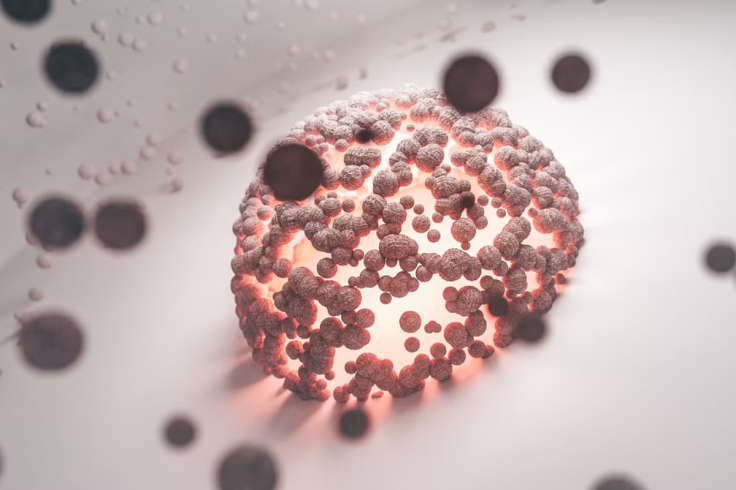
Scientists have built a cell from scratch using nothing but non-living chemicals, in what researchers describe as a genuine milestone for synthetic biology. The creation, named 'SpudCell', can feed itself, grow and divide much like a natural organism.
Kate Adamala, a synthetic biologist and professor at the University of Minnesota, led the team that assembled the cell piece by piece. 'I know the full ingredient list of the cell, I know exactly what chemicals, what molecules at what concentrations,' she said. 'It is fully defined, which means we can engineer it.'
A Minimalist Cell That Can Feed, Grow, and Divide
SpudCell is made up of just 150 to 200 distinct molecular species, far fewer than the millions found in a natural biological cell. It can replicate for around five generations, with each cycle requiring feeding and taking roughly twelve hours at 30 degrees Celsius, Adamala said.
By comparison, E coli bacteria divide every 30 minutes. SpudCell also cannot make its own ribosomes and instead relies on ribosomes supplied through feeding, meaning it cannot reproduce independently outside a lab setting.
Is It Alive? Scientists Split Over SpudCell's Status
Drew Endy, an associate professor of bioengineering at Stanford University who co-founded a research institution with Adamala, argues the creation stops short of being alive. 'I would say Kate has constructed a cell. I don't think she's created life,' he said.
He also pointed out that the cell cannot evolve in the way natural organisms do. When his team introduced a genetic change to boost a growth protein, the modified cells divided faster, but because the change was engineered rather than a spontaneous mutation, it does not count as evolution by natural selection.
On the other side, Yuval Elani, an associate professor in biochemical technologies at Imperial College London who was not involved in the work, is more willing to call it a genuine breakthrough. He described it as 'a genuine milestone on the road toward that question' of whether chemistry can be organised convincingly enough to be called life.
The split continues among other scientists in the field. Tom Ellis, a professor of synthetic genome engineering also at Imperial College London, called the cell 'probably the biggest breakthrough in recent times in the synthetic cell field'.
Elizabeth Strychalski, a group leader at the US National Institute of Standards and Technology's National Cellular Engineering Group, said the creation 'straddles the line between' a pile of chemicals and a naturally evolved cell, calling the research 'important and impressive'.
🚨: Scientists build a cell from scratch for the first time — it feeds, grows, and divides like life itself.
— Curiosity (@CuriosityonX) July 1, 2026
The lab-made creation is the most advanced synthetic cell ever built, completing a full growth-and-division cycle using only nonliving chemical parts. pic.twitter.com/Tzyqq3sne8
Building a Shared 'Bioeconomy'
Alongside the paper, Adamala and colleagues Drew Endy, Jan Jedryszek and Chris Raggio launched Biotic, a public-benefit institution intended to share the technology with other researchers, similar to open-source software. 'We're hoping we're really starting the true age of bioeconomy, enabling technology that will let people engineer biology,' Adamala said.
Endy also addressed safety concerns directly, stressing that SpudCell poses no biosafety risk in its current form. 'It can only divide if you feed everything, including ribosomes. It has zero capacity to reproduce itself outside that context,' he said.
© Copyright IBTimes 2026. All rights reserved.