Scientists Blast Human 'Terrocentrism' in Bombshell Paper Proving Alien and AI Minds Exist Beyond Flesh and Blood
A pair of philosophers are asking whether our greatest blind spot is not the search for alien minds, but the stubborn belief that they must look anything like us.
Scientists blast the idea that consciousness is confined to human or animal brains in a provocative new paper published this week, arguing that minds could exist in alien life and even advanced machines across the universe. The paper, by philosophers Eric Schwitzgebel of the University of California, Riverside, and Jeremy Pober of the University of Lisbon, claims it is overwhelmingly unlikely that consciousness is restricted to 'flesh and blood' organisms on Earth.
Questions about who or what can be conscious have usually circuited around humans and a few favoured animals primates, dolphins, perhaps octopuses if you are feeling generous. The background assumption has been that whatever consciousness is, it somehow belongs to carbon-based life with brains that look roughly like ours. Schwitzgebel and Pober set out to dismantle that assumption, labelling it a kind of 'terrocentrism': a bias that treats Earthly biology as the gold standard for minds.
Scientists Blast Old Assumptions About Consciousness
The researchers deliberately avoid the philosophical minefield of defining consciousness itself. Instead they pose a simpler and, in their view, sharper question: does consciousness require the particular biological materials that make up human and animal nervous systems? Their answer is explicit. They say the evidence points firmly towards 'no'.
They draw on the notion of 'substrate flexibility', a concept that sounds technical but is easy enough to grasp. Some properties do not care what they are made of. A cup is a cup whether it is glass, ceramic or plastic. A novel can live in ink on a page or as bits on a server. Music is still music whether stored on vinyl, CD or streaming files. If a pattern or structure is what really matters, then the substance it is built from can vary quite dramatically.
Schwitzgebel and Pober suggest consciousness may be such a substrate flexible property. On that view, it is the organisation and dynamics of a system that do the work, not whether it is built from neurons, silicon wafers or alien biochemistry nobody on Earth has a name for yet. It is a plea to take pattern seriously and substance a little less so.
They push the argument out into the wider cosmos. Astronomers estimate that the observable universe contains roughly one trillion galaxies, with countless planets, most of them nothing like Earth. For the sake of argument, the paper assumes that at least 1,000 technologically advanced alien civilisations have existed somewhere in that sprawl, and presents that number as conservative rather than wild speculation. Nothing is confirmed, of course, and all such estimates should be taken with a grain of salt, but it is the starting point for their reasoning rather than its conclusion.
**WOW** David Grusch: "There are several different types of Alien species that the US government are aware of" 👽
— Interstellar (@InterstellarUAP) June 9, 2026
"It's a continuum from Corporeal bipedal type life forms to sentient plasma life" pic.twitter.com/whIvDxWYt8
Scientists Blast 'Flesh and Blood Only' View of Alien Minds
Scientists have long toyed with the idea that extraterrestrial life might not share our chemistry. Instead of carbon chains in water, alien organisms could rely on different amino acids, exotic solvents or chemical structures barely imaginable from a terrestrial perspective. If life itself is chemically flexible, Schwitzgebel and Pober argue, it would be an extraordinary coincidence if every intelligent species in the universe nevertheless converged on our specific biological recipe for consciousness.
Even a quick glance at life on Earth suggests variety, not uniformity. Octopuses, insects, birds and mammals have wildly different nervous systems. An octopus's neurons are spread through its arms. Insects rely on compact ganglia. Birds pack dense neural wiring into small skulls. Yet many researchers are willing to attribute at least some form of conscious experience to several of these groups. Evolution, in other words, has already produced more than one way of building a complex mind.
The authors tie this to the old Copernican lesson. Humanity has repeatedly discovered that it is not at the centre of things. Earth fell from the centre of the solar system. The Milky Way lost any claim to being the hub of the cosmos. Schwitzgebel and Pober propose a 'Copernican principle of consciousness': if consciousness exists beyond Earth, it is unlikely to be a monopoly of organisms that happen to resemble us. To insist otherwise is, in their view, another version of putting ourselves back at the centre.
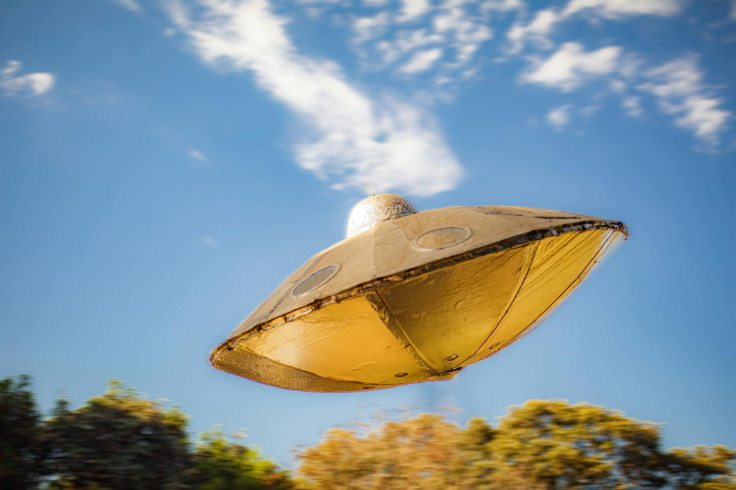
The paper also edges towards one of the most contentious questions in contemporary science and technology. What about artificial intelligence? The authors stop well short of declaring today's AI models conscious. They are careful on that point. But if we drop the dogma that minds must be made of living tissue, they argue, it becomes logically harder to rule out that some future non-biological system might host its own form of awareness.
They note that consciousness, if it turns out to be substrate flexible, might look and feel very different from the human case. Birds, bats and insects all fly, but they do not do it in the same way. There is no single template for wings. Likewise, conscious experience could come in a confusing variety of formats, some of them so alien to us that we might struggle to recognise them as minds at all.
🇺🇸 Asmongold reacts to Trump meeting the Agarthan emissaries.
— Mario Nawfal (@MarioNawfal) June 13, 2026
“Trump has been meeting with them privately to facilitate the transition into Hyperborea.”
Internet gonna be cooking with these tall Nordic alien memes for weeks 😂
Writer: Lucaspic.twitter.com/RfnNY35RPz https://t.co/UQGXRSOGd1
Behind the technical language, the paper is really a challenge to intellectual pride. If the universe is as big and as inventive as current science suggests, then betting that consciousness exists only in brains that look like ours may say more about human parochialism than about how minds actually arise.
© Copyright IBTimes 2026. All rights reserved.
- Recommended For You