EU Opens Bids for Seven AI Super-Hubs To Break US and China Monopoly
Brussels' ambitious plan aims to reduce reliance on US and Chinese tech giants.

The European Commission has opened a call for tenders for up to seven AI 'gigafactories' across the bloc, a €30bn (£25.6bn) push designed to reduce Europe's dependence on American and Chinese computing power. The call is one of Brussels' most ambitious attempts yet to build large-scale sovereign AI infrastructure.
Up to €10bn (£8.5bn) of the funding will come from EU and national government coffers, with a further €20bn (£17.1bn) expected from private investors, according to the Commission's announcement. Each gigafactory will combine advanced AI processors, high-speed connectivity and energy-efficient data centres, giving European start-ups, universities and public bodies access to computing power currently dominated by American and Chinese firms.
How the Gigafactories Will Be Built and Funded
Consortia and Special Purpose Vehicles bringing together companies, public bodies and investors can bid for the funding. Successful projects can be built at a single site or spread across several EU countries through what the Commission calls 'distributed AI computing facilities'.
The tender is split into two funding lots. Projects in the first lot are eligible for up to €100m in early-stage EU funding, rising to €400m per project in phase two. The second, larger lot offers up to €200m initially and as much as €800m further down the line.
Bidding closes on 12 November 2026, with award decisions expected in early 2027 and construction due to begin the same year.
AI is the most important technology of our time.
— Ursula von der Leyen (@vonderleyen) July 30, 2026
Europe wants to become the first AI Continent.
For advanced healthcare, for the transport sector and so much more.
European AI Gigafactories will provide the necessary computing power to make this possible.
Together with our… pic.twitter.com/FdOSqYbTiu
Reliant on US Hardware Despite Sovereignty Push
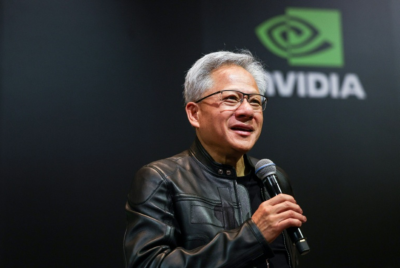
Despite the sovereignty framing, Europe's plan remains tied to American technology. The Commission confirmed it has signed letters of intent with US chipmakers AMD, Nvidia and Qualcomm to give gigafactory consortia 'seamless access to necessary hardware'.
Some procurement will be reserved for European start-ups and scale-ups, the Commission said, aimed at strengthening the continent's own supply chain. Each gigafactory is expected to run on well over 100,000 advanced AI chips, most of which are manufactured outside Europe.
Racing Washington and Beijing
The scheme mirrors Washington's Stargate programme, the joint venture between OpenAI, Oracle and SoftBank, as well as China's own state-backed AI infrastructure drive.
Announcing the call, Henna Virkkunen, the Commission's Executive Vice-President for Tech Sovereignty, Security and Democracy, said access to gigafactory-scale computing power was 'a strategic necessity for Europe as AI development accelerates', adding that the facilities were 'key to our technological sovereignty'.
Commission President Ursula von der Leyen echoed that message on X, writing that the gigafactories would provide 'the necessary computing power' for healthcare and transport, and that 'together, we are building our technological sovereignty'.
The Commission wants the first gigafactories operational by mid-2028, as Brussels policymakers grow increasingly concerned over the EU's digital dependency on foreign cloud and chip suppliers.
If the gigafactories are built as planned, Europe's AI computing capacity would more than double, giving smaller firms and public researchers access to processing power currently out of reach. But the scheme's success depends on whether the promised €20bn in private investment actually materialises, and on how quickly Europe can reduce its reliance on non-European chipmakers.
For now, the bloc's push to break the US-China grip on AI infrastructure still runs, in large part, on American silicon.
© Copyright IBTimes 2026. All rights reserved.
- Recommended For You