$350 Billion Wipeout: Trillionaire Elon Musk Breaks World Record for Biggest Wealth Loss Ever as SpaceX Slumps
When the world's first trillionaire can see $350bn vanish in days, it lays bare just how violently the AI boom can turn.

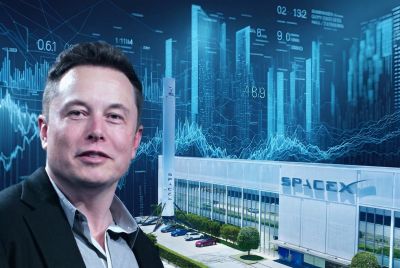
Elon Musk has suffered a record-breaking loss of personal wealth in the United States this week, after a steep slump in SpaceX's share price wiped an estimated $350bn (£264bn) from the trillionaire's fortune in just seven days, according to Forbes calculations.
SpaceX stock earlier this month briefly turned Musk into the world's first trillionaire on paper. Shares in his rocket, satellite and artificial intelligence company surged as much as 67pc in their first three days of trading in New York following a blockbuster initial public offering that valued the group at more than $1.8tn. At its peak, the market capitalisation of SpaceX reached around $2.9tn, epitomising the AI-fuelled exuberance that has gripped parts of Wall Street.
That exuberance is now colliding with a more familiar market instinct: doubt. SpaceX shares have fallen for three consecutive sessions, knocking almost 30pc off their value from last Tuesday's high and erasing about $928bn in market value. The company was still worth just over $2tn at Monday's close, but the scale and speed of the pullback have left Musk markedly poorer on paper, his net worth slipping from about $1.45tn to just under $1.1tn.

Elon Musk's SpaceX Slump Dwarfs Other Billionaire Losses
The $350bn hit to Musk's fortune in a single week is larger than the entire estimated wealth of the world's second-richest man. Larry Page's net worth at just over $299bn, underscoring the sheer size of the numbers now involved when markets swing around the technology elite.
It is not the first time Musk has watched mind-bending sums evaporate on a screen. In 2022 he set the previous record for the largest single loss of personal wealth, when a rout in Tesla shares knocked roughly $165bn off his estimated net worth. This week's reversal more than doubles that figure and again exposes how tightly Musk's personal balance sheet is lashed to market sentiment.
Musk's wealth is heavily concentrated in his stakes in his own companies. The latest estimates attribute about 38pc of SpaceX to him, alongside roughly 11pc of Tesla and a patchwork of positions in other start-ups. When traders turn against his flagship firms, the impact on his personal ledger is instant and brutal.
He is not the only tech tycoon feeling the chill. Larry Ellison, the 81‑year‑old founder of Oracle, has seen his net worth fall from about $400bn last September to roughly $220bn today following a major sell-off in Oracle's stock. The individual stories differ, but the broader pattern is recognisable: markets that raced ahead of fundamentals are now second-guessing themselves.
SpaceX Bond Plan Jolts AI Euphoria Around Elon Musk
The immediate trigger for SpaceX's worst day as a listed company came on Monday, when the group disclosed plans for its first investment‑grade bond sale as it seeks to raise at least $20bn to fuel its AI ambitions. The announcement rattled some investors who had grown used to thinking of SpaceX as an almost frictionless money machine, rather than as a business that still needs colossal funding to keep its promises.
Shares dropped 16.4pc that day, closing at $154, still comfortably above their $135 IPO price but a long way from last week's highs. SpaceX tried to soothe nerves by highlighting its financial firepower, saying it holds more than $100bn in cash. The figure is eye-catching, though it also hints at the scale of the spending now required to stay ahead in the AI and space races.
The bond offering prompted a wider question in boardrooms and trading floors: how far can even the biggest companies stretch their balance sheets to back AI projects that may take years to turn into durable profits? There is no clear answer yet, and nothing is confirmed about the long-term impact of SpaceX's fundraising strategy, so everything should be taken with a grain of salt. For now, investors have responded by reaching for the sell button.
The chill has spread well beyond Musk's empire. The tech‑heavy Nasdaq index fell 1.3pc on Monday, tugged lower by a 5pc slide in Alphabet and a 4.8pc drop in Amazon. In Asia, nerves around AI chipmakers were acute enough to trigger a trading halt on South Korea's Kospi on Tuesday morning after a 10pc plunge. Japan's Nikkei dropped 3.6pc the same day, while US futures pointed to further weakness in New York.

Market operators sometimes talk about 'Musk risk' as shorthand for the wild volatility that tends to follow his ventures. This week's record-breaking wipeout shows that risk cuts both ways. On the way up, Musk's ascent to trillionaire status was held up as evidence of a new AI‑driven era. On the way down, it looks more like a reminder that gravity still applies, even to the world's richest man.
© Copyright IBTimes 2026. All rights reserved.
- Recommended For You