Republican Voters Warn They Will Flip Democrat Over Data Centres: 'My Entire Community Will Break Rank'
Rural Texans are turning against the GOP over the expansion of AI data centres.

Deep-red Texas is cracking over AI data centres, and lifelong Republicans say the ballot box is the only weapon they have left.
Rena Schroeder voted for Ronald Reagan in her first presidential election. Cheryl Shadden spent decades pulling Republican ballots without question. Both women are now threatening to hand their votes to Democrats in the November 2026 midterms, citing sprawling AI infrastructure projects that they say are consuming rural land, spiking electricity bills and poisoning the silence of communities that chose to live far from city noise.
Their anger, documented in an MSNOW segment broadcast in late May 2026, has crystallised a political liability that Republicans have so far failed to contain. Texas, which trails only Virginia in the number of operational data centres, now finds members of its own base turning against an industry that its leadership has championed.
Communities Pushed to Breaking Point
Schroeder, 62, owns a ranch in Lot, Texas, a Falls County community of just 644 people. She described her opposition to the OpenAI Stargate project going up south of her property as the moment her relationship with the GOP fractured beyond repair. Reporting by the Texas Tribune notes that Schroeder proposed a data centre ban at a GOP precinct meeting in late March, only to be shouted down by fellow Republicans who demanded she water it down to a request for 'regulations.'
She refused. 'The only thing that I'm gonna revise, right here, right now, is my commitment to the Republican Party. Goodbye,' she said, according to the Tribune. Schroeder now identifies as an independent and, on the MSNOW segment, declared that the data centre issue 'will flip' the Texas Senate seat in November, adding: '100%.'
Shadden lives a quarter-mile from a data centre outside Fort Worth. She told MSNOW reporter Josh Einiger that the facility's industrial fans operate without pause, morning through night, even reaching her bedroom. 'It's like living on the edge of Niagara Falls, or you're on a runway next to a jet that's taking off, but this jet doesn't take off,' she said. Soundproofing walls were installed at the facility following community complaints, but Shadden says the noise level has not meaningfully changed.
MSNow: You're willing at this point to let the Senate fall into the hands of Democrats, if that's what it takes to end data centers?
— Acyn (@Acyn) May 29, 2026
Republican Voter: My entire community is going to break rank. Everybody, all of us. We've had enough. pic.twitter.com/0h2dAaLup7
Both women are now backing Democrat James Talarico, a former public school teacher and Texas state representative who entered the 2026 US Senate race in September 2025 and secured the Democratic primary in March 2026. He faces the winner of the Republican runoff between incumbent Senator John Cornyn and Attorney General Ken Paxton, whose primary Talarico's supporters view as a gift. Shadden made the calculation explicit. 'Red or blue, if you vote against data centres, we vote for you.'
Grid Under Strain
The frustration is not purely emotional. According to a Q1 2026 analysis by Energy Ogre, Texas residential electricity rates reached 15.87 cents per kilowatt-hour in early March 2026, up roughly 5.75% year-on-year. Wholesale prices at ERCOT's North Hub are projected to rise approximately 45% in 2026 versus 2025, driven by demand spikes during summer peak hours. Data centres account for roughly 46% of ERCOT's projected load growth between 2025 and 2031, according to ERCOT's own April 2025 Long-Term Load Forecast.
The World Economic Forum has stated it is 'impossible to accommodate the growth in AI data centres and maintain grid stability without prices increasing for all customers' in deregulated electricity markets such as Texas, a point echoed by Texas Scorecard's analysis of ERCOT's forward projections.
Between 2016 and 2026, transmission and distribution rates on an average residential bill in Texas rose 44%, according to a 2026 Texas Electric Rate Survey. The operator, Oncor, saw its net income climb from $864 million (approximately £670 million) in 2023 to $1.07 billion (approximately £830 million) in 2025, even as households absorbed the rate increases that funded that growth.
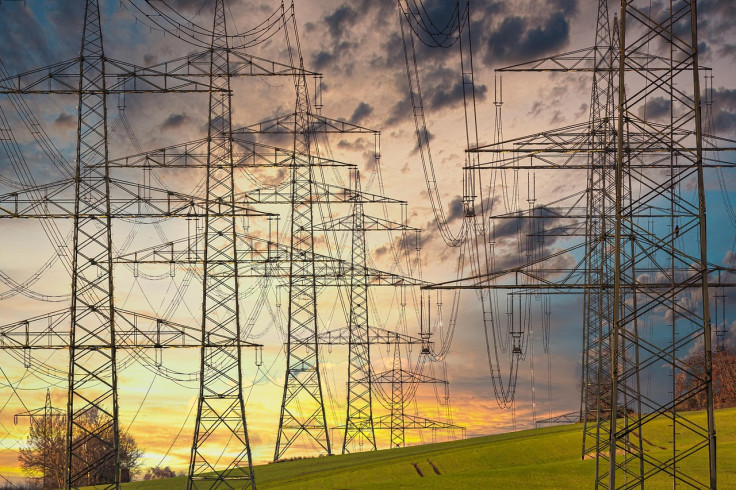
Texas passed Senate Bill 6 in June 2025, requiring large electricity customers, including data centres, to bear a greater share of grid connection and operational costs. The legislation also mandates that ERCOT retain curtailment control over these facilities during grid emergencies.
Critics argue it is too incremental given the scale of demand forecasts. ERCOT's preliminary long-term load forecast projects peak demand in Texas could climb from approximately 85,500 MW today to 278,000 MW by 2029 under a high-growth scenario dominated by data centre expansion.
When Loyalty Has Limit
The shift has gone beyond ballot declarations. On the MSNOW segment, Einiger reported that longtime Republicans at Schroeder's ranch in Lot are now actively canvassing for Clayton Tucker, the Democratic candidate for Texas Agriculture Commissioner. Tucker told Einiger their support reflects something broader than partisan defection.
'This is just Texans standing up for Texans,' he said. 'It's not surrendering our Texas, our way of life, our water, our power, or anything to these few corporations to make all the money in the world.'
Shadden went further, stating she will not vote for Trump-backed Attorney General Ken Paxton, who clinched the GOP Senate nomination at the time of the broadcast. Paxton faces Talarico in the November 2026 general election.
Asked whether she was willing to set aside every conservative priority to defeat data centres, her answer was a single word: 'Yep.' The seat has been held by Republicans since 1993.
Whether the anger translates into enough votes to alter the map remains contested. Texas Democrats have not won a statewide race in three decades and no political forecaster is treating the Senate contest as a toss-up. A 32-point Democratic swing in a February 2026 Texas State Senate special election in Tarrant County, a district Trump carried by 17 points in 2024, has sharpened attention on the state's shifting dynamics. The data centre backlash now stands as one of several structural pressures that Republicans in Texas will have to navigate before November.
In Lot, Texas, where the population numbers in the hundreds and the nearest data centre footprint measures in the hundreds of football fields, a bloc of lifelong conservatives has already decided the party of their parents is no longer their own.
© Copyright IBTimes 2026. All rights reserved.
- Recommended For You