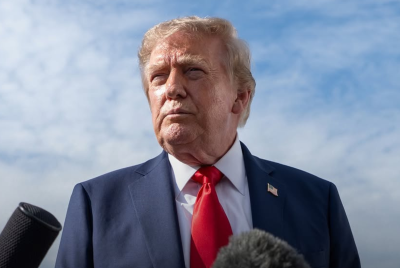
Ken Paxton Defeats John Cornyn: How Ousted Senator Could Exact Revenge on Donald Trump
Paxton's win, backed by Trump, reshapes Texas GOP dynamics and raises questions about Cornyn's future role.

Ken Paxton's victory over John Cornyn in Texas on Tuesday has left Washington with a more awkward question than the race result itself. Now that Donald Trump helped drive Cornyn out of the Republican nomination, attention has turned to whether the outgoing senator will spend the rest of his term making life harder for a president who has already seen other wounded Republicans drift into open dissent.
Texas Attorney General Ken Paxton ousted four-term US Senator John Cornyn riding President Donald Trump's endorsement to a runoff victory for the Republican Senate nomination, US media projected https://t.co/QrLT9PZUSc pic.twitter.com/SJm99gCq10
— Reuters (@Reuters) May 27, 2026
The news came after Cornyn suffered what CNN described as a landslide defeat in the Texas Republican Senate runoff, ending a bruising contest with Paxton that exposed just how fully Trump now dominates the party's internal pecking order. Paxton, the Texas attorney general, had Trump's endorsement and used it to devastating effect against a senator who once looked unshakeable in his own state.
Paxton Victory Leaves Cornyn in a Different Senate
For years, Cornyn was the reliable institutional Republican, the sort of senator who knew where the levers were and usually preferred to pull them quietly. He served in Senate leadership and built a reputation as a party loyalist, which is partly why this defeat carries a faint air of humiliation for the wider GOP, not just for him.
Texas Attorney General Ken Paxton, boosted by President Donald Trump’s endorsement, has trounced four-term US Senator John Cornyn in the Republican Senate primary run-off, in a sign of Trump’s grip on the party. pic.twitter.com/P67d0X101G
— Al Jazeera English (@AJEnglish) May 27, 2026
Before the runoff, Cornyn told NewsNation that losing would not produce a transformed version of himself in Washington. 'I don't think so,' he said, adding that he would continue to pick his fights 'on a case-by-case basis.'
That may be true. It may also be the sort of thing a senator says before voters remove the last incentive for discipline. In his concession speech after the defeat, Cornyn said he would 'continue my work to help make this nation a better place for all Texans and all Americans,' then declined to elaborate when reporters pressed him, saying only, 'I'll have more to say later.'
Trump further cements his grip over the Republican Party as his favored candidate in a bitter Texas primary runoff, scandal-plagued Ken Paxton, defeats incumbent Senator John Cornynhttps://t.co/omR4gzVc8G pic.twitter.com/YKzVcdaoWO
— AFP News Agency (@AFP) May 27, 2026
Paxton and Trump Deepen GOP Problem
Cornyn's colleagues have reason to be nervous because they have already seen this pattern before. CNN reported that Senators Thom Tillis and Bill Cassidy both became more outspoken against Trump after their own political setbacks, complicating the White House's ability to keep Republicans in line.
Tillis abandoned his re-election bid last year after Trump threatened to back a primary challenger, and later said he looked forward to having 'the complete freedom to make my own judgments as I see fit.' Cassidy, meanwhile, lost renomination in Louisiana this month after Trump endorsed against him, then moved to buck the president on major issues including a measure aimed at curbing presidential war powers in Iran.
Ted Cruz has already spelled out the arithmetic in unusually blunt terms. On his podcast, according to CNN, he grouped Cassidy, Tillis, Cornyn and Rand Paul together as four senators capable of causing trouble, warning that with Republicans holding a 53 to 47 majority, losing four votes would drag the party below 50 and leave it unable to pass anything.
That is not abstract griping from Capitol Hill. Trump still needs a major legislative package through Congress this year, including tens of billions of dollars for US Immigration and Customs Enforcement and broader border enforcement after Democrats rejected that funding in the latest spending deal. CNN reported that even this measure is now tangled in internal Republican disagreements, with some in the party unconvinced it can pass before the midterms.
The Politics of Revenge
Paxton spent much of the campaign arguing that Cornyn's support for Trump was transactional rather than sincere. On 18 May, he told a radio interviewer, 'As soon as this race is over, one way or the other, John Cornyn will go back to being John Cornyn,' adding that the senator would become 'a thorn in his side.'
🔊 @BoKnowsNews tells the Reuters World News podcast when a president endorses against one of their own it's 'inherently a more risky strategy’ on display in Texas where Trump-backed Ken Paxton ousted incumbent John Cornyn in a Senate runoff https://t.co/jcKCfh7KGn pic.twitter.com/ZBl92I3F24
— Reuters (@Reuters) May 27, 2026
Cornyn tried in the closing days to draw a line between himself and Cassidy, pointing out that unlike the Louisiana senator he did not vote to convict Trump in the second impeachment trial. He argued instead that he was paying the price for Trump's frustration with the Senate's slow progress on his agenda.
Paxton was more diplomatic on victory night, thanking Cornyn for his long public service in Texas. Even so, he also made the real point of the evening unmistakable when he declared, 'In the Senate, I'll support Donald Trump's America First agenda.'
Nothing is confirmed yet about how Cornyn will vote in the months ahead, and that uncertainty should be taken seriously rather than filled with guesswork. But Trump's habit of defeating internal rivals has a habit of producing a second problem after the applause dies down, which is that discarded Republicans sometimes stop behaving like loyalists and start behaving like men with nothing left to lose.
© Copyright IBTimes 2026. All rights reserved.
- Recommended For You