

Toronto Faces World's Worst Air Quality As Wildfire Smoke Blankets City During Heatwave
Wildfire smoke briefly makes Toronto the world's most polluted city during a heatwave
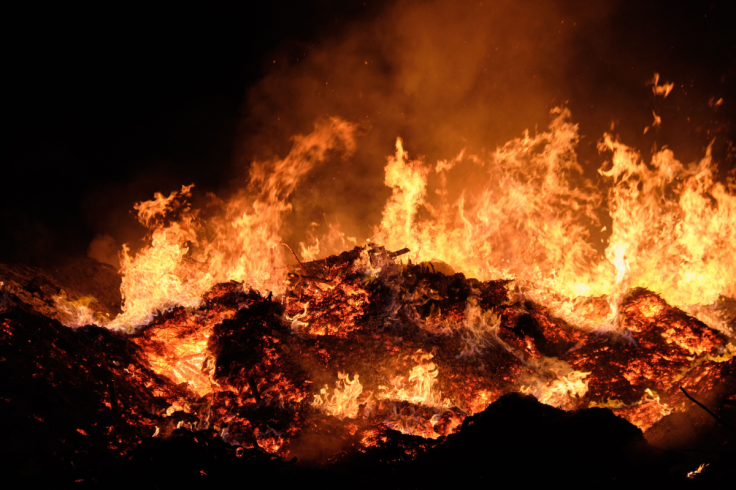
Toronto, where IQAir's historical data typically places air quality in the 'Good' category, briefly became the world's most polluted major city this week as wildfire smoke engulfed Canada's largest city during a heatwave.
IQAir's historical data shows Toronto typically records an Air Quality Index (AQI) of around 28 and an annual PM2.5 concentration of about 7.4 micrograms per cubic metre. Those figures generally place Toronto among cities with relatively clean air by international standards, making the dramatic deterioration during the wildfire smoke event particularly unusual for residents accustomed to good air quality.
During the peak of the smoke event on 14 and 15 July, however, the city's AQI surged to 184 — about six times its usual level — briefly pushing it ahead of Kinshasa in the Democratic Republic of Congo and India's capital, New Delhi, in the global rankings.
A Worrying Scale to the Wildfire Crisis
The scale of the crisis behind that spike was considerable. So far this year, Canadian wildfires have scorched approximately 1.9 million hectares — an area nearly the size of Slovenia. That remains well below the nearly 18 million hectares burned during Canada's record-breaking 2023 wildfire season, but it was enough to blanket Toronto's skyline in a hazy yellow-grey, reduce visibility and send pollution levels soaring.
Canadian authorities urged residents to stay indoors on Wednesday as conditions worsened. Armen Aradian, an air quality expert at IQAir, said the spike was driven primarily by wildfire smoke, while above-average temperatures further worsened conditions.
The Canadian government said 835 wildfires were active across the country on Wednesday, including 112 classified as out of control, with the fires' danger extending well beyond air quality alone. Near Armstrong in northern Ontario, a freight train crew was surrounded by flames earlier in the week and forced to wait until another train cleared the tracks before moving to safety.
Most of the active fires were burning in the central provinces of Manitoba, Saskatchewan and Ontario. While this year's wildfire season began more slowly than the record-setting fire seasons of 2023 and 2025, officials warned that warmer-than-usual temperatures continue to create favourable conditions for further fires.
Greg Evans, a professor of chemical engineering and applied chemistry at the University of Toronto, said the combination of extreme heat and wildfire smoke underscores a growing challenge for cities as climate conditions become more conducive to large wildfires.
'I expect that this will occur more frequently over the coming decades, so cities and residents need to prepare for this in the future,' Evans said.
Why The Smoke Moving South Poses Greater Concerns
While Toronto's ordeal was intense, it was brief. Smoke from the same wildfires continued drifting across eastern North America even as Toronto's skies cleared, prompting New York City to issue air quality alerts for Wednesday and Thursday and urge residents to reduce strenuous outdoor activity.
The timing was notable: more than 80,000 spectators are expected at Sunday's FIFA World Cup final at MetLife Stadium in New Jersey, with another 50,000 watching from New York's Central Park, where hazy skies were already visible. New York Governor Kathy Hochul urged residents with underlying health conditions to take precautions.
Back in Toronto, a Sharp Reversal
By Thursday, Toronto's own crisis had already passed. IQAir ranked the city 93rd out of 122 major cities worldwide, with an AQI of 28 — back in the 'Good' category, just days after briefly topping the global pollution rankings.
The reversal was as swift as the spike itself: a city that rarely appears near the top of any pollution list found itself, however briefly, ahead of Kinshasa and New Delhi, before returning to normal within 48 hours.
Even so, the episode highlighted how quickly wildfire smoke can transform air quality in major urban centres, reinforcing warnings from experts that such events could become more common as fire seasons grow longer and more severe.
© Copyright IBTimes 2026. All rights reserved.