

Heat Advisory Today: Experts Warn DC's Historic Fireworks Could Briefly Push Air Pollution to Beijing-Like Levels
Extreme heat and pollution warnings overshadow Washington's Independence Day celebrations.
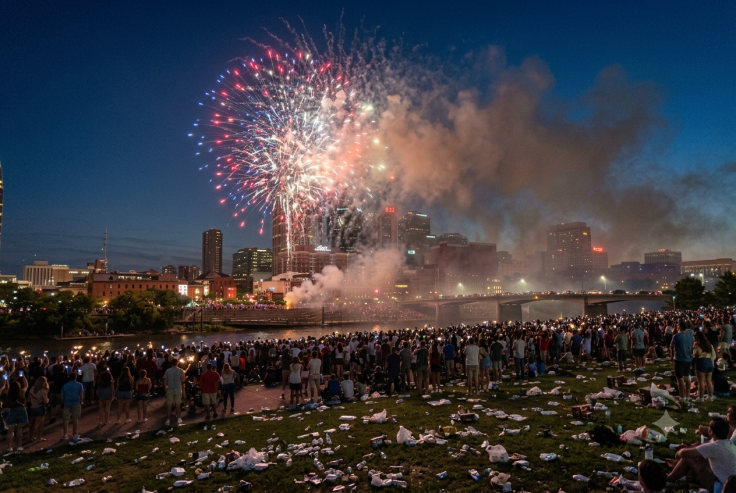
Washington's July Fourth fireworks are set against an extreme heat warning, and experts say the show could briefly drive air pollution around the National Mall to levels comparable with Beijing in a bad spell. The warning matters because the city is already dealing with dangerous heat, cancelled events and an evening display that may leave the air far worse than the sky.
Fireworks and Beijing Levels
The news came after local forecasts for the District of Columbia, Maryland and Northern Virginia warned of another day above 100 degrees, with heat index values climbing even higher as crowds gather for Independence Day celebrations. According to reports, the region was bracing for extreme heat, while other local outlets reported cancellations and postponements across the holiday schedule as organisers tried to keep people safe.

Internal National Park Service documents, said the fireworks for this year's July Fourth celebration were expected to cause hazardous pollution around the National Mall and 'very unhealthy' conditions in central Washington. The same reporting said the display, billed by the Trump administration as the largest pyrotechnic show in history, is expected to include about 850,000 fireworks.
That is where the Beijing comparison comes in. The modelling behind the Park Service analysis projected smoke and particulate matter severe enough to prompt warnings to avoid prolonged exposure, with the worst pollution concentrated near the Mall and lingering for hours after the show. For a city that already struggles with summer ozone and heat, that is not exactly reassuring stuff.
Heat Already Changed the Day
The day itself was already in rough shape before the first rocket even went up. Based on earlier reports, temperatures were expected to jump above 100 again on Saturday, with an extreme heat warning in effect and live updates tracking which events were still on and which had been pulled. Another report have multiple weather alerts and said the heat was forcing adjustments to Fourth of July plans across the metro area.
That matters because smoke does not behave politely in hot, still air. The fireworks would amplify an existing orange air quality alert in the District, and the station's meteorologist said the display could worsen air quality for people already sensitive to pollution. A forecast similarly warned that smoke from fireworks may linger longer than usual because winds were light, reducing visibility around some displays.
The combination is a grimly familiar one for anyone who has spent a July night in the capital. Big crowds, little breeze, heat hanging over the pavement, and then a barrage of fireworks that looks magnificent for a few minutes and then leaves the city breathing something rather less festive. It is the kind of summer trade-off Washington makes every year, though this one looks particularly wild.
What Experts Are Saying
According to George Thurston, a professor of medicine and population health at New York University, levels of up to 1,200 micrograms per cubic metre, as projected in the expected scenario, are still reason to take precautions. He said people should use 'the precautionary principle' and minimise exposure, adding that 'an N95 mask would be a good idea.'
The Park Service, in a separate document cited by a report, advised people to wear an N95 mask outdoors and remain inside as much as possible during and after the show. That guidance is blunt because the risk is not abstract, it is about fine particulate matter, or PM2.5, which can get deep into the lungs and trigger irritation or asthma symptoms.
That is also why comparisons with cities such as Beijing carry weight. The point is not that Washington becomes Beijing in any permanent sense, but that a short, intense burst of firework smoke can drive pollution into the same ugly territory for a limited period. In other words, the sky may look patriotic, while the air does something far less charming.
What Happens Tonight
The key question now is how much of the planned celebration actually goes ahead without further disruption. The city was following live weather updates for events including America 250, Freedom 250, the Great American State Fair and fireworks on the National Mall.
Most fireworks displays should still be able to proceed, although storms and lingering showers remained a concern in parts of the region. Even if the weather holds, the health message remains the same. Sensitive groups are being told to stay alert, limit time outdoors and avoid hanging around in the smoke after the show.
For everyone else, the holiday still promises a familiar Washington contradiction, a grand public spectacle paired with a hazard tucked into the haze. It is a bit mad, really, but that is summer in the capital.
© Copyright IBTimes 2026. All rights reserved.