

Donald Trump Cash Gifts Controversy: Ethics Lawyer Warns President 'Could Get Himself Impeached'
Former White House ethics lawyer Richard Painter questioned whether the payments were personal gifts or unlawful salary supplements; the White House disputes his interpretation
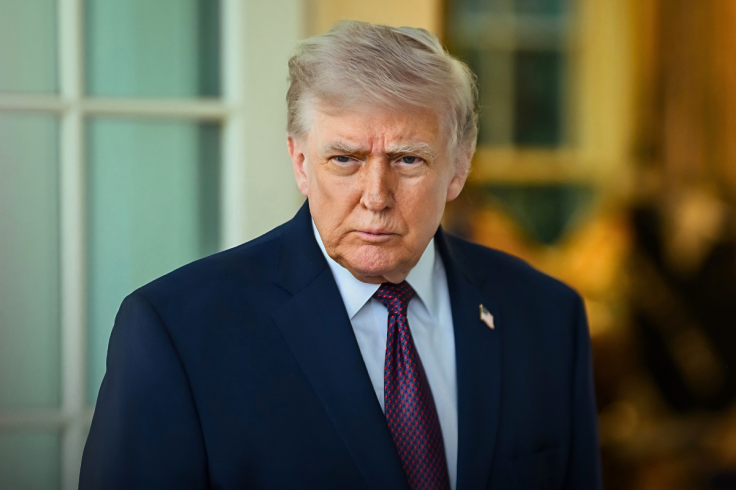
President Donald Trump's cash gifts to several White House aides have drawn a legal warning after former White House ethics lawyer Richard Painter said the payments may violate federal law and could expose Trump to impeachment.
Financial disclosure records show that Trump gave Natalie Harp, Margo Martin and Chamberlain Harris $45,000 each as holiday cash gifts in 2025, while Walt Nauta received $20,000.
The payments were disclosed in annual executive branch financial disclosure forms that the White House made public in September 2026.
Painter, who served as chief White House ethics lawyer under former President George W. Bush, told Newsweek that the Trump cash-gifts controversy turns on whether the money was a genuine personal gift or compensation tied to government service.
The White House rejected that interpretation, saying the payments were unrelated to official duties and permissible under legal and ethical rules.
Trump Cash Gifts Raise Questions Over Federal Compensation Law
The dispute centres on 18 U.S.C. § 209, titled 'Salary of Government officials and employees payable only by United States'.
The law generally prohibits executive branch employees from receiving salary or salary supplementation from a source other than the US government when it is provided as compensation for their government service.
The statute includes exceptions for certain arrangements, including continued participation in bona fide retirement or insurance programmes maintained by a former employer, but Painter is concerned these cash payments could be viewed differently if tied to public service.
Painter said their prior working relationships with Trump were relevant because Harp, Martin and Harris had previously worked for Trump or Trump-affiliated political operations before entering or returning to the current administration.
Each earns about $150,000 a year, making the $45,000 payments roughly 30 per cent of their annual salaries.
'Employers and employees don't have gift-giving relationships,' Painter told Newsweek. He described the payments as salary supplementation presented as holiday gifts.
Painter made a similar argument to CNN, saying a payment of this kind from an employer to an employee is 'almost certainly not a gift' and calling it income rather than a gift.
He also argued on X that White House staff should not be treated like private household employees who receive holiday tips.
The key legal question, Painter said, is whether the money was intended to compensate the aides for government service or whether it was a genuine personal gift with no connection to their official duties.
Trump Cash Gifts Could Bring Political Exposure
Painter told Newsweek that both the giver and recipient of an unlawful salary supplement could face criminal exposure. He said possible penalties include fines, civil penalties and prison sentences of up to one year, or up to five years for wilful violations.
He also raised possible political consequences for Trump. 'President Trump could get himself impeached for it,' Painter said.
Trump was impeached twice during his first term, in 2019 and 2021, and was acquitted by the Senate both times.
Painter also said potential legal exposure could extend beyond Trump's presidency because of a five-year statute of limitations, which he said could allow a future Justice Department to examine the payments.
That does not establish that the gifts violated the law. Painter's argument depends on whether authorities could show the money was linked to the aides' government work rather than a personal relationship with Trump.
White House Defends Trump Cash Gifts as Personal
White House spokesperson Davis Ingle defended the payments in a statement to The Washington Post, saying Trump has a 'longstanding practice of giving Christmas gifts to people in his orbit, including at times employees and aides, both in government and in his time in the private sector'.
Ingle said the gifts 'have nothing to do with any of these individuals' official government duties' and are 'entirely permissible under relevant legal and ethical standards'.
Not all ethics specialists have concluded that the payments violate Section 209. Don Fox, a former acting director of the Office of Government Ethics, told The Washington Post that the available facts did not make a violation clear and that the purpose of the payments would be critical to that determination.
The records establish that the payments were reported. Painter has raised the legal question of whether they amount to prohibited compensation, while the White House disputes his interpretation.
© Copyright IBTimes 2026. All rights reserved.