Trump Overruled His Own Staff to Bring 'Great Jensen Huang' to Beijing — Nvidia Boss Boarded During Refuelling Stop
Nvidia's Jensen Huang joins Trump's Beijing delegation, sparking discussions on US-China semiconductor policies

President Donald Trump dismissed reports that Nvidia CEO Jensen Huang had been left off his Beijing delegation as 'FAKE NEWS' on Tuesday evening, writing on Truth Social that 'CNBC incorrectly reported that the Great Jensen Huang, of Nvidia, was not invited to the incredible gathering of the World's Greatest Businessmen/women proudly going to China.'
His own White House told a different story. A spokesman confirmed to Reuters that Huang's 'schedule had changed' and that it had 'worked out for him to attend.' Bloomberg separately confirmed that 'the list of attendees until Tuesday had not included Huang.'
What multiple sources describe is this: Trump, after seeing coverage of Huang's absence, personally telephoned the Nvidia chief on Tuesday and asked him to come, Euronews confirmed. The president made the decision himself, overriding concerns from staff who had cautioned that Huang's presence could become a political liability.
Huang, whose net worth Forbes estimates at roughly $180 billion (£142 billion), flew from California to Alaska to board Air Force One during a refuelling stop at Ted Stevens Airport in Anchorage. He was later photographed stepping off the aircraft in Beijing alongside Tesla CEO Elon Musk and Apple CEO Tim Cook.
'Jensen is attending the summit at the invitation of President Trump to support America and the administration's goals,' an Nvidia spokesperson told Euronews.
Trump Names 'the Great Jensen Huang' Among CEO Delegation
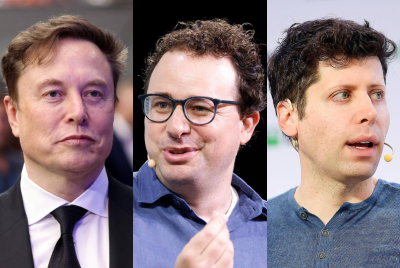
In his Truth Social post, Trump said Huang was 'currently on Air Force One' and listed the full delegation: Musk, Cook, Larry Fink of BlackRock, Stephen Schwarzman of Blackstone, Kelly Ortberg of Boeing, Brian Sikes of Cargill, Jane Fraser of Citi, Larry Culp of GE Aerospace, David Solomon of Goldman Sachs, Sanjay Mehrotra of Micron, and Cristiano Amon of Qualcomm.

Trump added that he would be 'asking President Xi, a Leader of extraordinary distinction, to "open up" China so that these brilliant people can work their magic.' He called it his 'very first request' upon arrival.
The exclusion, before Trump's reversal, had not come from nowhere. Huang and the president had previously discussed how the Nvidia CEO's presence in Beijing could invite uncomfortable scrutiny of the administration's semiconductor policies toward China. Republican hawks in Congress have sharply criticised the White House for allowing Nvidia to sell more advanced chips to Chinese buyers, and a House committee recently advanced legislation giving lawmakers 30 days to review and block such sales.
Huang had kept the door open publicly. Speaking to CNBC's Jim Cramer last week, he said, 'If invited, it would be a privilege, it would be a great honor to represent the United States.'
What Huang's Invitation Means for Nvidia's $50B China Bet
The financial stakes are enormous. Huang has publicly valued China's addressable market for AI chips at $50 billion (£39.5 billion) over the next few years and, as recently as October, described the long-term opportunity as worth 'a couple of hundred billion dollars by the end of the decade.' The China market once accounted for 13% of Nvidia's total revenue, a share that has collapsed under the weight of US export restrictions.
Nvidia's most advanced H200 processors remain blocked from entering China. The company confirmed in February that government-approved versions had not yet been cleared for sale. Chinese tech giants Huawei, Alibaba, and ByteDance have all launched their own chip design efforts to reduce dependence on American silicon.
Markets responded swiftly. Nvidia shares climbed roughly 3% on Wednesday after Huang's invitation became public, adding approximately $160 billion (£126 billion) to the company's market capitalisation. Nvidia is already valued above $5 trillion (£3.95 trillion).
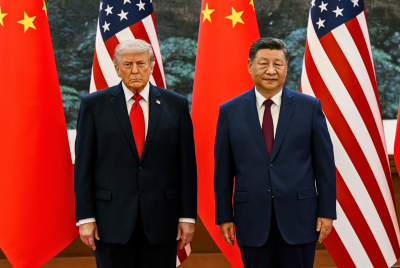
The summit with Xi, running 14-15 May, is expected to cover trade, Iran, Taiwan, and AI chip exports. Whether Huang's seat aboard the presidential aircraft translates into any loosening of semiconductor restrictions remains to be seen.
© Copyright IBTimes 2026. All rights reserved.
- Recommended For You