Donald Trump Reveals Military Is Building 'Massive' Underground Complex at White House
The president's remarks follow earlier reports of a top‑secret bunker project under the former East Wing site.

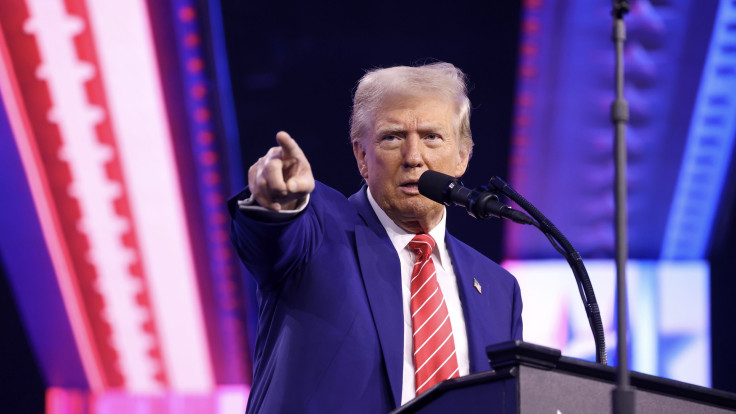
Donald Trump has claimed that the US military is currently 'building a massive complex' beneath his new $400 million White House ballroom, telling reporters on Air Force One on Sunday night that the underground facility is already under construction and progressing 'very well.'
The fallout over Donald Trump's decision last year to demolish the East Wing and replace it with a privately funded ballroom has never really settled. Preservation advocates objected to tearing down a historic section of the White House, while ethics watchdogs questioned the scale and purpose of what was billed as a glamorous venue for state dinners and high‑profile receptions. Now the president's own description of a 'massive complex' hidden below that ballroom is raising an entirely different set of questions, many of them about secrecy and security.
Donald Trump Links Underground Complex To 'Secret' Security Plans
The latest revelation came almost off‑hand, as Donald Trump fielded questions from journalists mid‑flight. Flicking through architectural renderings, he described extensive fortification measures surrounding the ballroom and whatever lies beneath it.
'Now, the military is building a big complex under the ballroom, which has come out recently because of a stupid lawsuit that was filed,' he said, without specifying who had brought the case or what exactly it challenged. He repeated the point a moment later: 'The military is building a massive complex under the ballroom, and that's under construction, and we're doing very well.'
The president highlighted what he cast as necessary hardening of the site. 'We have all bulletproof glass, we have drone-proof roofs, ceilings,' he said, adding a terse justification. 'Unfortunately, we're living in an age when that's a good thing.'
Those remarks appeared to build on comments Donald Trump made days earlier at a Cabinet meeting, where he hinted at a national security dimension to the ballroom works that was 'supposed to be secret.' At that meeting, he told officials that 'the military wanted it more than anybody' and blamed critics for exposing sensitive details. 'It was supposed to be secret, but it became unsecret because of people that are really unpatriotic saying things,' he complained.
The White House has not publicly released design plans for the subterranean facility or explained which branch of the military is leading the project. There was no immediate official response on Sunday to clarify Trump's description, and there has been no independent confirmation of the full scale or specific function of the complex he referred to, so some of the claims remain unverified and should be treated with caution.
Trump: We’re building a ballroom. They've wanted a ballroom for 150 years. I’m giving that honor to this incredible place. Right on the other side, you have construction going on which you might hear. pic.twitter.com/oIPnlZXSA6
— Molly Ploofkins (@Mollyploofkins) October 20, 2025
Ballroom Project Has Long Been Shadowed By Security Speculation
To recall, Donald Trump's ballroom scheme has been politically fraught from the outset. The decision to demolish the East Wing, once home to key offices and social spaces, was justified by the administration as a necessary overhaul to modernise the presidential campus and create a more suitable setting for high‑level diplomacy. According to the White House, the project is being bankrolled by private donations rather than taxpayer funds, a point officials have repeatedly used to deflect criticism over the cost.
Trump has argued that the ballroom will host state dinners, galas and summits with visiting heads of state, casting it as both a showpiece and a tool of soft power. In public, the emphasis has largely been on chandeliers and seating plans. Behind the scenes, however, the security element has loomed larger.
Passing it on. Via Glee Violette
— James Tate (@JamesTate121) October 23, 2025
People. Please. Let me say this loud and clear. IT WAS NEVER ABOUT A BALLROOM.
The East Wing was built in 1942 to disguise the simultaneous construction of an underground bunker and operations center, underneath it.
And just like then, the… pic.twitter.com/7Ehp9HfTKW
Earlier this year, CNN reported that the construction could include a 'top‑secret project,' citing sources who said Trump was effectively 'rebuilding a secret bunker under the East Wing'. That framing dovetails with Trump's own suggestion that a covert national security feature was embedded in the ballroom plans from the start, even if he insists it should never have been discussed in public.
None of the agencies usually associated with presidential protection — including the Secret Service and the Pentagon — have gone on record to elaborate on or endorse the 'secret bunker' reports. Without formal confirmation, it is impossible to say precisely how closely Trump's 'massive complex' language matches the classified briefings that would normally underpin such a build.
BREAKING: @PressSec announces the construction of a new 90,000 sq ft ballroom at the White House — with construction to begin in September.
— Rapid Response 47 (@RapidResponse47) July 31, 2025
Visit https://t.co/Nq7Vqlw3HO for more. pic.twitter.com/XadWWxOGON
By pinning the disclosure on a 'stupid lawsuit' and 'unpatriotic' opponents, Donald Trump recasts controversy over the ballroom's extravagance as a story about safeguarding the presidency in a dangerous era. In his telling, the bulletproof glass and 'drone-proof roofs' are not symbols of excess but markers of realism about modern threats.
The lawsuit he referenced has not been detailed publicly in these remarks, and no court filings have been released alongside his comments. If and when that case surfaces in full, it may shed light on how much of the underground complex was genuinely intended to remain out of public view and how much was always destined to leak into the political arena.
“Ballroom won’t interfere with the current building. It’ll be near it and won’t touch it which I’m the biggest fan of”
— Maine (@TheMaineWonk) October 22, 2025
- President Donald Trump in July. pic.twitter.com/IMrOYTReIZ
Until then, the picture of what is taking shape under the White House remains oddly sketchy. There is the president's insistence that the military is driving the project, the prior reporting that hints at a rebuilt bunker, and the visible, above‑ground shell of a luxury ballroom designed to impress foreign leaders. What connects those elements beneath the surface, literally and figuratively, is still largely hidden from the people who ultimately pay for the institution it is meant to protect.
© Copyright IBTimes 2026. All rights reserved.
- MOST POPULAR IN World