

'Why Now?': Daniel Newman Warns Trump's Tariff Plans Could Fuel Inflation and Delay Interest Rate Cuts
The Futurum Group CEO Daniel Newman says higher import costs could pressure consumers, businesses and financial markets as Washington weighs new trade measures
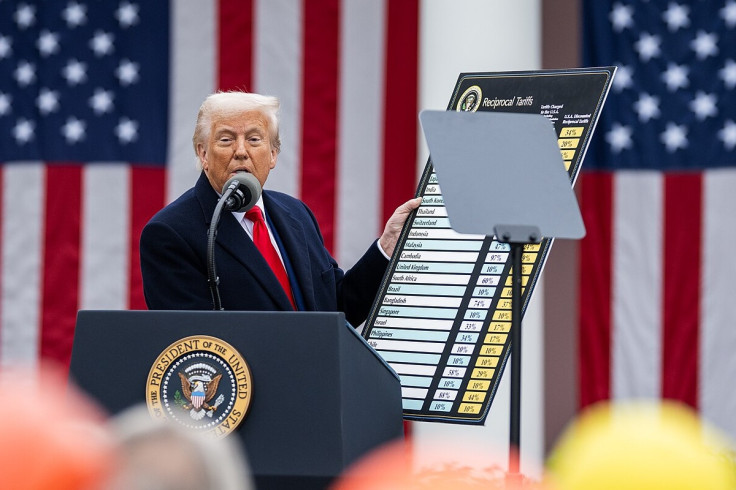
Daniel Newman, CEO of The Futurum Group, warned on Tuesday, 24 November 2026, that Trump's tariff plans could fuel inflation in the US and delay interest rate cuts.
The technology analyst questioned whether higher import duties were compatible with President Donald Trump's economic ambitions.
The Trump administration initially pursued investigations involving China, the European Union and 14 other economies.
The move follows a 20 February Supreme Court ruling that found the International Emergency Economic Powers Act did not authorise the president to impose tariffs.
Trump's Tariff Plans Could Complicate Federal Reserve Rate Decisions
Writing on X, Newman questioned the economic rationale behind the proposed tariff increases, particularly given Trump's preference for lower borrowing costs.
According to Benzinga, Newman expressed concern that renewed trade restrictions could put financial markets under pressure.
'It will make the case for higher inflation and further FED hawkishness,' Newman wrote.
Companies that pass additional import costs on to consumers could contribute to inflation, while businesses absorbing those expenses may face narrower profit margins.
It feels like we need more context on these new tariffs. Headline will drive markets down and yields up. It will make the case for higher inflation and further FED hawkishness. But knowing the President wants to see rates come down and knowing past legal challenges around tariffs… https://t.co/XJ5Hm8pkdY
— Daniel Newman (@danielnewmanUV) November 24, 2026
Persistent inflation could make the Federal Reserve more reluctant to reduce interest rates, potentially prolonging higher borrowing costs for households and businesses.
However, tariffs do not necessarily produce sustained inflation. Federal Reserve policymakers also consider employment conditions, consumer spending and broader economic indicators when determining interest rates.
Newman questioned what negotiating advantage Washington hoped to secure through additional tariffs following previous legal challenges.
'Why now?' he asked.
His warning represents an economic assessment rather than a confirmed forecast of the Federal Reserve's next policy decision.
White House Pursues Higher Tariffs Despite Republican Midterm Losses
US Trade Representative Jamieson Greer launched investigations in March under Section 301 of the Trade Act of 1974. The investigations examined foreign industrial policies, including subsidies that Washington believes disadvantage American manufacturers.
Bloomberg reported in August that Washington was considering an increase of 7.5 percentage points on Chinese imports, potentially raising Trump's second-term tariff rate to 20 per cent.
🚨 THIS IS VERY BAD FOR MARKETS 🚨
— NoName (@WhaleNoName) November 24, 2026
Trump is preparing another massive tariff offensive
- China
- The European Union
- And 14 more economies
We're talking about tariffs covering most imported products
And the market is already reacting
Nasdaq 100 futures have plunged around… https://t.co/0GxyfPUtjp pic.twitter.com/5Bj0E64qSH
In a subsequent update on 25 November, Reuters reported that Washington had proposed new tariffs affecting 14 trading partners.
Tariff ceilings for the European Union, Japan and South Korea are expected to remain at 15 per cent under existing trade arrangements. Older product-specific duties may also apply.
The proposals indicate that Republican electoral setbacks on 3 November have not substantially altered the administration's approach to trade policy.
Speaking at the B20 summit in Washington on 10 November, White House Office of Public Liaison Director Jim Goyer indicated that the administration's tariff campaign was 'just getting started'.
The proposed measures remain subject to further procedures before implementation.
US-China Trade Truce Faces Renewed Uncertainty
The prospect of higher American tariffs coincides with Beijing's efforts to preserve temporary trade concessions.
On 9 November, China's Ministry of Finance announced a two-month extension of its suspension of an additional 24 per cent tariff on American imports.
The suspension runs until 10 January 2027, while an additional 10 per cent tariff remains in place.
Reuters previously reported that negotiations over reciprocal tariff reductions, including concessions involving American agricultural products, had yet to produce a final agreement.
On 24 November, China's Ministry of Commerce announced that certain export restrictions would remain suspended until 27 January 2027.
The suspension covers dual-use items involving gallium, germanium, antimony and superhard materials.
It also includes enhanced end-user and end-use reviews for US-bound graphite shipments, although other applicable export controls may remain in force.
The extension provides temporary relief for American importers as Washington and Beijing navigate continuing disagreements over trade policy and industrial competition.
© Copyright IBTimes 2026. All rights reserved.