

Trump Signs Executive Order Directing US Treasury Department To Build 'TrumpIRA.gov' Savings Portal
TrumpIRA.gov aims to simplify retirement savings for millions of American workers lacking employer-sponsored plans
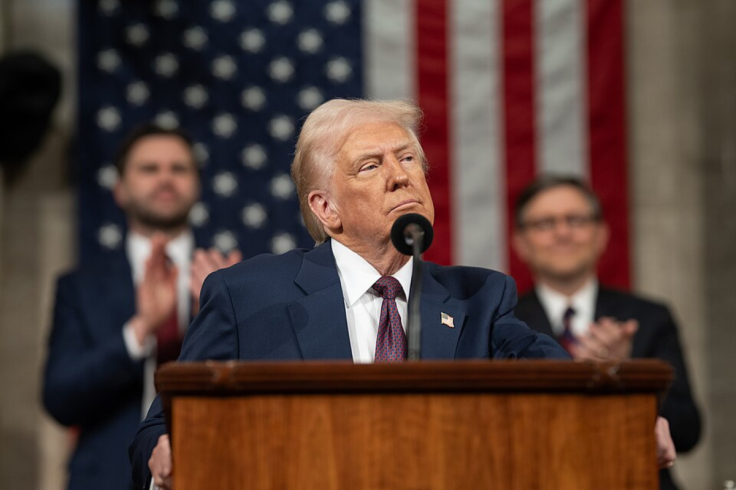
President Donald Trump has signed an executive order directing the US Department of the Treasury to establish TrumpIRA.gov, a federal retirement savings portal scheduled to launch by 1 January 2027.
The platform is intended to help workers, particularly independent contractors, the self-employed, and others without access to employer-sponsored retirement plans, compare qualifying, low-cost individual retirement accounts offered by private financial institutions.
The White House says roughly 41 million American workers ages 18 to 65 lack access to an employer-provided retirement plan.
TrumpIRA.gov is also intended to increase awareness of the federal Saver's Match, which can provide eligible low- and moderate-income taxpayers with a match of up to $1,000 a year on qualifying retirement contributions.
The Saver's Match itself was created under the bipartisan SECURE 2.0 Act of 2022. Trump's 30 April 2026 executive order directs the Treasury to promote the existing program and establish a federal platform to help workers identify eligible retirement savings options.
Who Stands To Gain From TrumpIRA.gov
The initiative is aimed squarely at workers who fall outside traditional employment structures. Independent contractors, small-business employees and those juggling multiple part-time roles often miss out on automatic payroll deductions and employer matches, two features that retirement experts say are crucial to building a nest egg.
For these workers, the barrier is rarely legal, IRAs have existed for decades but practical. Researching providers, comparing fees and choosing investments can feel daunting, especially for lower earners who assume investing is only for the wealthy.
TrumpIRA.gov is designed to cut through that confusion by highlighting accounts that impose no minimum contribution or balance requirements and cap overall net expense ratios at 0.15 per cent.
The real hook, however, is the Saver's Match. Starting with contributions made for tax year 2027, eligible lower- and middle-income taxpayers who contribute to a qualifying retirement account can receive a 50 per cent federal match on the first $2,000 they save, up to $1,000 a year.
A qualifying taxpayer who contributes $2,000 during the 2027 tax year and qualifies for the full 50 per cent match could receive the maximum $1,000 Saver's Match.
The match is claimed with the taxpayer's 2027 federal tax return, filed in 2028.
For a single filer earning $20,500 or less in modified adjusted gross income, that means a $2,000 contribution could trigger the full $1,000 top-up.
The match phases out gradually for higher incomes and is generally not included in gross income when deposited, but distributions attributable to the match are generally taxable when withdrawn in retirement.
Limits and What Comes Next
Critics point out that the scheme remains voluntary. Workers must still visit the site, open an account, fund it and keep contributing steps that many postpone even when employer plans exist. With inflation squeezing household budgets, rent and groceries often take priority over long-term saving.
The White House has offered a hypothetical example in which a 25-year-old low-income worker who saves about $165 a month and qualifies for roughly $1,000 in annual Saver's Match contributions could accumulate about $465,000 by age 65, assuming a 6 per cent annual return.
Roughly $155,000 of that total would stem from the federal match, illustrating the power of compounding over four decades.
On 7 August, Treasury and the IRS issued guidance announcing their intent to propose regulations governing the Saver's Match.
The executive order also directs Treasury to prepare legislative recommendations for Congress, including proposals concerning retirement options and portability.
For now, workers do not need to wait until 2027 to start saving; IRAs are already available through banks and brokerages, but TrumpIRA.gov could make comparison shopping far easier.
© Copyright IBTimes 2026. All rights reserved.