White House Slammed for Serving 'Day-Old Fish Stew' Executive Order to Defy Supreme Court
A constitutional clash reignites as the administration attempts to rewrite American citizenship through executive force


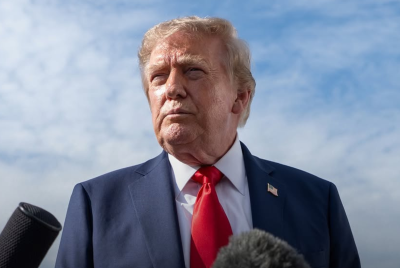
President Donald Trump issued a new executive order from the White House on Thursday attempting to bypass the Supreme Court and rewrite the rules of American birthright citizenship.
The news came after the highest court in the United States handed his administration a humiliating defeat on the exact same issue just two months prior.
New Executive Order Follows Supreme Court Ruling
In June, a Supreme Court majority rejected an earlier attempt to limit automatic citizenship for the children of undocumented immigrants and temporary visa holders.
The justices held that the Fourteenth Amendment guarantees citizenship to people born on American soil who are subject to US jurisdiction. Chief Justice John Roberts authored the majority opinion in Trump v. Barbara.
He wrote that the targeted children satisfy both elements of the Citizenship Clause and are therefore 'citizens at birth' under the Constitution. The White House has now returned with a revised executive order that sets out new categories of people the administration argues fall outside the established constitutional rule.
The executive order claims to target specific categories of children who the administration contends do not fall under the protections recognised by the Supreme Court. The Citizenship Clause was ratified after the Civil War to ensure people born in the United States would receive constitutional protection against arbitrary denial of citizenship. Whether the administration's new interpretation is constitutional is expected to be decided by the courts.
A Repackaging of Earlier Legal Arguments
Matt Ford, a writer for The New Republic, reviewed the new directive and argued that it rests on the same underlying legal theories previously rejected by the courts.
He wrote that there is no indication the justices intended for the executive branch to identify new exceptions, adding that there are 'plenty of reasons to believe that they intended to foreclose them.'
According to Ford, the administration is attempting to achieve through executive action what it failed to secure in court. Ford compared the situation to the complex collateralised debt obligations that contributed to the 2008 global financial crisis.
To explain the analogy, he wrote that banks bundled together large numbers of risky subprime mortgages, repackaged them and secured artificially high credit ratings before selling them to investors.
The underlying assets appeared stronger than they were until the financial system ultimately collapsed. Ford argued that the latest executive order relies on a similar kind of repackaging, combining previously rejected legal arguments into a narrower framework.
He described the president as an 'unscrupulous chef' serving the American public a bowl of 'day-old fish stew.' In Ford's view, the administration has mixed rejected legal theories with a handful of new provisions in an attempt to persuade the courts.
Order Targets Birth Tourism and Other Categories
The revised order specifically targets the practice commonly referred to as 'birth tourism.' It seeks to exclude children born in the United States where the administration alleges at least one parent engaged in a commercial arrangement primarily intended to obtain US citizenship for the child.
The order also addresses cases involving alleged fraud related to immigration status. Furthermore, the document covers certain commercial surrogacy arrangements involving a surrogate located within the United States.
Those provisions are also expected to face legal scrutiny if they are challenged in court. The directive extends its reach to children born to people designated as 'alien enemies.' This definition includes members of designated foreign terrorist organisations or individuals classified as specially designated global terrorists.
Whether those classifications can lawfully affect birthright citizenship remains one of the central legal questions raised by the order.
The text of the executive order does not cite specific provisions of the United States Code creating new citizenship exceptions. Instead, it relies primarily on authorities relating to terrorism designations and immigration enforcement, issues that legal experts expect will be tested in future court challenges.
© Copyright IBTimes 2026. All rights reserved.
- Recommended For You