

Tyga Faces Fraud and Breach of Contract Claims Over Beijing Nightclub Dates Allegedly Missed in 2023
Beijing Tongxing Wanxin Catering Management alleges the rapper failed to attend bookings in 2023 and seeks the claimed balance, interest and punitive damages
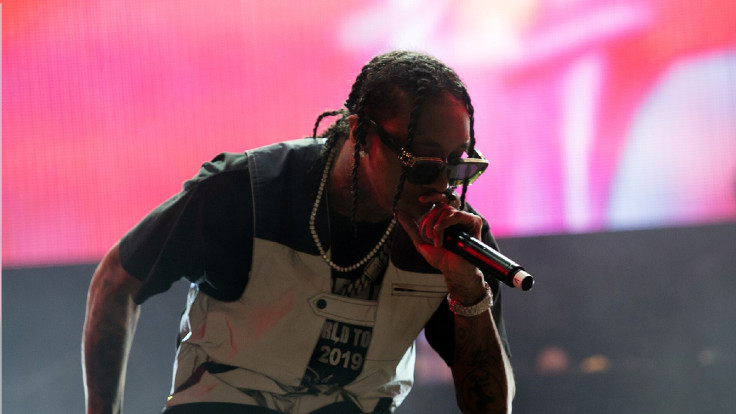
Rapper Tyga is being sued for fraud and breach of contract by a Beijing nightclub management company that claims he took payment for two 2023 appearances he never made, and is now seeking $135,000 (£101,500) in alleged unpaid fees.
The lawsuit was reported by TMZ on Tuesday, 27 October 2026, with the company seeking to recover $135,000 (€121,200 and £101,500).
Beijing Tongxing Wanxin Catering Management alleges that it paid the American rapper to appear at Club Pac Star on 4 August and 27 October 2023, but he attended neither booking. It also claims a plan to rearrange the appearances in 2024 came to nothing.
The company is requesting the alleged outstanding balance, interest and punitive damages. Those demands are allegations in a civil case, not a finding that Tyga owes the money or committed fraud.
Tyga's Beijing Nightclub No-Shows at Centre of Claim
According to court documents obtained by TMZ, the complaint names Tyga, whose legal name is Michael Ray Nguyen-Stevenson, in connection with the two scheduled engagements at Club Pac Star.
The company alleges that payment had been made in advance and that the rapper did not appear on either date. The reporting does not establish why the bookings were missed or what explanations, if any, were given at the time.
The August and October dates were separate scheduled engagements. Nothing in the published account establishes that the October appearance was organised as a replacement after the August booking fell through.
The company further alleges it was informed Tyga would reschedule for the first or second quarter of 2024. According to its account, the proposed rescheduling did not materialise.
What remains uncertain is who communicated that arrangement, how it was documented and whether the parties agreed to any amended terms. Neither TMZ nor subsequent coverage by Complex has reproduced the original booking contract.
Failure to fulfil a booking does not, by itself, establish fraud. The complaint also alleges breach of contract, but a court would need to examine the agreements and evidence before determining whether either claim has merit.
Settlement Dispute Over Claimed $145,000 Balance
The dispute also concerns what the management company describes as a settlement and partial refund. It alleges that $145,000 (€130,200 and £109,000) was owed, but that it received only $10,000 (€9,000 and £7,500) back.
On that account, $135,000 (€121,200 and £101,500) remains unpaid. TMZ reports that the company wants to recover that amount, together with interest and punitive damages.
The published reports do not specify how the settlement was negotiated or provide the wording of any refund agreement. They also do not state an amount for the punitive damages being sought.
These distinctions matter because the sum requested in a lawsuit is not a court award. The company's version of the payment history has not been tested in a reported judgment.
The reports reviewed do not include a public response from Tyga or his representatives. IBTimes UK has not independently inspected the underlying complaint, and the allegations have not been independently verified.
Previous Performance Row in UAE Resolved in 2019
The Beijing lawsuit has a parallel in an earlier contractual dispute involving the rapper, although that case does not establish anything about the current allegations.
In 2018, concert promoter Heavy Rotation sued Tyga over three proposed appearances in the United Arab Emirates. The company alleged that it had paid him $141,000 (€126,600 and £106,000) before the arrangements fell apart.
Tyga denied wrongdoing and disputed the promoter's interpretation of their agreement. According to The Blast, he also argued that the promoter had not obtained the necessary approvals for one of the venues.
The parties reached a settlement in 2019 and agreed to dismiss the case, The Blast reported in April that year. The published account did not disclose the settlement terms, and resolving a lawsuit does not amount to an admission of liability.
For the latest Beijing complaint, the key questions remain whether the scheduled appearances were covered by enforceable terms, what was agreed about rescheduling and refunds, and how the court assesses the allegations. No ruling or hearing date was identified in the reports reviewed
© Copyright IBTimes 2026. All rights reserved.