

UC San Diego Math Crisis: 1 in 8 Freshmen 'Numerically Illiterate' and Unable to Do Basic Calculations, Report Claims
Students with A-minus grades and advanced coursework reportedly struggle with third-grade arithmetic, according to university analysis
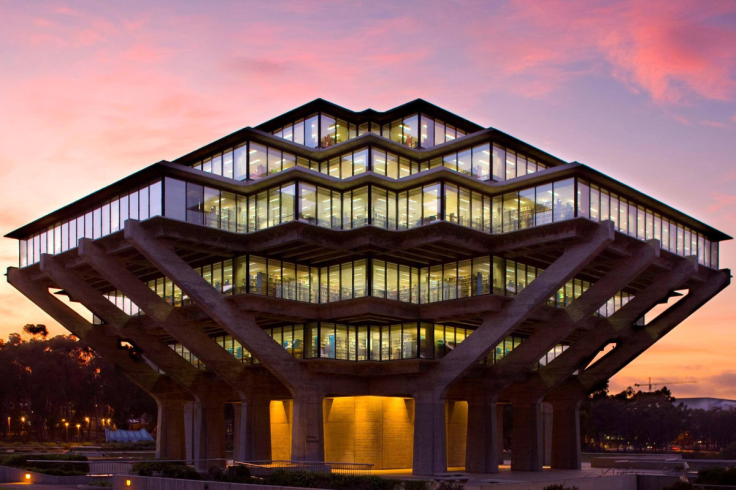
A troubling new report from one of America's leading public universities has uncovered a significant gap between students' academic credentials and their actual mathematical abilities.
The University of California, San Diego (UCSD), which is ranked sixth nationally among public universities by US News & World Report, has found that approximately one in eight incoming freshmen lack basic high school maths skills. This skills deficiency appears to be far more widespread than university administrators initially anticipated. The analysis reveals that students placed into remedial classes in 2023 demonstrated maths abilities comparable to those expected of fifth graders, according to the Wall Street Journal.
The findings cast a stark light on the current state of education and what qualifications truly indicate about a student's readiness for higher education and, ultimately, the workforce. It raises serious questions about grade inflation, academic standards, and the real-world applicability of what students have learned.
Stellar Transcripts, Startling Deficiencies
Perhaps most alarming is the disconnect between students' academic records and their actual mathematical competence. Astonishingly, among those assigned to UCSD's remedial maths programme, 94% had completed advanced high school coursework, including pre-calculus, calculus, or statistics. Many of these students had earned top grades — with an average of A-minus in their maths classes.
Yet, when subjected to basic testing, only 39% could correctly round the number 374,518 to the nearest hundred, a task typically learned in third grade. Such a fundamental skill should be routine for anyone who has completed primary education, yet the university was compelled to develop an entirely new remedial course covering middle school and primary school mathematics because so many incoming students were, as the report states, 'numerically illiterate'.
According to the UCSD report, a remedial maths tutor observed that some high school teachers tend to focus on 'life skills', relying heavily on calculators, internet resources, and prescribed formulas, rather than fostering mathematical reasoning. This approach appears to have left many students ill-prepared for even basic numeracy.
Implications Beyond the Campus
The consequences of this skills gap extend well beyond UCSD's campus. The report notes that few students requiring remedial maths go on to complete engineering degrees or other STEM disciplines. Given that more than half of UCSD's students pursue STEM fields, this presents a significant pipeline problem for future technical workers.
Students needing remediation typically take longer to finish their degrees and often rack up more debt in the process. Many decide to abandon rigorous majors altogether, thus limiting their career prospects in an economy that increasingly depends on technological expertise and quantitative skills.
This crisis is not isolated to UCSD. Nationally, the picture is equally bleak. According to the Wall Street Journal's analysis, only 22% of 12th graders scored proficient in maths on the latest National Assessment of Educational Progress, marking the lowest level on record.
How Did We Reach This Point?
The report identifies several underlying causes. One key factor was the UC Board of Regents' decision in 2020 to eliminate standardised tests from university admissions requirements. This shift resulted in universities relying more heavily on GPAs, which have become less reliable indicators of student preparedness due to widespread grade inflation.
Over the past two decades, pass rates for Advanced Placement (AP) exams have increased significantly, partly because the College Board has made the tests easier to pass. For instance, the percentage of students passing AP Calculus AB has increased by 6.3 percentage points, while pass rates for AP Chemistry and AP US History have soared by 21.9 and 23.3 points respectively.
The Wall Street Journal describes this phenomenon as 'vanity grading', where mediocre students graduate with top marks, creating an illusion of excellence that boosts school reputation but does little to ensure genuine academic competence. Such practices can mislead parents and policymakers alike, fostering a false sense of achievement while undermining the integrity of education reform efforts.
Is There a Solution?
The UC San Diego report advocates for reinstating standardised testing as part of the admissions process, arguing that it provides a more accurate measure of student preparedness. However, following the trend of making tests optional, the College Board has recently simplified the SAT — reducing its length from three hours to two and removing longer reading passages — which critics say diminishes its effectiveness as an assessment tool.
The implications extend to the workplace as well. A university degree — even from a reputable institution — no longer guarantees numerical competence. The gap between what individuals claim they can do and what they actually know is widening, with potential repercussions for employers and the economy at large. If graduates enter the workforce lacking fundamental skills, it could hinder innovation, productivity, and economic growth in the years ahead.
© Copyright IBTimes 2026. All rights reserved.
- MOST POPULAR IN World


