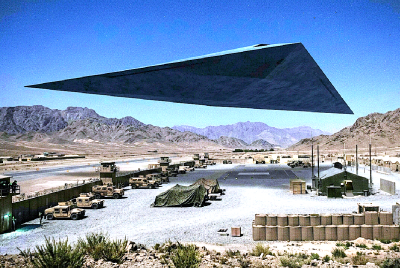
What Is Trump Hiding Behind UFO File Release? Expert Says 'Government Will Never Disclose Everything'
UFO veteran Anderson warns government may never fully disclose Trump's files

The Trump administration's release of long-anticipated UFO and unidentified aerial phenomena (UAP) files has been presented as a step towards transparency, although questions are already being raised over whether the disclosure tells the full story.
The publication of the documents, described by some commentators as a 'bombshell' release, forms part of a wider declassification effort aimed at making government records on unidentified aerial phenomena publicly accessible. Officials have framed the move as an attempt to increase scrutiny of material previously kept from public view, including files linked to broader investigations into potential extraterrestrial activity.
However, the release has also drawn scepticism from parts of the UFO research community, with concerns that key information may still remain undisclosed.
Trump Frames Release As Transparency Push
In a statement accompanying the release, Donald Trump said the files represent the first tranche of UFO and UAP records made available for public review and study.
He said: 'As for my promise to you, the Department of War has released the first tranche of the UFO/UAP files to the public for their review and study'.
Trump said the move was intended to improve openness, adding: 'In an effort for complete and maximum transparency, it was my honour to direct my administration to identify and provide government files related to alien and extraterrestrial life, unidentified aerial phenomena, and unidentified flying objects'.
He also criticised previous administrations, stating: 'Whereas previous administrations have failed to be transparent on this subject...'
Framing the release as a matter for public interpretation, he added: '...with these new documents and videos, the people can decide for themselves, "WHAT THE HELL IS GOING ON?" Have fun and enjoy!'
UFO Veteran Raises Doubts Over Completeness
Despite the administration's claims of transparency, UFO veteran Anderson has questioned whether the release provides a complete account.
Anderson, who has spent more than six decades studying unexplained aerial sightings, argues that governments have historically been reluctant to fully disclose what they know about unidentified anomalous phenomena (UAPs).
He directly questioned the extent of openness from governments, stating: 'Government will never disclose everything'.
Anderson added that there is still 'something strange' surrounding unidentified anomalous phenomena (UAPs), suggesting that the available records do not provide a complete picture of government knowledge.
Ongoing Debate Over Transparency
The contrasting positions reflect a long-running debate over secrecy in UFO investigations. While recent years have seen increased official acknowledgement of UAP research and more structured reporting processes, sceptics argue that declassified material still does not reveal the full extent of classified information.
The latest release has therefore reignited discussion over whether governments are selectively releasing documents while retaining more sensitive or unexplained records.
Supporters of the move say it represents a step towards greater accountability and public access to historical files. Critics, however, maintain that the most significant evidence may still remain undisclosed.
The Trump administration has not directly responded to claims that key information remains withheld, but maintains that the release is part of a broader effort to make UAP-related records accessible to the public.
© Copyright IBTimes 2026. All rights reserved.
- Recommended For You