

Energy Secretary Chris Wright Applauds Absolute End For Federal Wind And Solar Subsidies In Massive Green Energy Blow
Federal support for wind and solar projects faces significant changes with the end of core tax credits by 2026.
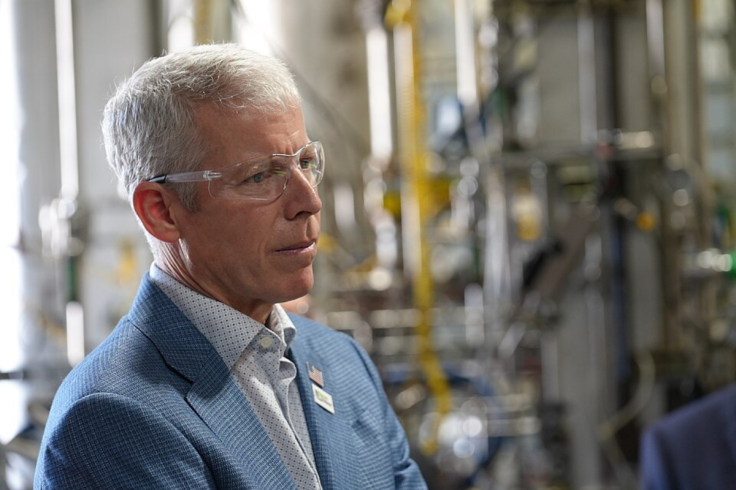
The 4 Jul 2026 deadline will end core tax credits for future US wind and solar projects, but not all federal support.
Energy Secretary Chris Wright said on 2 Jul that the Trump administration would 'end the subsidies for wind and solar' after about 35 years. The statute reaches two principal clean-electricity tax credits rather than every federal mechanism that can assist the sector.
Its timing also matters: a project that establishes construction before the cut-off can remain outside the new termination rule.
The 4 July Cut-Off Governs Two Tax Credits
Wright's statement referred to sections 45Y and 48E of the Internal Revenue Code: the Clean Electricity Production Credit and Clean Electricity Investment Credit. Public Law 119-21, enacted on 4 Jul 2025, amended both provisions to terminate them for wind and solar facilities placed in service after 31 Dec 2027, subject to a construction-date exception.
Section 45Y is a production credit for qualifying electricity, while section 48E is an investment credit tied to qualifying property and related investment. The statute defines the affected facilities as those using wind or solar to generate electricity. It therefore represents a sharp reversal from the broader technology-neutral credit structure enacted in 2022.
I'm thrilled to report that after 35 years, on July 4th, we will end the subsidies for new wind and solar projects, thanks President Trump’s Working Families Tax Cut. pic.twitter.com/OKgFYIIEF8
— Secretary Chris Wright (@SecretaryWright) July 2, 2026
Before the 2025 amendment, the Government Accountability Office said the credits were scheduled to begin phasing out after the later of 2032 or a statutory power-sector emissions threshold. The new law replaces the latter, performance-based exit path for future wind and solar projects with an earlier construction deadline.
The Department of Energy described the deadline as ending federal tax-credit subsidies for new projects 'not currently under construction.' That shorthand needs care. The statute does not prohibit construction, and it does not remove credits from every project that begins after the law's enactment.
Grandfathered Projects Face Demanding Construction Tests
Treasury and the Internal Revenue Service say the termination applies only where construction begins after 4 Jul 2026. Notice 2025-42 says a taxpayer may prove a project began before 5 Jul 2026 only through the Physical Work Test, requiring physical work of a significant nature and a continuous programme of construction.
The guidance is stricter than the previous approach. Except for a limited exception, it withdraws the five-percent safe harbour as a way to meet this deadline, meaning expenditure alone will usually not suffice. Work can take place on site or off site under a binding written contract, but the IRS says the factual record will control.
A timely project is not free of other restrictions. Public Law 119-21 disqualifies a facility whose construction begins after 31 Dec 2025 if it receives material assistance from a prohibited foreign entity. The law also limits credits for certain foreign-influenced taxpayers, increasing the importance of supply-chain documentation.
The production credit remains available for 10 years beginning when a qualifying facility is placed in service. In practical terms, a project that begins qualifying construction in time may retain access to section 45Y after 2027, provided it satisfies the applicable rules. That grandfathering point is incompatible with an immediate, universal cut-off.
Statutory Exceptions Narrow The 'Absolute End' Claim
Congress expressly excluded energy-storage technology placed at an affected wind or solar facility from the section 48E termination provision. Storage will still face its own eligibility conditions, including restrictions connected to prohibited foreign entities, but the exception appears in the text of the law.

The same Act also curtails the section 45X manufacturing credit for wind energy components produced and sold after 31 Dec 2027. Yet that provision continues until then, which further undercuts the claim that federal support for wind vanishes on 4 Jul 2026.
The law's relevant language is precise: it amends specified tax-credit sections and sets effective dates.No language in sections 70512 and 70513 purports to repeal federal agency energy-programme authorities. An assertion that all federal financial support has ended would require evidence about grants, loans, research funding, procurement, and existing awards beyond these tax changes.
DOE has separately said it cancelled or began cancelling loan obligations for wind and solar projects. That is a distinct administrative action, not the same legal event as the 4 Jul tax-credit deadline. The agency's 2 Jul statement did not identify a study measuring the effect of the credit terminations on household electricity bills.
Primary-Energy Figure Requires Electricity-System Context
DOE said wind and solar represented roughly 3% of US primary energy consumption in 2025. The Energy Information Administration's 2025 data support the broad order of magnitude because primary energy includes transport, industry, and heating as well as electricity.
That measure should not be confused with power-sector output. EIA says wind provided about 11% and solar about 7% of US utility-scale electricity generation in 2025, or 17% together, while small-scale solar added further output. The figures measure different things, rather than presenting contradictory accounts.
Wright argued that intermittent generation raises system costs and electricity prices. The government statement cited no underlying price analysis, and the statute itself does not establish a quantified consumer-bill effect. The immediate legal consequence is clearer than the market outcome: it brings forward the loss of major federal tax credits for projects that miss the construction deadline.
The law is a consequential retreat from the 2022 clean-electricity incentives, but its exceptions and grandfathering rules make an 'absolute end' a political description rather than a literal one.
© Copyright IBTimes 2026. All rights reserved.