August 2026 Stimulus Check Update: IRS Debunks $2,000 Tariff Refund Direct Deposit Rumours
The IRS has confirmed that there is no new August 2026 stimulus check on the way, despite viral claims of a $2,000 'tariff refund' tied to Donald Trump's proposals..

A widely shared claim that an August 2026 stimulus check worth $2,000 is about to drop into Americans' bank accounts has been firmly knocked down by US tax authorities, who say no new federal payment has been approved and no such deposits are scheduled.
As of 30 July, the Internal Revenue Service confirms there is no nationwide fourth stimulus programme on its books, and warns that the now-viral promises of 'tariff refund' windfalls or surprise IRS direct deposits are not grounded in any official announcement.
After weeks of confusion online, where videos and posts have breathlessly promised a fresh round of government cash, often framed as a 'tariff dividend' linked to Donald Trump's trade policy.
For anyone who lost track after the pandemic, the IRS has quietly shut the door on that period: its own Economic Impact Payments page is now labelled historical material and records that all first, second and third Covid-era stimulus payments have already been issued. The old Get My Payment tool that millions used to track those cheques has been retired as well.
August 2026 Stimulus Check Rumours Meet IRS Reality
The current wave of speculation around an August 2026 stimulus check has latched onto a genuine political idea that has not yet made it off the drawing board.
Trump, who has repeatedly flirted with using tariff revenue as a funding stream, has talked up the notion of sending money back to households in the form of 'tariff dividend' cheques.
He first teased the concept in a series of Truth Social posts in November 2025. The following month, his economic adviser Kevin Hassett went further on CBS's Face the Nation, saying that 'in the new year, the president will bring forth a proposal to Congress to make that happen.'
In February, Trump said that he was looking at the dividend cheques 'very seriously,' adding: 'I haven't made the commitment yet, but I may make the commitment.'

That is where the facts stop. No bill has passed Congress, no tariff dividend programme has been enacted, and nothing resembling a federal August 2026 stimulus check has been scheduled.
The IRS has not published a payment calendar for a fourth round of Economic Impact Payments and has made clear that the pandemic scheme is over.
Put bluntly, a proposal is not a payment. At the moment, the much-discussed tariff dividend exists as a political talking point, not as money heading for anyone's bank account.
Who Would See Any Trump Tariff Refund and Who Would Not?
Supporters of the tariff dividend concept have tended to pitch it as relief for 'working-class American families'. Even on its own terms, though, that would still have to go through the usual grind of lawmaking.
Any serious attempt to turn it into a real programme would need explicit rules on who gets what, with income thresholds, treatment of dependants and filing status, and a method for distributing the money. None of that has been written into law.
It is not only Republicans floating tariff-related payments. On Capitol Hill, Democratic Representative Henry Cuellar has introduced a measure called the American Consumer Tariff Rebate Act, which would provide more than $230 billion in one-off payments.
Senator Martin Heinrich has put forward a parallel proposal in the Senate. Both ideas underline that there is political appetite to claw back some of the cost that tariffs have pushed onto consumers, but again, neither has crossed the line into an enacted, funded programme.
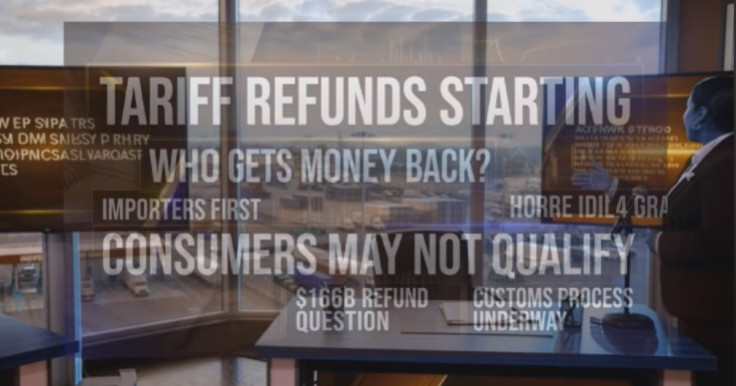
Meanwhile, there is one group that is seeing real money from tariff disputes, and it is not ordinary shoppers.
Following a Supreme Court ruling on 20 February 2026, involving tariffs imposed under the International Emergency Economic Powers Act, US Customs and Border Protection now faces returning about $166 billion to businesses and importers. Those are targeted refunds to companies that directly paid the duties, not a stealth stimulus scheme for households.
Consumers who paid higher prices in shops because those tariffs were passed down the supply chain are not in line for direct refunds through that process.
The uncomfortable reality is that they absorbed the cost in the form of more expensive goods, and there is no mechanism in that court-driven refund wave to compensate them.
How To Separate an IRS Refund From an August 2026 Stimulus Check
Part of the confusion stems from the basic fact that lots of Americans are always waiting on some kind of payment from the IRS. A standard tax refund, which millions legitimately receive each year, is easily muddled in online chatter with the notion of a new stimulus cheque or a tariff dividend.
On that front, the IRS guidance is unambiguous. If you are simply waiting for a regular tax refund, you should be using the 'Where's My Refund?' tool, which is still live and updated. That is a completely different system from the now-defunct Get My Payment tool that once tracked Covid-era stimulus rounds.
As for August, there is no approved federal stimulus check for August 2026, no official IRS timetable for any fresh Economic Impact Payments and no operational Trump tariff dividend scheme. Viral clips promising automatic $2,000 deposits and guaranteed windfalls are, at best, jumping several political steps ahead of reality. At worst, they are exploiting people's financial anxiety.
© Copyright IBTimes 2026. All rights reserved.
- Recommended For You