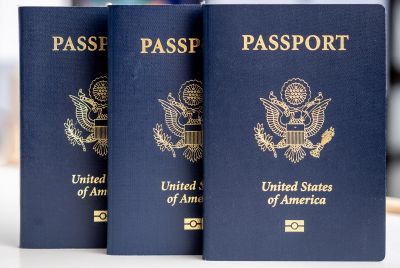
Unpaid Child Support? US Can Now Revoke Passports Over Debts as Low as $2,500
Thousands of Americans could lose passport privileges under expanded child support enforcement.

The US State Department is expanding enforcement of a federal child support policy that allows authorities to revoke or deny passports for parents with unpaid child support debts. Officials said the expanded measures will begin this week and could eventually affect thousands of American passport holders.
Under US law, individuals owing more than $2,500 (about £1,800) in overdue child support can already be denied a passport renewal or new application. However, the State Department told the Associated Press the policy will now be enforced more aggressively, including revoking some active passports already in circulation.
Officials said the first phase will target approximately 2,700 people owing at least $100,000 (about £74,000) in unpaid child support, with broader enforcement expected once updated state data is processed.
Who Can Lose Their Passport
The enforcement system operates through coordination between the Department of State and the Department of Health and Human Services (HHS). State child support agencies certify individuals who exceed the federal arrears threshold, after which the State Department can deny or revoke passport privileges.
The legal authority for the programme comes from a 1996 federal law, although officials acknowledged the policy has historically been enforced inconsistently. Until now, the programme mainly affected people applying for a new passport or attempting to renew an existing one.
In coordination with @HHSGov, @StateDept is holding parents who owe significant child support accountable by revoking their passports. If you owe more than $2,500 in child support, arrange payment now to the relevant state child support enforcement agency.https://t.co/wvmM4lZ0Ta
— Department of State (@StateDept) May 7, 2026
In coordination with @HHSGov, @StateDept will revoke U.S. passports of those who owe significant child support debt. Anyone owing child support debt should arrange payment now with the relevant state child support enforcement agency to prevent passport revocation. If outside the… pic.twitter.com/dgSZcdBnjU
— TravelGov (@TravelGov) May 8, 2026
The U.S. will start revoking passports this week for parents who owe $100,000 or more in child support and soon will expand the policy. https://t.co/dEC8CFithF
— The Associated Press (@AP) May 7, 2026
Under the expanded approach, authorities said HHS will begin supplying broader records of people with qualifying debt, allowing the State Department to revoke active passports linked to unpaid child support obligations.
Once a passport is revoked, it can no longer be used for international travel until the debt is resolved through the relevant state child support agency. For Americans already overseas at the time of revocation, officials said emergency travel documents may be issued through US embassies or consulates to allow return travel to the United States.
Government Expands Existing Enforcement Programme
In a statement, Assistant Secretary of State for Consular Affairs Mora Namdar described the move as a 'commonsense practice' intended to improve compliance with child support obligations.
Federal officials said the programme has previously been used as a financial enforcement tool for unpaid child support. According to the State Department, states have collected approximately $657 million (about £484 million) in overdue payments since enforcement efforts intensified in 1998.
Officials also said hundreds of parents reportedly resolved outstanding debts after reports earlier this year indicated the government planned to expand passport revocations.
The State Department stated that individuals whose passports are revoked would be notified that their documents could no longer be used for travel. Eligibility for a new passport would generally only be restored after debts are resolved with the relevant state child support agency.
The department also encouraged Americans with substantial unpaid child support debt to contact state agencies and arrange payment plans before enforcement action is taken.
Concerns Over Travel and Employment
Supporters of the policy argue passport restrictions are an effective way to encourage compliance with court-ordered child support payments. Federal officials said the programme is intended to strengthen enforcement of existing law and support families owed unpaid maintenance.
Calling it now: they will extend this to those with student loans, unsecured consumer debt, etc. as more Americans decide they’d rather escape the plantation than pay up. They can already do this if you owe a large sum to the IRS. A big, beautiful Iron Curtain.
— War Pigs (@WarpigsPod) May 7, 2026
This isn’t new, it’s been federal since 1996.
— Jess (@Cocogrey2015) May 7, 2026
Ummm... This isn't news. If a parent owes $2500.00 or more in reported back child support then they already can't get a passport.
— The Last Squatch (@TheLastSquatch) May 8, 2026
It's been a law on the books for quite awhile 🤷🏻♂️
Critics, however, have argued that the relatively low $2,500 threshold could affect lower-income individuals who rely on international travel for work opportunities or family obligations. Some legal observers have also questioned whether broader passport revocations could create complications for Americans living or working abroad.
For now, the State Department said enforcement would continue under existing federal law, with additional revocations expected as more state data is processed.
© Copyright IBTimes 2026. All rights reserved.
- Recommended For You