USS Gerald R. Ford Fire Triggers Navy Probe Into Whether Sailors Sabotaged Ship To End 11-Month Deployment Amid Iran War
A prolonged deployment and systemic issues may have contributed to the fire aboard the USS Gerald R. Ford, now under investigation for possible sabotage.
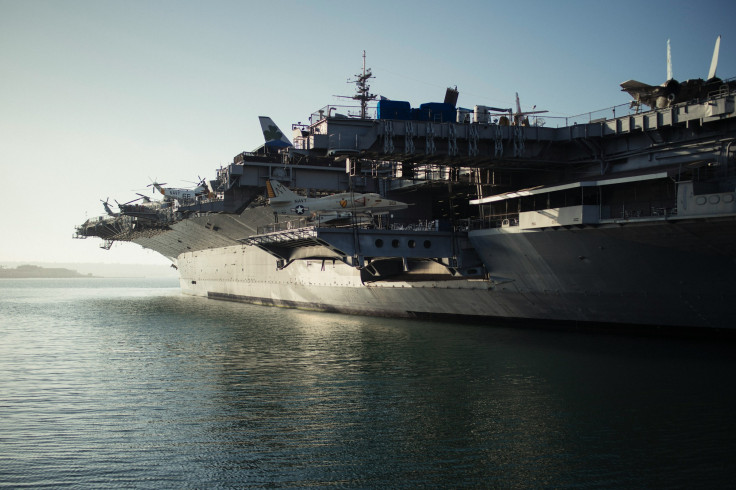
The US Navy is formally investigating whether sailors aboard the USS Gerald R. Ford deliberately started the fire that tore through the aircraft carrier on 12 March 2026, a blaze that took more than 30 hours to extinguish and left over 600 crew members without beds, as the warship limps toward Greece after nearly 11 consecutive months at sea.
The fire, which originated in the ship's main laundry spaces while the carrier operated in the Red Sea in support of Operation Epic Fury, injured at least two sailors, with a third later medevaced for further care. US Central Command confirmed the incident was 'not combat-related and is contained,' but has declined to specify the cause, a gap that investigators are now working to fill.
A Deployment Stretched Beyond Its Limits
The Ford left Norfolk for a scheduled deployment to US European Command, but the mission changed dramatically in October 2025 when Defence Secretary Pete Hegseth ordered it to the Caribbean to support operations against Venezuela under Operation Southern Spear.
After the mission that ultimately resulted in the capture of Venezuelan leader Nicolás Maduro, the crew was told, in the second week of February, that they would be home by early March. Less than 12 hours later, the order changed again: the carrier was redirected to the Mediterranean and then to the Red Sea for the US-Israeli war against Iran.
Vice Chief of Naval Operations Admiral James Kilby told the Senate Armed Services Committee that the Ford was expected to reach an 11-month deployment, a figure that would make it the longest continuous carrier deployment since the Vietnam War. The current post-Vietnam record is held by the USS Abraham Lincoln at 294 days. The Ford departed 262 days ago as of 12 March; as NPR reported on 17 March 2026, by early May the deployment could approach 330 days, rivalling wartime records set in the Gulf of Tonkin.
Chief of Naval Operations Admiral Daryl Caudle had warned explicitly at the Surface Navy Association's annual symposium in January that such extensions were damaging. 'I am a big non-fan of extensions,' Caudle told reporters including The War Zone. 'Number one, I'm a sailors-first CNO. People want to have some type of certainty that they're going to do a seven-month deployment.' He added: 'When it goes past that, that disrupts lives. It disrupts things like funerals that were planned, marriages that were planned, babies that were planned.' Those objections were overruled.
Rear Admiral Paul Lanzilotta, commander of Carrier Strike Group 12, offered a public statement that acknowledged the psychological toll. 'Fatigue accumulates and time away from home weighs on sailors,' Lanzilotta said in a February statement. 'Our responsibility as leaders is to ensure they are supported — with reliable shipboard services, clear communication, and consistent engagement.' A parent of a sailor aboard the Ford told NPR after the fire: 'They are tired. The fire obviously impacted morale, further degrading it after their last extension.'
The Fire, the Damage, and the Sabotage Theory
At approximately 12 March 2026, fire broke out in the Ford's main laundry spaces. The official US Naval Forces Central Command statement, published the same day from Manama, Bahrain, confirmed two sailors were receiving treatment for non-life-threatening injuries, that there was no damage to the propulsion plant, and that the ship remained 'fully operational.' The statement did not identify a cause.
In practice, the damage was significantly more severe than that statement indicated. Navy Times reported on 17 March that the blaze spread through ventilation systems and destroyed sleeping quarters so badly that over 600 sailors were forced to sleep on floors and tables. The Navy rushed in replacement mattresses pulled from the future USS John F. Kennedy, which is still under construction. Dozens more crew members reportedly suffered smoke inhalation, though the Navy's public figures were limited to three confirmed casualties.
The investigation, which Greek media outlet Kathimerini and others cited as including a formal arson inquiry, is examining whether any crew member deliberately started the fire to force a port call and potentially end the deployment. Greek City Times reported on 18 March that this line of inquiry had been confirmed by sources with direct knowledge of the planned port call in Crete. The US Navy has not officially confirmed the arson angle, maintaining only that the cause is 'under investigation.' The possibility of deliberate sabotage is one theory; the fire could equally have been accidental.
Iran's state broadcaster, citing a source in the central headquarters of the Iranian Armed Forces, separately alleged that American servicemen started the fire deliberately to avoid continuing operations against Iran. That claim should be treated with caution: it comes from a state adversary with clear motivation to amplify dissent within US forces. However, multiple independent Western news organisations have since confirmed separately that the sabotage theory is being formally examined by US investigators, independent of Iranian framing.
A Ship Already Under Strain
The sabotage investigation did not emerge in a vacuum. For months, the Ford had been exhibiting signs of compounding systemic and human strain that are now inseparable from the context of the fire inquiry.
The most documented problem, reported extensively through FOIA documents obtained by NPR in January 2026, is the failure of the ship's Vacuum Collection, Holding and Transfer (VCHT) sewage system. The system, which the General Accountability Office reported as early as 2020 was undersized and poorly designed, has been averaging one maintenance call per day throughout the current deployment.
The Ford has called for outside assistance 42 times since 2023, with 32 of those calls occurring in 2025. An internal engineering email reviewed by NPR documented 205 system breakdowns in a four-day period. T-shirts and a four-foot piece of rope were among the objects found clogging the narrow pipes.
The NPR report of 17 March quoted John Cordle, a recently retired Navy captain and human factors engineer who has studied shipboard fatigue, drawing explicit parallels to the 2025 USS Harry S. Truman deployment in the Red Sea, which saw an F/A-18 lost at sea. 'There's a difference between the can-do attitude and the just-get-it-done attitude,' Cordle said, noting that exhausted crews take shortcuts.
If investigators confirm deliberate arson, the USS Ford case would not be without precedent in the modern US Navy. In July 2020, a fire broke out aboard the Wasp-class amphibious assault ship USS Bonhomme Richard in San Diego harbour, injuring 63 sailors and gutting the vessel beyond repair. A subsequent investigation determined that inadequate training and readiness contributed to the fire response. The Navy ultimately scrapped the ship. In that case, arson by a sailor was later proven: Seaman Apprentice Ryan Mays was charged, though acquitted at court-martial in 2022.
The most expensive warship ever built, deployed longer than almost any carrier since Vietnam, now sits at the centre of a sabotage inquiry that asks the hardest possible question about what 11 months at sea does to the people ordered to stay there.
© Copyright IBTimes 2026. All rights reserved.
- MOST POPULAR IN World