

US Slips to 29th Place as Global Corruption Concerns Deepen
America now trails the Bahamas, Uruguay and Lithuania in humiliating slide to worst position since 2012.

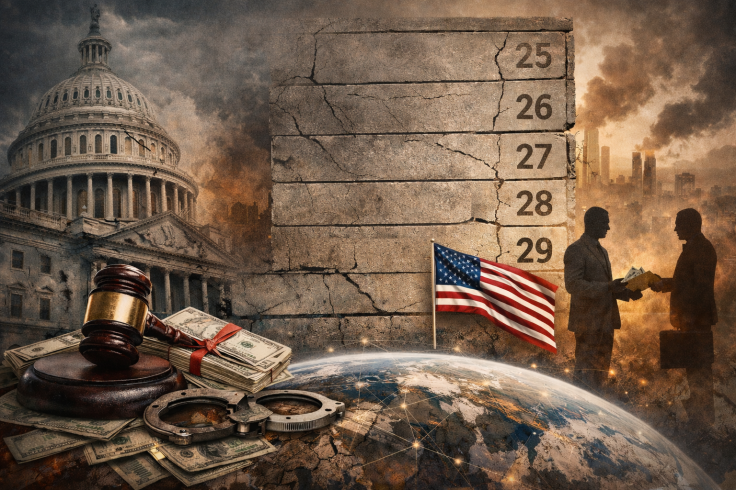
The United States has slumped to 29th place in global corruption rankings, its worst performance since 2012, trailing smaller economies including the Bahamas, Uruguay, and Lithuania in a humiliating slide that campaigners say reflects a collapse in trust in American institutions.
The latest Corruption Perceptions Index from Transparency International scored the US at just 64 out of 100, down from previous years and tied with a Caribbean tax haven most Americans couldn't find on a map.
For a nation that lectures the world about democratic values, it stings. And the trend shows no sign of stopping. Transparency International warned it's 'very concerned about the situation in the United States' as the Trump administration pauses investigations into corporate foreign bribery and weakens enforcement mechanisms that once kept questionable behaviour in check.
How the Mighty Have Fallen
Twenty-ninth. That's where America stands now amongst 182 nations measured by perceived public-sector corruption.
Behind Barbados. Behind Lithuania. Level with the Bahamas.
The ranking isn't based on documented corruption cases. It measures perception — what independent experts and businesspeople think when they look at a country's public sector. But here's the thing. Perception drives investment. Drives confidence. Drives whether people believe the system works.
And right now, fewer people believe it does.
The score has been sliding for years, but recent policy shifts have accelerated the decline. The Trump administration curtailed enforcement of the Foreign Corrupt Practices Act, the main tool for prosecuting corporate bribery abroad. Investigations into American companies paying off foreign officials? Paused. It weakened the Foreign Agent Registration Act, making it harder to track foreign influence operations. Critics say that sends a message: questionable behaviour gets a pass.
Anti-corruption advocates aren't mincing words. Soft enforcement, they argue, normalises the behaviour you're supposed to be policing. When companies see prosecutors backing off, they take note. So do investors trying to decide where to put their money.
There's also the foreign aid cuts. Programmes that supported civil society and transparency efforts globally have been slashed. The worry? America loses credibility when it stops funding the very systems it claims to champion.
None of this proves widespread corruption is happening. But it shapes how the system looks from the outside. And in a perception index, that's everything.
UK and Canada Slide Too
Britain isn't faring much better. It scored 70 — its lowest ever — and sits in 20th place despite more than a decade of steady decline.
Mega donors. Dodgy appointments. Political scandals that won't quit. The COVID-19 contracts controversy, the ongoing rows over lobbying and honours lists. Trust is eroding there too, though British campaigners insist the UK still maintains stronger institutional safeguards than many nations further down the rankings.
Canada's dropped as well, though Transparency International didn't provide details. The pattern's clear, though. Democracies across the West are struggling with the same problems: big money in politics, slow oversight, and rules that bend depending on who's asking.
Some analysts reckon the rankings reflect a broader democratic malaise rather than uniquely American failures. Maybe. But that's cold comfort when Uruguay outranks you.
Denmark Still Winning, But No One's Clean
Denmark topped the index for the eighth year running with a score of 89. Finland and Singapore aren't far behind.
Strong institutions. Clear rules. Enforcement that doesn't waver depending on political winds. That's the formula.
But even high scorers aren't corruption-free. Transparency groups warn that private-sector misconduct and illicit financial flows still slip through, even in the cleanest countries.
The global average score fell to 42, its lowest level in over a decade. Most countries, Transparency International said, are failing to keep corruption under control.
For the US, though, the question isn't whether everyone's struggling. It's whether a country that positions itself as a model for democratic governance can afford to keep sliding whilst smaller nations climb past.
Right now, the answer looks uncomfortable.
© Copyright IBTimes 2026. All rights reserved.