Is This The End For Donald Trump? POTUS Allegedly 'Cannot Recover' As Approval Ratings Sink Amid Iran War Crisis
As bombs fall abroad and approval sinks at home, Donald Trump is battling not just his enemies, but the narrative closing in around him.
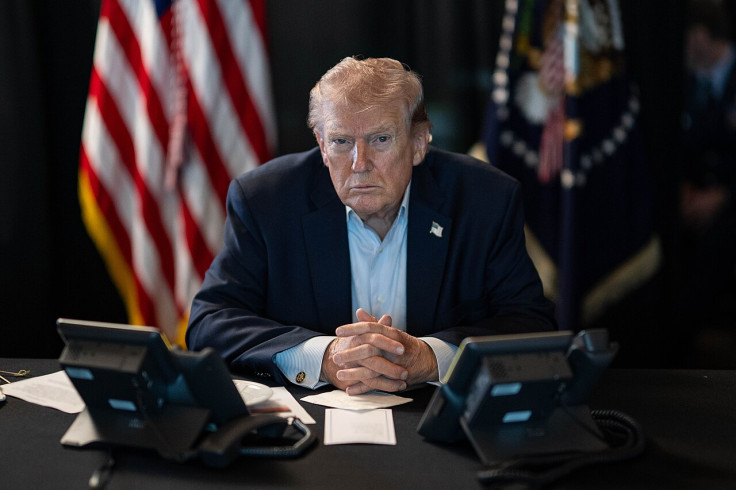
Donald Trump is facing what one long-time observer calls a 'political catastrophe' as his approval ratings plunge and the war in Iran deepens, according to remarks made on the Inside Trump's Head podcast and a related Substack post on 18 March 2026.
Journalist and author Michael Wolff, who has tracked Trump's rise and presidency for years, warned that the US president's position in his second term has become so precarious that 'he's not going to be able to recover.'
The warning came after a bruising few days for the White House. For starters, a New York Times poll published on Tuesday, 17 March, put Trump's approval at minus 14 points, a sharp deficit for a sitting president attempting to project control during an overseas conflict.
At the same time, his administration has been hit by a series of internal shocks, including high-profile firings and the disclosure that his chief of staff, Susie Wiles, has been diagnosed with cancer. Layered on top of a stagnant economy and simmering domestic unrest, the Iran war has turned what Wolff describes as a 'political crisis' into something closer to freefall.
Donald Trump Ratings Slide As Iran War Dominates
On the podcast, Wolff did not sound surprised by Trump's slump so much as convinced that an already fragile situation had tipped over the edge.
'I think the wheels are coming off in so many ways,' he told co-hosts, before stressing that the trouble was visible even before the first strikes in Iran. He cited unrest in Minneapolis, an economy that 'won't budge,' and Trump's continuing insistence on putting his name on buildings as examples of how badly calibrated the president's political instincts have become.
Then he turned to the data. 'I mean, his own numbers, terrible. Sinking. Sinking fast,' Wolff said of the New York Times survey. At minus 14, Trump is not merely underwater; he is running out of political oxygen at a moment when US presidents traditionally seek to rally the country around a foreign policy crisis.
Presidents often receive at least a short-lived bump in support at the outset of major military operations. Wolff's point is that Trump appears to be experiencing the opposite: the Iran war amplifies doubts rather than muting them. 'And then the war comes along, so we're gonna go from a political crisis to a political catastrophe,' he predicted.
In Wolff's view, the timing is crueller still because Trump is deep into his second term. 'We're getting to the point because it's the second term in which he's not going to be able to recover,' he said, arguing that the normal tools for political reset are no longer available to a president who has already been in office for years and is now defined, in the public mind, by accumulated controversies.
Nothing in Wolff's analysis has been independently verified beyond the publicly reported polling and personnel changes, and his prediction of political collapse remains his own assessment rather than an established fact. As with all forward-looking political commentary, it should be treated with a degree of caution.

Inside The White House: Firings, Illness And An 'Unravelling' Trump Team
If the polls are one problem, Wolff suggests the people around Trump are another. In an accompanying Substack essay, he zeroed in on recent staff moves as a sign that the second Trump administration is starting to resemble the most volatile days of his first.
He pointed to the sacking of Kristi Noem from her post as secretary of homeland security as emblematic of what he calls a looming 'return to the 'revolving door' of the first administration.' Rather than a carefully planned reshuffle, Wolff portrays it as another spur-of-the-moment personnel decision driven by Trump's frustrations.
The news that chief of staff Susie Wiles has cancer added an unsettling note of vulnerability at the core of Trump's operation. Wolff argued that the combination of abrupt firings and sudden health challenges could mean the administration may 'begin to unravel,' as institutional memory and internal discipline are eroded.

According to Wolff, Trump's hiring and firing habits lie at the heart of this instability. 'Trump's decisions to fire people are based on his roiling gut that they have become 'a problem,' if not 'the problem' rather than strategic or performance-related reasons,' he wrote. 'It's about the president changing the channel, basically.' It is a harsh assessment and one the White House has not publicly addressed in detail. There has been no formal rebuttal from Trump or his senior aides to Wolff's latest claims.
The questions about judgment are not confined to HR. Wolff also seized on Trump's recent claim that a former US president had privately told him they regretted not attacking Iran a remark that quickly ran into trouble when all four living former presidents denied having such a conversation with him.
At the time, Trump declined to name the ex-president he claimed to have spoken to, saying he did not want to 'embarrass' them. With no supporting evidence and blanket denials from the only possible candidates, Wolff concluded that 'of course the president is just making s--- up.'
For Wolff, this episode is not a one-off gaffe but a window into how Trump thinks. 'The absurd assertion that one of his Oval Office predecessors would be game for a catch-up, let alone that they would tell him they wished they had done what he's doing in Iran, is a tragically transparent attempt to project success and secure validation,' he wrote, adding that Trump 'simply does not believe things need to be real to be true.'
Whether voters agree is another matter. Poll numbers can move, wars can change course, and presidencies have survived periods of acute unpopularity before. For now, though, if Wolff is right, the president is trying to wage a foreign war and a political one at the same time, while the ground under his own feet begins to give way.
© Copyright IBTimes 2026. All rights reserved.
- MOST POPULAR IN World