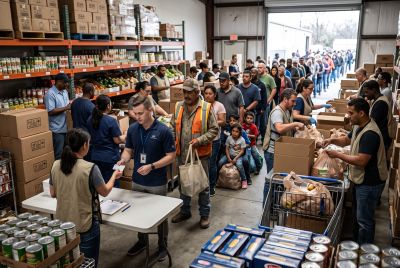
Over 700,000 Kids Cut Off From Food Aid in 12 States as Trump's 'Big Beautiful Bill' Bites
New legislation leads to drastic reductions in child food assistance across the US, with Arizona and Texas hit hardest.

An alarming number of vulnerable children across the United States are suddenly losing access to the food support they rely on. In the months after the 'One Big Beautiful Bill Act' took effect, more than 700,000 kids were dropped from food stamp programmes in the twelve states that have so far published their numbers.
Signed by President Donald Trump on 4 July 2025, the sweeping new law has caused national welfare enrolments to shrink drastically. Researchers warn this figure underestimates the true crisis, as many regions do not publicly disclose their child caseload metrics.
Unprecedented Reductions In Arizona And Texas Amid Rising Unemployment
A recent analysis released on Wednesday by the Center on Budget and Policy Priorities highlights the severity of these drop-offs. Researchers from the non-partisan group found that exactly 728,492 children lost their SNAP benefits between July 2025 and April 2026. To put that in perspective, children make up almost half of the 1.6 million total people removed from the system during those months.
The numbers also show that these steep drops are happening in areas where local economies are already struggling. Joseph Llobrera, the author of the report, noted the geographical disparities by stating, 'Nowhere has the SNAP decline been more alarming than in Arizona.'
Arizona authorities removed more than 200,000 children from their welfare registers. This represents a 55 per cent reduction in caseloads, occurring concurrently with rising state unemployment rates. Such conditions actively contradict suggestions that the benefit declines reflect an improving local economy.
Historic £148.8 Billion Benefit Cuts Shift Costs Onto States
Other populous states are mirroring this downward trajectory in child nutritional aid. Texas witnessed a reduction of 253,000 children, while Louisiana shed 79,000 minors from its protective rolls. Massachusetts recorded nearly 50,000 fewer children receiving benefits, translating to a 15 per cent drop in merely eight months as unemployment climbed.
The main reason behind these widespread removals is a historic drop in federal funding. The law requires a huge reduction in the programme's budget through 2034, which adds up to roughly £148.8 billion ($186 billion). This marks the largest financial reduction to the assistance programme in its history.
Consequently, the new law shifts a large proportion of operational and benefit costs directly onto individual states. Policy experts observe that this financial burden compels local agencies to implement stringent bureaucratic hurdles. These administrative barriers are inevitably pushing eligible families out of the system.
New data reveals that 700,000 children have been kicked off of SNAP food assistance since Trump's budget bill gutted SNAP funding. pic.twitter.com/e6j77cfPVR
— Headquarters (@HQNewsNow) May 27, 2026
Wider Ripple Effects Jeopardise School Meals And Summer Feeding
The fallout from these policy changes goes far beyond families simply losing their 'grocery money'. Once kids are dropped from the SNAP registry, they immediately lose their guaranteed spot in free school meal and summer EBT programmes. The Congressional Budget Office estimates that 96,000 children each month will lose access to school dining initiatives.
Advocates are sounding the alarm regarding the long-term physical and educational effects on affected demographics. Erin Hysom, a senior child nutrition policy analyst at the Food Research & Action Center, expressed deep concern over the cascading consequences. 'Children's learning will be disrupted and their health will be jeopardized,' she explained.
The analyst further emphasised the universal nature of this food assistancecrisis. She warned, 'It's really going to be devastating. Every state will be affected.'
In response, the Center on Budget and Policy Priorities is urging Congress to intervene. The organisation advocates for a mandatory delay of the law's cost-shifting provision by a minimum of two years. Such a pause would prevent further massive losses in child nutrition access while lawmakers reassess the broader impacts.
© Copyright IBTimes 2026. All rights reserved.
- Recommended For You