

Why Did the FAA Issue a Nationwide Ground Stop on Friday and How Many Flights Were Cancelled Saturday?
A four-hour aviation shutdown exposed how quickly a technical failure can disrupt travel across an entire country
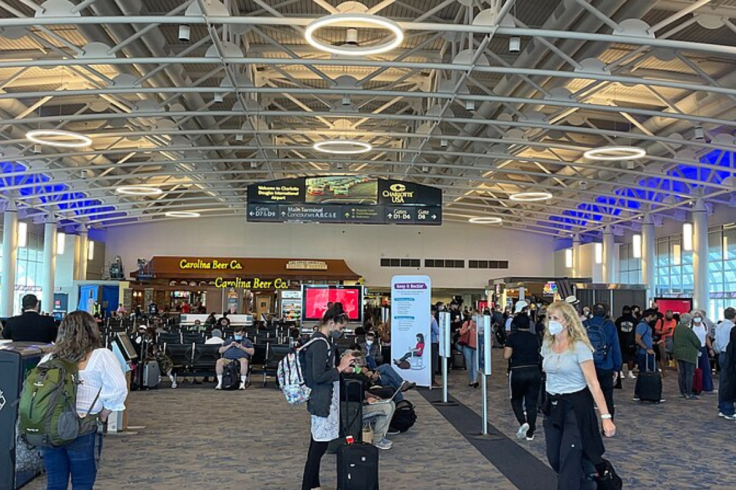
An FAA ground stop halted departures across the United States on Friday, 13 November, after communications failures affected air traffic control systems. By 6 a.m. Eastern Time on Saturday, FlightAware had recorded 3,374 flight cancellations and 1,008 delays involving US airports. Although the restriction ended Friday evening, airlines were still recovering from the disruption.
Friday's toll reached 9,132 cancellations and 7,030 delays, according to figures published early Saturday. Those totals cover flights within, into or out of the United States. They do not show how many disruptions resulted solely from the nationwide ground stop.
Why Did the FAA Issue a Nationwide Ground Stop?
Transportation Secretary Sean Duffy said the technical instability began at 3:36 p.m. Eastern Time. At approximately 3:54 p.m., the Federal Aviation Administration (FAA) issued a nationwide advisory instructing departing aircraft to remain grounded for safety reasons.
The FAA cited intermittent telecommunications outages affecting radar and communications at air traffic control centres. Aircraft already airborne continued under established safety procedures, while inbound international flights were handled individually.
Duffy blamed overloaded routers and switches within an ageing network, saying they had produced inconsistent information for controllers. Newer equipment had remained operational, he said, urging Congress to provide more money for modernisation. His explanation was preliminary rather than the outcome of a completed investigation.
Homeland Security Secretary Markwayne Mullin said investigators had found no evidence of a cyberattack. However, he cautioned that officials had not ruled out every possible cause.
The FAA reopened US airspace at 8:15 p.m. Eastern Time, more than four hours after the ground stop began. Officials said the affected systems had been tested before departures resumed. Duffy warned that reopening airspace would not immediately put aircraft and flight crews back where airlines needed them.
The shutdown was the first nationwide ground stop since January 2023, when a separate failure affected the FAA's pilot-notification system. Concerns about ageing infrastructure predated Friday's outage. In a 2024 review, the US Government Accountability Office reported that the FAA had classified 51 of its 138 air traffic control systems as unsustainable.
How Many Flights Were Cancelled Saturday After the FAA Ground Stop?
Saturday's 3,374 cancellations were an early count, not a final tally. Aircraft diversions complicated the recovery. Aviation analytics firm Cirium recorded 827 diversions by 7:05 p.m. Friday, including 670 aircraft returning to their departure airports and 157 landing elsewhere.
Cirium estimated that about 11,000 flights carrying more than 1.5 million passengers had been scheduled to depart US airports after 4 p.m. Friday. That was the volume of planned travel, not a count of passengers left stranded.

The effects reached weekend sport. The University of Oklahoma confirmed its football game against Ole Miss had been moved from Saturday to Sunday after the visiting team's flight was disrupted. Oklahoma's athletics director criticised the decision, citing the effect on supporters who had arranged travel and accommodation.
Duffy encouraged college teams using charter aircraft to contact the FAA about their flight arrangements. The agency's Saturday operations plan also listed possible airport-specific restrictions.
For affected passengers, the US Transportation Department says a cancelled flight generally entitles travellers to a refund if they decline alternative transport and do not travel. That right applies regardless of the reason for cancellation. Other assistance, including meals or hotels, depends on airline policies and circumstances.
© Copyright IBTimes 2026. All rights reserved.