

Why Mojtaba Khamenei's Absence at His Father's Funeral Is Drawing Attention
The absence of Mojtaba Khamenei at his father's funeral raises questions about Iran's leadership transition.
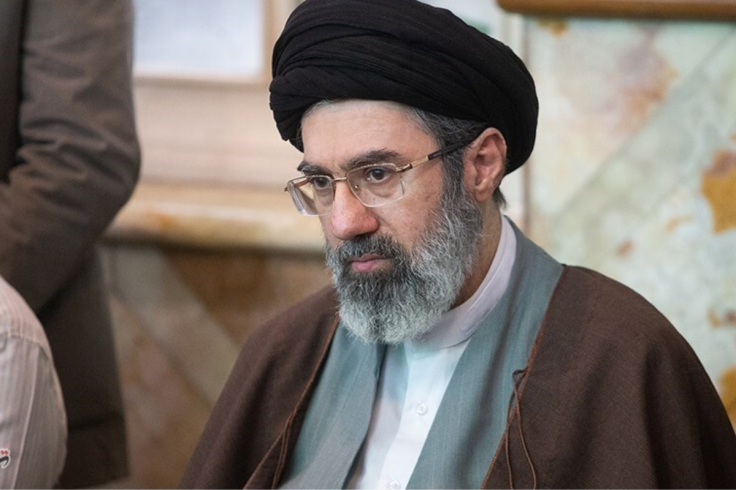
Mojtaba Khamenei's absence from his father's state funeral has become one of the biggest talking points following the ceremony in Tehran, after Iranian authorities offered no public explanation for why he did not appear.
The funeral for Iran's longtime Supreme Leader, Ayatollah Ali Khamenei, drew hundreds of thousands of mourners, senior government officials and foreign delegations. Yet despite the scale of the event, attention quickly shifted to Mojtaba Khamenei, the newly appointed Supreme Leader, whose absence became a central point of discussion among political observers.
Three of Ali Khamenei's sons — Mostafa, Masoud and Meysam — stood beside their father's coffin at Tehran's Imam Khomeini Grand Mosalla. President Masoud Pezeshkian, senior clerics and military commanders also attended the ceremony.
State television broadcast hours of live coverage of the funeral and the public procession through Tehran. Mojtaba Khamenei, however, was not seen at any stage of the public proceedings.
The funeral marked the beginning of several days of national mourning following Ali Khamenei's death during the recent conflict involving Iran, Israel and the United States. His coffin is expected to travel through several religious cities before his burial in Mashhad, one of the country's holiest sites.
Why His Absence Matters
Iranian authorities have not publicly explained Mojtaba Khamenei's absence.
State funerals in Iran are more than ceremonial occasions. They are carefully organised national events designed to project political unity and continuity during periods of uncertainty.
Appearances by senior political and religious figures are closely watched by diplomats, analysts and foreign governments. Observers often look for subtle signals about the country's leadership and the direction it may take following a major political event.
Mojtaba Khamenei has frequently been mentioned by analysts as a possible successor to his father. He was formally named Supreme Leader in March 2026 following Ali Khamenei's death.
Without an official explanation, his absence quickly became one of the most discussed aspects of the funeral. Social media, regional affairs experts, and international analysts speculated about his health and security, but no official statement has confirmed the reason he did not attend.
State Funeral Highlights Iran's Political Transition
The funeral took place under heightened security as large crowds gathered across central Tehran carrying Iranian flags and portraits of the late leader.
Senior government officials, military commanders and prominent clerics attended alongside representatives from several countries. Their presence highlighted the funeral's diplomatic significance as well as its domestic importance.
Mourners chanted slogans in support of Iran's leadership while condemning the United States and Israel. The ceremony reflected both public mourning and the continuing tensions that have shaped the region in recent weeks.
For many observers, the funeral represented more than a farewell to one of Iran's most influential leaders. It also became an important moment in the country's political transition, with every public appearance receiving close scrutiny.
Focus Turns to Iran's Leadership Transition
Political analysts caution against drawing firm conclusions from Mojtaba Khamenei's absence alone. They note that no official has suggested it signals any change to Iran's leadership plans.
Authorities have also not indicated when Mojtaba Khamenei may next appear in public. They have provided no additional information explaining why he missed the funeral ceremony.
As national mourning continues, attention is expected to remain focused on Iran's leadership transition. Any future public appearance by Mojtaba Khamenei is likely to receive significant international attention given his central role in shaping Iran's political direction.
Until Iranian officials provide further clarification, questions surrounding his absence are likely to persist. For many observers, one of the most closely watched developments from Iran's most significant state ceremony was not only who attended, but also who remained out of public view.
© Copyright IBTimes 2026. All rights reserved.