Trump Moves to Meet Iran Supreme Leader Mojtaba Khamenei While Netanyahu Tears up US Aid Agreement
A pivotal moment in US-Israel relations as Netanyahu seeks independence from US aid while Trump pursues diplomacy with Iran.
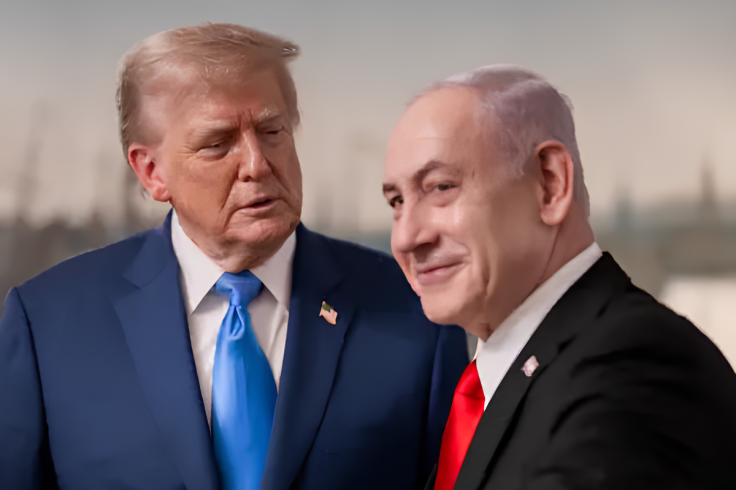
Netanyahu's decision to phase out American financial support arrives just as Trump pursues a diplomatic opening with Tehran that the Israeli prime minister has done everything to derail.
In a remarkable pivot that underscores the fracturing of Washington's Middle East strategy, President Donald Trump has now declared that he wants a face-to-face with Iran's elusive new Supreme Leader, Mojtaba Khamenei, even as Israeli Prime Minister Benjamin Netanyahu moves to sever the military aid relationship that has underpinned American-Israeli ties for decades.
The two developments, unfolding within days of each other in early June 2026, expose a US-Israel alliance under extraordinary strain: Trump pursuing peace with America's longtime regional adversary while Netanyahu appears to be positioning Israel for a more unilateral future, and, according to multiple sources, actively threatening to blow up the talks that could get Trump there.
Trump's Extraordinary Overture To A Hidden Leader
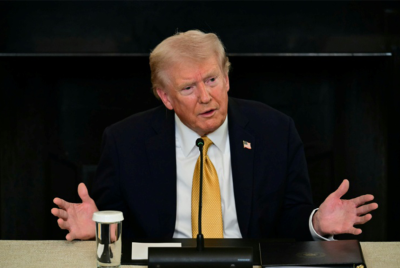
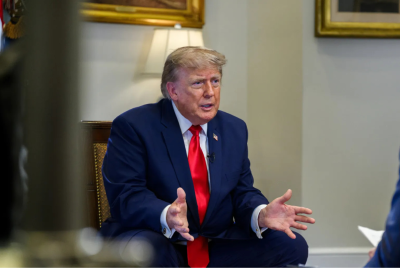
In a podcast interview with the New York Post's Pod Force One published on 3 June 2026, Trump confirmed his willingness to engage directly with the man who leads Iran from an undisclosed location. 'Yeah, I'd like to meet him. I'd like to meet everybody. I'd like to meet him. We probably will meet at some point, depending on how it all works,' Trump said when asked about Mojtaba Khamenei.
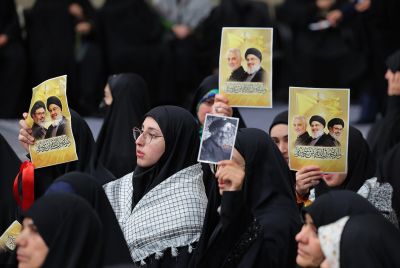
The statement carries unusual weight. Mojtaba Khamenei, born 8 September 1969 and now 56, assumed the position of Supreme Leader on 8 March 2026, following his father Ali Khamenei's assassination in US-Israeli strikes on 28 February, the opening day of the 2026 Iran war. He has not appeared publicly since being wounded in the same strike that killed his father.
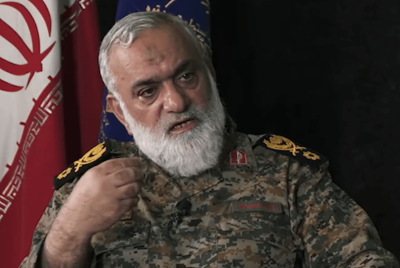
Khamenei 'is increasingly engaging at some level, although all of his communications have been in writing and through intermediaries,' Secretary of State Marco Rubio told the Senate Foreign Relations Committee on 2 June 2026, his first public congressional testimony since the war began. Rubio added that it can take three to five days for Iranian negotiators to respond to US proposals, citing internal divisions within the Tehran regime and the use of a complex courier network.
Trump also claimed, in the same New York Post interview, that Iran has 'already agreed' not to pursue nuclear weapons, describing the issue as a major breakthrough in talks aimed at ending the conflict that erupted in late February. Iranian officials have not publicly confirmed that characterisation.
Fragile Diplomacy And A Ceasefire On Edge
The backdrop to Trump's overture is a fragile diplomatic architecture that has been repeatedly tested. Diplomatic efforts centre on a fragile April 2026 ceasefire brokered by Pakistan and Oman, with indirect talks addressing the Strait of Hormuz reopening, disposal of Iran's highly enriched uranium, sanctions relief, and limits on its nuclear and ballistic programmes.
The ceasefire itself has been tested repeatedly. An Iranian attack on Kuwait's airport on 4 June marked one of the more severe tests yet of the shaky 8 April ceasefire. Iran's Islamic Revolutionary Guard Corps claimed the attack, saying it was in retaliation for US strikes on an Iranian oil tanker and island. Both sides continue to accuse the other of violations, even as negotiators reportedly draft non-nuclear elements of a memorandum of understanding.
"You're f****** crazy. You'd be in prison if it weren't for me. I'm saving your a***. Everybody hates you now. Everybody hates Israel because of this."
— Fox News (@FoxNews) June 2, 2026
That's what a U.S. official tells Axios President Trump unloaded on Israeli Prime Minister Benjamin Netanyahu during a heated… pic.twitter.com/JyehxI6QrP
The Netanyahu Factor: Fury, Lebanon And A Diplomatic Tripwire
The most immediate threat to Trump's Iran diplomacy has come from his closest regional ally. Trump's telephone call on Monday with Prime Minister Benjamin Netanyahu became quite heated as the US president pressed the Israeli leader to scale back plans for military operations in Lebanon, with Trump at points using expletives to convey his disapproval of the planned offensive, which threatened to upend his efforts to broker a preliminary agreement with Iran.
Trump reportedly called Netanyahu 'f—king crazy' for potentially upending Washington's efforts to reach a preliminary peace agreement with Iran, after Netanyahu ordered an attack on a Hezbollah stronghold in Beirut. 'You'd be in prison if it weren't for me,' Trump was quoted as saying, according to a US official cited by Axios. 'I'm saving your ass. Everybody hates you now. Everybody hates Israel because of this.'
The context matters: Iran announced it would suspend peace talks with the US over Israel's campaign in southern Lebanon. Washington subsequently moved to contain the damage, and talks appear to have resumed, but the episode revealed how exposed Trump's diplomatic ambitions remain to Israeli military decision-making.
JUST IN: Netanyahu announces Israel wants to change its relationship with U.S. from “aid to partnership”
— Polymarket (@Polymarket) June 3, 2026
Netanyahu's Strategic Divorce From Washington's Purse
Even as the Lebanon crisis played out, Netanyahu pressed forward with a broader recalibration of the US-Israel financial relationship. Speaking on CBS's 60 Minutes on 10 May 2026, Netanyahu announced his intention to end Israel's reliance on American military aid entirely. 'Absolutely. I've said this to President Trump. I've said it to our own people. Their jaws drop,' he said. 'I want to draw down to zero the American financial support, the financial component of the military cooperation that we have.'
Netanyahu said he does not want to wait for the next Congress and wants to begin the process immediately, framing the move as evidence that Israel has 'come of age'. Supporters of the proposal argue it reflects a desire to shift from a donor-recipient dynamic to an equal strategic partnership, but analysts at the Foundation for Defense of Democracies note that Israel must spend tens of billions of dollars to replenish and expand its arsenal following the multi-front war, and its military requirements are growing substantially.
The timing is striking. Netanyahu's public commitment to end American financial dependence arrives precisely as Trump's anger at Israeli actions in Lebanon reaches its most explosive point on record, and as Trump himself pivots towards the adversary Netanyahu spent years urging America to confront militarily.
Whether Trump's desired meeting with Mojtaba Khamenei, a man reportedly governing by courier from an unknown location, missing limbs according to Trump's own words, ever materialises will depend on whether the two men nominally on the same side can find enough common ground to keep a fragile ceasefire alive.
© Copyright IBTimes 2026. All rights reserved.
- Recommended For You