

Where Is Mojtaba Khamenei? Three Sons of Iran's Late Ayatollah Appeared at His Funeral, but the Successor Was Missing
As Iran turns a funeral into a show of strength, the unseen figure of Mojtaba Khamenei hangs over every frame of the spectacle.
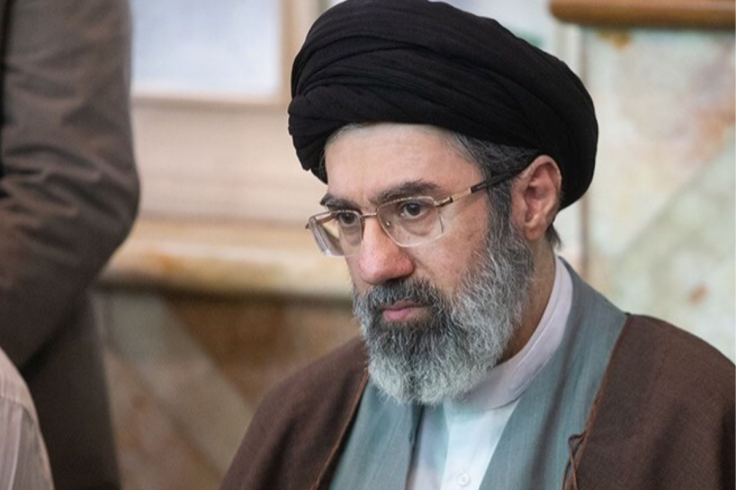
Three sons of the late Ayatollah Ali Khamenei joined prayers beside his coffin in Tehran on Sunday, but Mojtaba Khamenei, the son who has already succeeded him as Iran's supreme leader, was conspicuously absent from the high-profile funeral rites.
After days of tightly choreographed mourning in the Iranian capital, where state television has followed every stage of Khamenei's farewell. The former supreme leader was killed on 28 February in a US–Israeli bombing of Iranian targets at the start of the war, an attack that also claimed several of his close relatives. Since then, the authorities have leaned heavily on spectacle and symbolism to project continuity at the top of the Islamic Republic, even as questions about Mojtaba's condition and visibility have grown louder.
Mojtaba Khamenei's Silence Fuels Speculation
On Sunday, state TV showed three of the late leader's sons Mostafa, Meysam and Masoud Khamenei lined up in prayer behind five coffins in the vast courtyard of Tehran's Imam Khomeini Grand Mosalla, a sprawling religious complex often used for regime-defining events. Ali Khamenei's coffin lay under glass alongside those of his daughter, his son-in-law, his daughter-in-law and his 14‑month‑old granddaughter.
Mojtaba, however, was nowhere to be seen. No recent photograph, no grainy clip, not even a glimpse from a distance. According to people close to his inner circle, Mojtaba suffered severe injuries in the February strike that killed his father and other family members. His face was reportedly disfigured and he sustained significant damage to one or both legs. Officials have not publicly confirmed any of this. With no independent images and no on‑the‑record medical update, his exact condition remains unverified and should be treated with caution.

Mojtaba has long been viewed by many Iranians and regional observers as the most powerful of the late ayatollah's sons, and the man most likely to inherit the mantle of supreme leader. His formal succession following his father's death, while not detailed in Sunday's coverage, is already being taken as fact by state media and senior insiders. That makes his absence from what is arguably the defining public moment of this transition all the more striking.
Iranian officials have offered no explanation. Instead, they have focused on the national outpouring. Crowds of Iranians have streamed into the Mosalla complex since Saturday, many of them seen on television weeping openly, some beating their chests in a traditional display of grief. The national metro network reported seven million trips from late Saturday to Sunday morning as people flocked to the funeral centre.
Among the political elite, there was no shortage of visible loyalty. On Sunday, President Masoud Pezeshkian and Parliament Speaker Mohammad Baqer Qalibaf were shown praying behind the coffins. Masoud Khamenei at one point broke down in tears, wiping his face with a black‑and‑white keffiyeh, a scarf that in Iran carries heavy revolutionary and pro‑Palestinian symbolism. It was the kind of image state television relishes, reinforcing both piety and political narrative in a single frame.
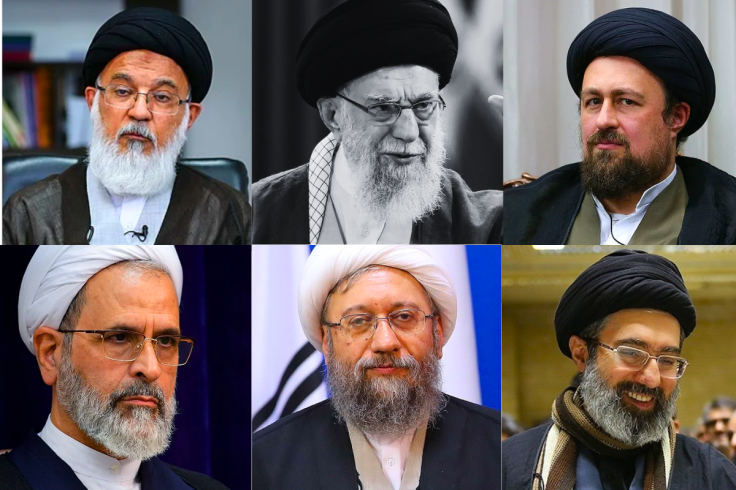
A Global Stage With Mojtaba Khamenei Off‑Camera
The funeral is not just a domestic ritual. Authorities have planned a week‑long series of processions across Iran and neighbouring Iraq, explicitly designed to showcase the Islamic Republic's reach and its Shi'ite religious credentials.
After Khamenei's body lay in state indoors for senior Iranian officials and foreign dignitaries, the coffin was moved outside on Saturday, encased in glass before a sea of mourners. On Monday, the government is promising a massive procession through central Tehran. From there, the remains are scheduled to travel to Qom on Tuesday, the seminary city at the heart of the country's Shi'ite clerical hierarchy.
The itinerary then widens beyond Iran's borders. On Wednesday, the body is due in Iraq for ceremonies in Najaf and Kerbala, two of Shi'ite Islam's holiest shrine cities. It is then set to return to Iran on Thursday for a final procession and burial in Mashhad, near the tomb of a medieval Shi'ite imam. Officials say they aim to mobilise millions of people over these days, offering transport, food and lodging to ensure turnout.
All of this unfolds against the backdrop of a fragile ceasefire. The four‑month‑old war that began with the February strikes is currently paused under an agreement with Washington that Iranian authorities insist will ultimately bring 'huge economic benefits,' framing the deal as evidence of a kind of victory over a superpower. US President Donald Trump said that peace talks had been temporarily put on hold for a week to allow for the funeral events.
In that sense, the farewell to Ali Khamenei is doing double duty. It is both a mourning ritual and a carefully produced television serial about resilience, legitimacy and the handover of power. Yet the central character in that succession story, Mojtaba Khamenei, remains resolutely out of shot.
Whether his absence is purely medical, a calculated choice to maintain mystique, or something more troubling inside Iran's opaque power structure is impossible to verify from the outside. Until Iran's new supreme leader appears in public, any confident claim about his health or his grip on power rests on incomplete information and should be treated, for now, with a degree of scepticism.
© Copyright IBTimes 2026. All rights reserved.