'Better Be Careful': Iran Issues Chilling Response After Trump Hints at Assassinating Peace Negotiators
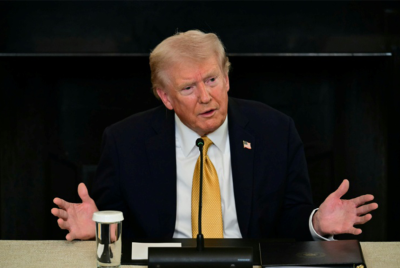
Mohammad Bagher Ghalibaf has told Donald Trump to 'be careful' after the US president threatened to 'take over' Iran and appeared to hint at killing peace negotiators in Switzerland.

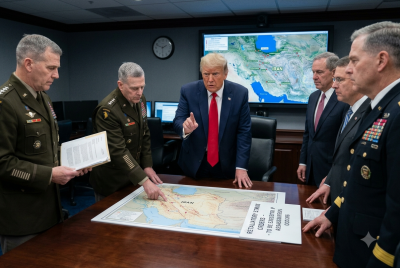
Iran issued a stark warning to Donald Trump on Sunday after the US president, speaking as ceasefire talks continued in Switzerland, threatened to 'take over' Iran and the Strait of Hormuz and appeared to hint at assassinating Iranian peace negotiators.
The response, delivered by Iranian parliament speaker Mohammad Bagher Ghalibaf, told Trump to 'be careful' with his words as the fragile ceasefire and ongoing negotiations came under fresh strain.
For context, the new clash in rhetoric came as Iranian and US delegations are engaged in delicate talks in Switzerland aimed at stabilising a ceasefire between the two long-time adversaries. The negotiations, which involve senior Iranian officials including Ghalibaf, are seen by regional observers as a rare opening to de-escalate tensions that have simmered for years and occasionally exploded into open confrontation.
Trump's latest comments were first relayed by Fox News correspondent Trey Yingst, who reported that the president had boasted he could 'take over' Iran along with the vital Strait of Hormuz, the maritime chokepoint through which a significant share of the world's oil passes.
Trump now threatening the lives of the Iranian negotiators in Switzerland while also claiming the US “may take over the Strait of Hormuz if we have to and collect tolls…”
— Mel (@Villgecrazylady) June 21, 2026
Sometimes I think this MoU and Trump’s daily sabotage of it was a way for the US to track how Iran is… pic.twitter.com/T7pHKlMXVQ
Yingst also noted that Trump went further, issuing what was described as a vague but chilling threat that seemed to suggest he might order the assassination of Iranian peace negotiators, explicitly including Ghalibaf.
The implications of that allegation are as serious as they sound. Targeted killings of officials are hardly an abstract topic in US–Iran relations, given the 2020 US strike that killed senior Iranian commander Qassem Soleimani. To even hint at repeating that kind of operation against current peace negotiators, while they sit at a Swiss venue under international scrutiny, is the sort of thing that can blow up painstaking diplomacy in a matter of hours.
Iranian Leader's 'Better Be Careful' Retort To Trump Threat
The news came after Ghalibaf used social media to answer Trump directly, issuing his own warning in language that mixed defiance with a reminder of Iran's military readiness. In a statement reported by Iranian outlets and translated into English from Hebrew via Google Translate, Ghalibaf dismissed Trump's threats as the empty bravado of a weakened adversary.
'Don't they think to themselves that if their threats had any effect, they wouldn't have reached the point of despair today? We don't count on the threats of the Americans,' he wrote.
He followed that with the line that has since ricocheted across US and Middle Eastern political circles. 'They better be careful with their statements, our armed forces are ready to respond in another way. Whatever they say, we are the ones who will act.'
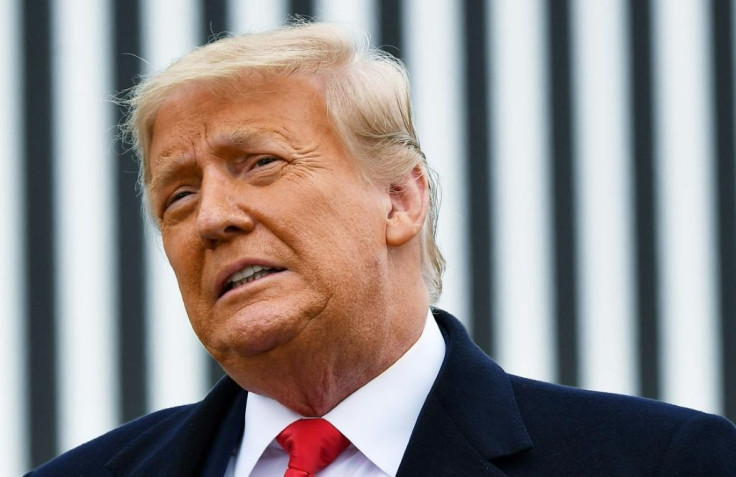
Taken together, Ghalibaf's comments functioned as both a rebuttal and a warning shot of his own. Iran, he was saying, is not impressed by Trump's bluster and will not sit quietly if talk turns into action. Whether that message was aimed at Trump personally, at US military planners who might be listening, or at his own domestic audience is an open question. Likely it was all three.
Nothing in the public statements so far confirms whether Trump's remarks represent any active operational plan or were simply the latest in a long line of rhetorical escalations.
Trump Threats Jolt Switzerland Peace Talks
The sharp exchange has already bled into the Swiss talks themselves. An Iranian news outlet reported that members of Iran's delegation walked out of the negotiation venue in protest after learning of Trump's Sunday morning threats. That walkout, if it holds, could freeze a process that was already highly fragile and heavily dependent on trust that each side would at least keep their political fire to a low simmer while talks were in progress.
Progressive media outlet MeidasTouch argued that Trump was 'single-handedly destroying the entire peace process,' accusing him of actively undermining negotiations in Switzerland. Supporters of Trump, for their part, have often defended his hardline posture towards Tehran as necessary leverage, arguing in past disputes that Iran only responds to strength. Those defences have not yet been fully tested against the idea of threatening to kill people sitting at a peace table.
🚨🚨 BREAKING: Iran's negotiators have LEFT the venue in protest of Trump's threats, per Tasnim.
— MeidasTouch (@MeidasTouch) June 21, 2026
Trump is single-handedly destroying the entire peace process.
The Strait of Hormuz reference is not a throwaway detail. By asserting he could 'take over' the narrow waterway, Trump invoked one of the world's most sensitive strategic points, a place where American warships, Iranian patrol boats and global energy markets all intersect in a tight, combustible corridor. Suggesting that the US could seize control there is the sort of bravado that thrills some domestic audiences and terrifies anyone whose job involves shipping insurance.
What happens next in Switzerland is unclear. The reported Iranian walkout could be tactical, a short-lived protest designed to extract reassurances from the US side that Trump is not speaking for the current administration.
It could also signal something more serious, a cooling of Tehran's appetite for any deal that might be seen as capitulating in the face of open threats.
For now, the only hard facts are the words on record. Trump, according to Yingst, upped the rhetorical temperature with fresh threats against Iran, including what sounded like a nod towards assassinating peace negotiators. Ghalibaf, in turn, told him to 'be careful' and reminded the world that Iran's armed forces were 'ready to respond in another way.'
If the point of Switzerland's peace talks was to lower the risk of sudden, chaotic escalation between Washington and Tehran, Sunday's exchange shows just how fast that risk can climb again when one man decides to talk tough on a quiet morning.
© Copyright IBTimes 2026. All rights reserved.
- Recommended For You