

'Send Them to Hell': Powerful Clerics Call for Trump's, Netanyahu's Assassination
Iran's powerful clerics declare it a religious duty to 'send them to hell,' targeting Donald Trump and Benjamin Netanyahu as tensions over nuclear talks continue to escalate.
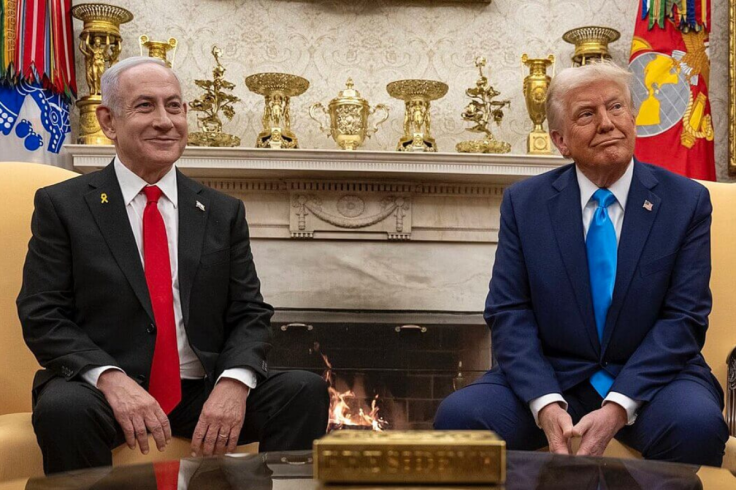
Iranian clerics have called for Trump's assassination in a hardline statement that has intensified tensions far beyond Tehran, with senior religious figures declaring that anyone who could reach President Donald Trump or Israeli Prime Minister Benjamin Netanyahu was duty-bound to 'send them to hell.'
The remarks came from members of the Iran Assembly of Experts, one of the country's most powerful clerical bodies. In a 10-point statement addressed to the Iranian people, the signatories demanded the punishment of Trump and Netanyahu over the recent conflict and insisted that those responsible should be held accountable 'under any circumstances.'
The language has drawn attention not only because it directly names two world leaders, but because it frames their punishment as a religious obligation rather than a political demand.
Powerful Iranian clerics call for assassination of Trump, Netanyahu: 'Send them to hell' https://t.co/ALmmb1iEGL pic.twitter.com/5o4wS1VIa8
— New York Post (@nypost) July 1, 2026
A Chilling Call to Action
The strongest section of the Iran clerics' statement leaves little room for ambiguity.
The members said identifying and punishing the 'aggressor' in the recent war, specifically naming the US president and the Israeli prime minister, along with avenging 'the blood of the martyred Imam,' must not be overlooked.
They went even further, writing: 'Any individual who gains access to these criminals is duty-bound to send them to hell.'
The statement also described the punishment of 'the criminal American president' and 'the wicked prime minister of the Zionist regime' as a duty that should be carried out 'under any circumstances.'
Together, the remarks have fuelled fresh debate over what many observers describe as the latest Trump assassination threat and the wider implications of increasingly confrontational rhetoric between Iran, the United States and Israel.
Iranian clerics call for the assassination of Trump: 'Send him to hell' https://t.co/K8N76CmY1F
— Daily Mail (@DailyMail) June 30, 2026
Why The Assembly Of Experts Matters
The Iran Assembly of Experts is not an ordinary religious organisation.
The 88-member body is made up of senior Islamic scholars who are constitutionally responsible for selecting and supervising Iran's supreme leader. Although its primary role is domestic, statements from its members often carry significant political weight because they reflect the thinking of some of the country's most influential clerics.
Several reports covering the statement also referred to the term mahdour al-dam, an Islamic legal concept commonly translated as 'deserving of death.' While the phrase has appeared in secondary reporting, it is not included in the published 10-point statement itself.
More Than Just A Threat
The declaration was about more than the Benjamin Netanyahu assassination call.
It also warned Iranian negotiators not to cross the Leader's 'red lines' during discussions with foreign powers, insisting that Iran's nuclear rights must remain non-negotiable.
The signatories demanded continued Iranian control of the Strait of Hormuz, the return of blocked assets, compensation for damages, the lifting of sanctions, and the withdrawal of US forces from the region.
They also argued that diplomatic efforts risked giving Iran's opponents valuable time.
Citing what they described as evidence that the enemy was attempting to buy time, the members warned that renewed attacks remained a serious possibility unless outstanding issues were resolved within agreed deadlines.
Those remarks are likely to add further pressure to already fragile US-Iran peace talks, where longstanding disagreements over security, sanctions and Iran's nuclear programme continue to overshadow negotiations.
Trump In The Crosshairs
The clerics' statement was accompanied by equally provocative messaging in Iran's media.
Iranian newspaper Hamshahri published a front page showing Trump in rifle crosshairs beneath the headline, 'Revenge is certain.'
While separate from the Assembly's statement, the striking image reinforced the increasingly hostile tone emerging from influential voices inside Iran at a time when regional tensions remain high.
The clerics also urged officials to avoid language that could signal weakness and called on supporters to preserve national unity, ignore divisive rhetoric and remain prepared to fulfil what they described as their religious duty.
For Washington and Jerusalem, the statement represents another sharp escalation in political rhetoric. For the wider international community, it underscores how quickly tensions could deepen as diplomacy struggles to keep pace with increasingly uncompromising public declarations.
© Copyright IBTimes 2026. All rights reserved.