Disney and Tesla Among 88 Major US Firms Paying Zero Corporate Income Tax Last Year Despite Billions in Profit
A report reveals how top US companies legally avoided federal taxes, highlighting systemic issues in the tax code.

Eighty-eight of America's largest corporations paid not a single dollar in federal income tax in 2025, despite collectively earning more than £80.5bn ($105bn) in US profits. At a time when the federal government is collecting more revenue overall, some of its most profitable companies are contributing nothing at all to the public purse.
That is the central finding of a report published on 14 April 2026 by the Institute on Taxation and Economic Policy (ITEP), a non-partisan research organisation based in Washington, DC. Authored by ITEP Senior Fellow Matthew Gardner and data analyst Spandan Marasini, the analysis draws entirely on SEC-mandated financial disclosures, meaning the figures are the companies' own admissions. The report arrives as the US Treasury confirms that corporate income tax receipts fell 14.7 per cent in 2025, a drop of approximately £59.6bn ($77.8bn) year-on-year, even as overall federal revenue grew 6 per cent.
A Staggering Loss to the Public Purse
At the statutory federal income tax rate of 21 per cent, the 88 companies identified by ITEP would have collectively owed £16.9bn ($22.1bn) in federal income taxes for the year. Instead, they received £3.6bn ($4.7bn) in tax rebates, bringing total federal corporate income tax breaks to £20.5bn ($26.7bn) against the statutory rate.
In the 1950s, corporate income tax revenue accounted for nearly one-third of all federal revenues. By 2025, it had fallen to just 8.6 per cent, and is projected to drop further still, to 7 per cent of total receipts this year. The erosion is not incidental. It is the direct consequence of deliberate legislative choices made in Washington over the past decade.
Federal Income Taxes Paid By Tesla:
— Warren Gunnels (@GunnelsWarren) April 29, 2026
2025: $0
2024: $0
2022: $0
2021: $0
Tesla's profits during those years: $14 billion
Musk's effective tax rate from 2014-2018: 3.27%
Tax rate of a nurse: 13.3%
Tax rate of a school teacher: 9.8%
Tax rate of a truck driver: 8.4%
That's wild. https://t.co/QyApyOEalM
The Mechanics of Legally Paying Nothing
None of these companies broke the law. What ITEP documents instead is a tax code engineered to allow the most capitalised corporations in the world to zero out their obligations through an interlocking system of credits, deductions and write-offs.
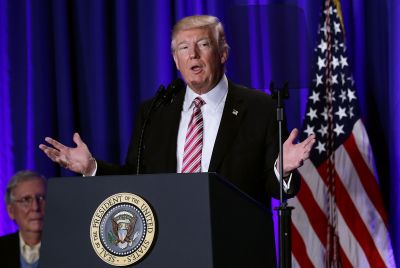
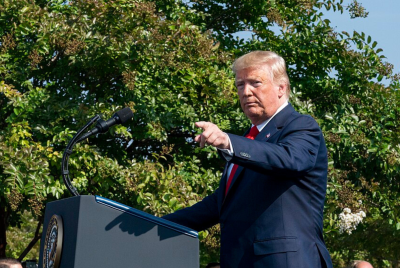
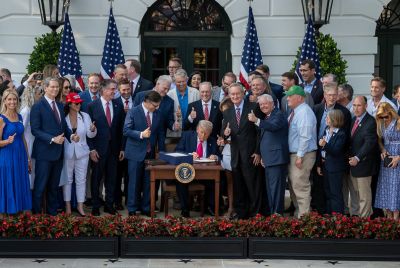
The most universally relied-upon mechanism was accelerated depreciation. The 'One Big Beautiful Bill Act', signed by President Trump on 4 July 2025, allows companies to immediately write off capital investments in their entirety. More than half of the 88 companies used this provision, collectively reducing their federal income tax by £8.7bn ($11.4bn).
More than 30 zero-tax companies additionally exploited a new provision, retroactive to January 2025, allowing immediate expensing of research and development costs. Those companies appear to have reduced their 2025 income taxes by at least £3.4bn ($4.4bn) using this rule alone. The retroactive nature is significant: companies received credit for research already conducted, making it a windfall rather than an incentive.
The Named and the Notable
The companies on ITEP's list span every major sector of the American economy.
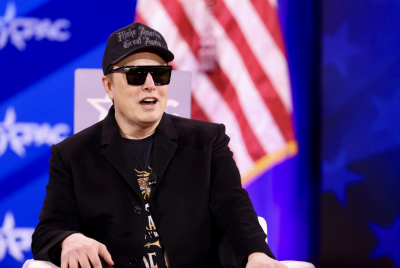
Tesla earned almost £4.4bn ($5.7bn) in US income in 2025, nearly double its 2024 figure, and paid precisely zero current federal income tax. While Tesla paid nothing to the US federal government, it paid over £769m ($1bn) in taxes to China and other foreign governments.
Walt Disney reported £6.4bn ($8.3bn) in US profits and paid zero federal income tax. CVS Health reported £5bn ($6.57bn) in profits and paid nothing. Citigroup owed no federal tax on £3.4bn ($4.45bn) in US income. Yum! Brands, parent company of KFC, Taco Bell and Pizza Hut, paid no federal income tax on over £791m ($1.03bn) in US pretax profits. Southwest Airlines avoided all federal income tax on £430m ($561m) in income; United Airlines achieved the same result on almost £3.3bn ($4.3bn).
'These findings are not isolated cases, they reflect systemic deficiencies in the corporate tax code,' Amy Hanauer, ITEP's Executive Director, said. 'Without meaningful reform, profitable corporations will continue to pay less than their fair share.'
There are now 13 public companies worth more than $1 Trillion
— Evan (@StockMKTNewz) April 23, 2026
Nvidia $NVDA $4.95T
Google $GOOGL $4.09T
Apple $AAPL: $4.02T
Microsoft $MSFT: $3.11T
Amazon $AMZN: $2.75T
Broadcom $AVGO: $2.03T
TSMC $TSM: $2T
Saudi Aramco: $1.76T
Meta Platforms $META: $1.68T
Tesla $TSLA: $1.42T… pic.twitter.com/VPehE6oIZ4
Two Laws, One Outcome
The report situates 2025's figures within a decades-long trend, sharpened by two specific pieces of legislation. The effective corporate tax rate has fallen from 38 per cent in the 1960s to approximately 12.8 per cent after the 2017 Tax Cuts and Jobs Act. The One Big Beautiful Bill Act has accelerated that decline further.
The Act was passed by the Senate 51–50 on 1 July 2025, with Vice President JD Vance casting the tiebreaking vote, and is estimated to cut approximately £3.4 trillion ($4.46 trillion) in tax revenue over ten years while adding roughly £2.3 trillion ($3 trillion) to the national debt.
The impact is already visible: the federal government collected £34.5bn ($45bn) less in corporate income taxes in the first half of fiscal year 2026 compared with the same period the prior year, a 28 per cent decrease attributed directly to provisions in the One Big Beautiful Bill Act.
The 88 companies profiled collectively acknowledged £2.7bn ($3.5bn) in 'uncertain tax benefits', breaks claimed on their 2025 returns that the companies themselves believe are more likely than not to be disallowed upon audit. That admission, buried in footnotes, speaks to how far beyond legal certainty some of this avoidance extends. Meanwhile, a Gallup survey cited in the ITEP report found that 70 per cent of Americans believe corporations pay too little income tax, with only 7 per cent saying they pay too much. The public consensus is clear. The policy response, for now, is not.
Correction/Update: This article has been updated following a request for correction. An earlier version incorrectly referenced Amazon as being included in a recent ITEP report on corporate tax. Amazon is not named in the report, and its reference has been removed from the headline, article content and featured image.
© Copyright IBTimes 2026. All rights reserved.
- Recommended For You