Trump's Navy Secretary Pick Sparks Outcry Over 'KKK Hood' Requests, Race Claims and 'Witchcraft' Warnings
Hung Cao's potential appointment as Navy Secretary draws criticism over past statements and military record.

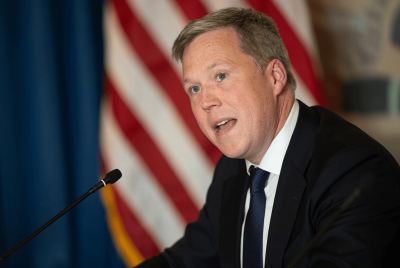
President Donald Trump's decision to replace the US Navy Secretary has ignited fresh controversy in Washington, as his reported choice, Hung Cao, faces renewed scrutiny over past statements and questions about his background just as he is being considered for one of the Pentagon's most visible civilian roles.
The move follows the departure of Navy Secretary John Phelan, with reports indicating that Cao, a former Senate candidate and Navy veteran, is being lined up for the role. The announcement has rapidly drawn political and public reaction, with critics pointing to a series of controversial remarks attributed to Cao in recent years.
The developments come at a sensitive moment for US military leadership, where credibility, experience and public trust remain central to the role overseeing one of the world's largest naval forces.
Leadership Change At The Pentagon Sparks Immediate Reaction
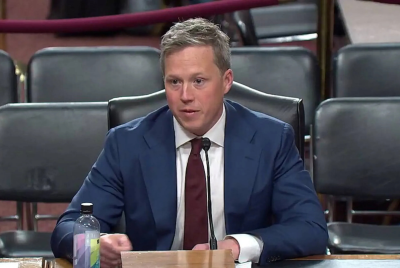
The reported replacement of John Phelan marks a significant shift within the Department of the Navy, a civilian-led branch responsible for both the US Navy and Marine Corps. According to defence sector reporting, Phelan's departure forms part of a broader reshaping of leadership under Trump's administration.
Hung Cao, a retired US Navy officer and former Republican Senate candidate in Virginia, has emerged as a central figure in that transition. His potential appointment has drawn attention not only because of his military background but also due to his public profile during his political campaign.
The Department of the Navy operates under the US Department of Defense, and the Secretary's role involves oversight of personnel, procurement and operational readiness. Any leadership change therefore carries implications for both military strategy and institutional stability.
Trump has fired Navy Secretary John Phelan, replacing him with failed VA Senate candidate Hung Cao who:
— FactPost (@factpostnews) April 23, 2026
— Asked for a KKK hood with "slits" as eye holes instead of circles so he could see better
— Falsely claimed to have been injured in combat
— Warned that a wave of… pic.twitter.com/v6353CDjop
Past Statements And Public Record Draw Scrutiny
Criticism surrounding Cao's potential appointment has largely centred on remarks he made during his Senate campaign and in public appearances. A digital advertisement released by the Democratic Party of Virginia compiles several of these statements, presenting them as evidence of what opponents describe as 'concerning judgement'.
In that material, Cao is shown making comments about race, including a claim that he could identify as African American based on having lived in Africa. The context and intent of the remark have been debated, but it has nonetheless drawn backlash from critics who argue it reflects a misunderstanding of racial identity in the United States.
Separate comments referenced in the same campaign material include warnings about 'witchcraft' influencing American society. Cao's remarks appeared to be framed within a broader critique of cultural and political trends, though opponents have characterised them as extreme.
The resurfacing of these statements has intensified scrutiny as his name is linked to a senior national security role. Public reaction has been amplified across social media platforms, where clips and excerpts have circulated widely.
Here is a video of new Acting Navy Secretary Hung Cao claiming he is African American because he once lived in Africa
— FactPost (@factpostnews) April 23, 2026
(Hung Cao is Vietnamese) pic.twitter.com/zknwspv2L7
Questions Raised Over Military Record And Credentials
Alongside debate over his public remarks, Cao's military record has also come under renewed examination. He served for more than two decades in the US Navy, including roles connected to special operations and explosive ordnance disposal, according to publicly available campaign biographies.
However, critics have challenged aspects of his service record, particularly claims relating to combat injuries. These disputes have not been formally adjudicated in court but have nonetheless become a focal point in political discourse surrounding his candidacy.
Military credentials often carry significant weight in appointments to senior defence roles. Analysts note that any perceived inconsistencies or disputes can become politically sensitive, particularly when the position involves oversight of active-duty personnel.
Supporters of Cao, meanwhile, have emphasised his refugee background and long military service, portraying him as a candidate with both personal resilience and operational experience.
Here is a video of new Acting Navy Secretary Hung Cao asking for a KKK hood with "slits" as eye holes instead of circles so he can see better pic.twitter.com/grsIKJ3osB
— FactPost (@factpostnews) April 23, 2026
Political Fallout And Implications For Defence Leadership
The controversy surrounding Cao's reported appointment reflects broader political divisions over leadership standards and rhetoric. Critics argue that the combination of disputed claims and controversial remarks risks undermining confidence in the Department of the Navy at a critical time.
Supporters counter that political opponents are amplifying isolated comments to discredit a qualified veteran. They point to his service history and electoral campaign as evidence of his commitment to public service.
The role of Navy Secretary requires Senate confirmation, meaning any nomination would likely face detailed questioning in hearings. Lawmakers typically examine a nominee's record, statements and qualifications before deciding whether to approve the appointment.
As the situation develops, attention is expected to focus on how the administration addresses concerns about Cao's past remarks and whether additional documentation or testimony emerges during the confirmation process.
The unfolding debate underscores how leadership choices at the highest levels of the US military can quickly become flashpoints for broader national conversations about credibility, judgement and public trust.
© Copyright IBTimes 2026. All rights reserved.
- Recommended For You