The Self-Made Myth: How Billions in Taxpayer Contracts and Grants Built Elon Musk's Trillion-Dollar Fortune
Elon Musk became the world's first trillionaire after SpaceX's record IPO, with his wealth sparking scrutiny over the tens of billions in US government funding that supported his companies' growth.
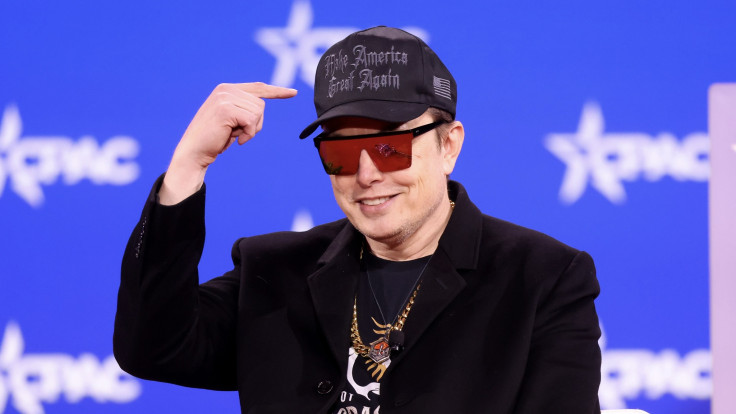
Elon Musk became the world's first trillionaire this week after SpaceX completed the largest IPO in history, yet the fortune he built was seeded, sustained and repeatedly rescued by the same federal government he spent the past year dismantling.
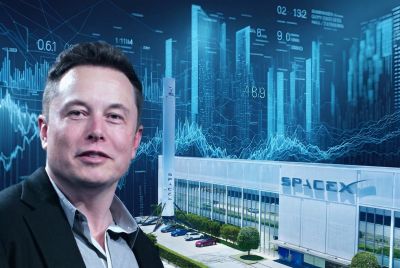
On 12 June 2026, Space Exploration Technologies Corp. began trading on the Nasdaq under the ticker SPCX, raising £55.3 billion ($75 billion) at a valuation of £1.31 trillion ($1.77 trillion), surpassing Saudi Aramco's 2019 listing to become the biggest share sale ever recorded. Musk's approximately 38 percent stake pushed his net worth past £813 billion ($1.1 trillion), according to the Bloomberg Billionaires Index.
The milestone followed a Washington Post investigation published in February 2025 that found Musk and his companies received at least £28.1 billion ($38 billion) in government contracts, loans, subsidies and tax credits since 2003, a figure that does not include classified defence work.
Tesla's Near-Collapse and the Government Lifeline That Changed Everything
Shortly after becoming Tesla's chief executive in 2008, Musk fought to secure a low-interest loan from the US Department of Energy. According to the Washington Post's investigation, he personally held daily briefings with company executives about the paperwork and spent hours with a government loan officer. The Department of Energy issued £342 million ($465 million) to Tesla in January 2010, under the Advanced Technology Vehicles Manufacturing programme, to develop the Model S and purchase a factory in Fremont, California.
A former senior Tesla employee, speaking anonymously to the Washington Post for fear of retribution, was direct: 'Tesla would not have survived without the loan.' Musk repaid the debt nine years ahead of schedule in 2013, but the government's role in keeping the company alive during its most precarious period was foundational. California governor Gavin Newsom later stated that 'there was no Tesla without California's regulatory bodies, and regulation.'

The federal scaffolding around Tesla did not end there. SEC filings show Tesla earned £8.4 billion ($11.4 billion) from the sale of regulatory credits since 2014, credits issued by the federal and state governments to encourage electric vehicle production. Automakers that failed to meet emissions targets bought the credits from Tesla, creating a revenue stream that, in 2020 alone, meant the difference between an £635 million ($862 million) profit and a £516 million ($700 million) loss.
SpaceX and the $22 Billion Federal Contract Stack
SpaceX holds the largest share of the £28.1 billion ($38 billion) total. SpaceX president Gwynne Shotwell confirmed in 2024 that the company holds approximately £16.2 billion ($22 billion) in government contracts, with roughly £11.1 billion ($15 billion) of that derived from NASA.
Federal agencies including the Department of Defense, the Space Force, and the National Reconnaissance Office (NRO) now depend on SpaceX to launch classified satellites, ferry astronauts to the International Space Station, and operate the military's primary low-Earth orbit communications network.
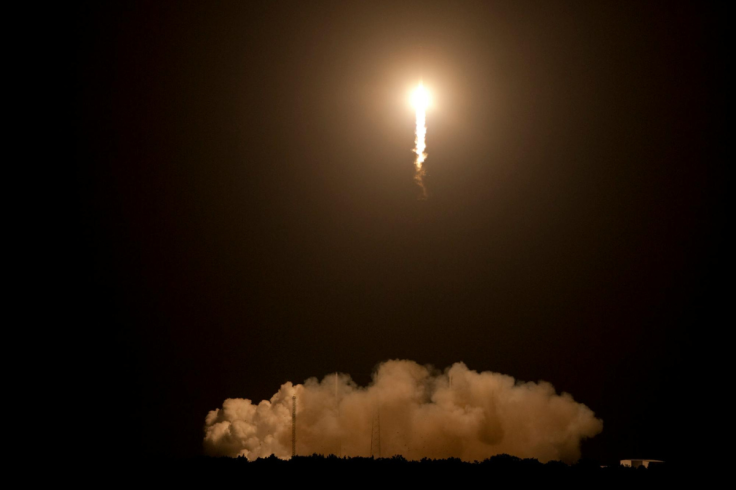
In April 2025, SpaceX was awarded a £4.35 billion ($5.9 billion) contract to support US Space Force rocket launches and satellite operations through 2029. The Washington Post's analysis found that 52 ongoing contracts across seven agencies, including NASA and the General Services Administration, carry a combined remaining value of £8.7 billion ($11.8 billion).
The NRO has dramatically expanded its reliance on SpaceX in 2026, with approximately 12 launches planned this year alone, as the agency shifts from a small number of large intelligence satellites to a proliferated constellation that depends entirely on SpaceX's launch cadence.
The concentration of federal business in Musk's hands is unprecedented in modern commercial space. A March 2026 analysis by Fed-Spend, drawing on USASpending.gov data, found that SpaceX swept 100 percent of the National Security Space Launch Phase 3 Lane 1 task orders awarded through May 2026, totalling £1.14 billion ($1.55 billion) across approximately 17 missions. United Launch Alliance and Blue Origin received zero.
The Conflict of Interest Congress Could Not Ignore
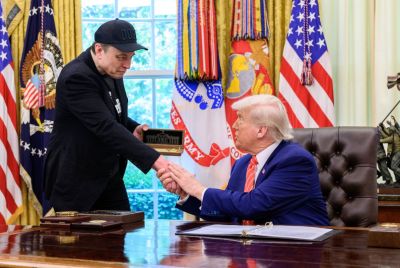
While Musk led the Department of Government Efficiency (DOGE), a body charged with slashing federal spending, his companies were simultaneously winning billions more in federal awards. The arrangement triggered a chain of formal investigations from both chambers of Congress.
In April 2025, Representatives Stephen Lynch and Gerald Connolly sent a letter to the Pentagon requesting documents on how the Department of Defense was preventing Musk from using his position as a Special Government Employee to enrich his own companies, citing a 'whopping $9.5 billion in defence contracts.'
That same month, Congressman Maxwell Frost and Ranking Member Connolly launched a parallel investigation into NASA, writing to NASA's chief legal officer to demand an account of how the agency was ensuring Musk was not exploiting his government role to enrich SpaceX.
Federal ethics law under 18 USC 208 prohibits Special Government Employees from participating in matters that affect their own financial interests; critics alleged the arrangement rendered that prohibition essentially unenforceable given how deeply Musk's businesses intersected with every agency he touched.
In May 2025, Senator Elizabeth Warren and Congressman Greg Casar led 40 members of Congress in calling on the Pentagon Inspector General to investigate SpaceX's emergence as a frontrunner for the Golden Dome missile defence contract, which could be worth billions. Their letter raised the concern that 'an attitude that the national security and defence community has to be sensitive and deferential to Elon Musk because of his role in the government' was distorting the competitive process.
Cutting the Hand That Fed Him
The tension between Musk's public posture and his companies' dependency on public money sharpened when DOGE moved to dismantle the Department of Energy's Loan Programs Office, the same body that had issued Tesla its £342 million ($465 million) lifeline in 2010.
Reports confirmed that approximately half of the LPO's federal workforce resigned under pressure. Major loan recipients including Kore Power and Aspen Aerogels subsequently scrapped expansion plans for battery and manufacturing plants, citing frozen funds and policy uncertainty.
The Washington Post's analysis recorded more than 400 federal contracts, nearly 90 federal and local grants, more than two dozen tax credits or property tax abatements, and six loans directed to Musk's companies since 2003. Nearly two-thirds of the £28.1 billion ($38 billion) total arrived in just the past five years.
In 2024 alone, federal and local governments committed at least £4.65 billion ($6.3 billion) to his ventures, a record high. The Post noted its figures exclude classified contracts, meaning the true total is almost certainly larger.
The world's first trillionaire did not build his empire in spite of government; he built it on top of one.
© Copyright IBTimes 2026. All rights reserved.
- Recommended For You