

Amazon, Apple and Meta Donated Millions to Trump's Ballroom Before Their Federal Investigations Were Quietly Dropped
Report reveals corporate donors to Trump's ballroom project benefit from billions in federal contracts and reduced enforcement actions.
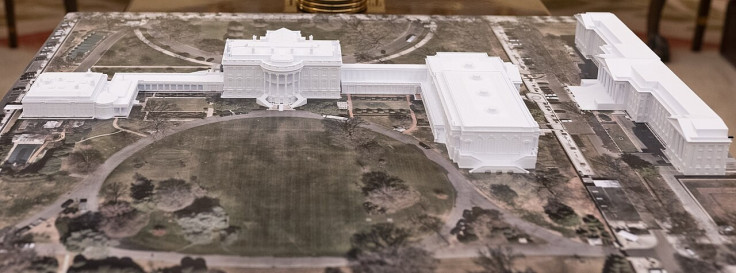
More than half of the corporate donors to President Donald Trump's £310m ($400m) White House ballroom project have collected over £38.8bn ($50bn) in new or expanded federal contracts since making their donations, while 16 of the 27 known corporate donors are facing federal enforcement actions that have been suspended, dropped, or scaled back under the Trump administration.
A new report titled Ballroom Billions, published on 4 June 2026 by the consumer advocacy nonprofit Public Citizen and authored by Jon Golinger, Eileen O'Grady, and Rick Claypool, analyses contract data from USASpending.gov and federal enforcement records for all 27 known corporate donors to the project. The results are striking: 14 of those 27 companies saw their government business increase after donating, with the total value of new and expanded contracts reaching £38.8bn ($50.46bn) in the six months since Trump demolished the White House East Wing in October 2025 to make way for the structure.
The report builds on a prior Public Citizen analysis from November 2025 that found the same donor group held £216bn ($279bn) in federal contracts over the preceding five years and had spent £1.24bn ($1.6bn) on political contributions and lobbying. Over the full five-and-a-half-year period now covered by the group's data, 19 of 27 corporate donors have held contracts worth a combined £262bn ($338bn).
Investigations Dropped, Contracts Awarded: The Company-by-Company Picture
The enforcement picture is what makes this report especially pointed. Amazon donated to the ballroom project whilst facing a Department of Justice investigation into alleged fraudulent concealment of worker injuries, multiple National Labor Relations Board cases, an FTC antitrust lawsuit alleging illegal monopolistic behaviour, and a Federal Communications Commission probe into alleged sales of illegal wireless jammers. Amazon received £197.9m ($255.7m) in new or expanded contracts in the six months following the East Wing's demolition.
Apple's situation is similarly layered. The company faces an active Department of Justice antitrust lawsuit alleging it monopolised the smartphone market. Its NLRB cases alleging unfair labour practices were withdrawn after the Trump administration moved to scale back the agency's enforcement activity. Apple received £1.43m ($1.85m) in contracts over the full five-year period reviewed, though the report notes the more significant value is in the federal enforcement relief its donation may have helped secure.

Meta donated to the project and subsequently saw a Consumer Financial Protection Bureau investigation into alleged improper access of user financial data closed entirely under the Trump administration. The FTC antitrust case alleging Meta monopolised social media remains live, though the administration has signalled a more permissive attitude toward big tech enforcement generally. Meta's total government contracts over five years amount to just £38,000 ($49,599), a figure that underscores Public Citizen's central argument: the value for these companies lies in regulatory relief, not procurement.
Coinbase donated whilst an SEC case alleging illegal sales of unregistered securities was pending. Trump's SEC dismissed those charges in 2025. Ripple, another crypto donor, had the SEC's appeal in its own securities case withdrawn by the Trump administration. T-Mobile donated whilst the Department of Justice's Antitrust Division was investigating its proposed merger with UScellular. The DOJ closed that investigation and allowed the merger to proceed.
A Secret Contract, Anonymous Donors, and a FOIA Lawsuit
The White House initially disclosed only 21 corporate donors to the ballroom project in October 2025. News outlets subsequently identified six more. The full list remains unknown because the funding agreement itself, which Public Citizen obtained through a FOIA lawsuit against the National Park Service and Department of the Interior, explicitly permits donors to remain anonymous.

'This document reveals that anonymous donations are the heart of this agreement,' said Public Citizen democracy advocate Jon Golinger after the contract's April 2026 disclosure. 'The questions this raises are: of the hundreds of millions being funnelled in secret, who are these anonymous donors, and what are they hiding?' The contract was negotiated between the White House, the National Park Service, and the Trust for the National Mall, the nonprofit formally receiving the donations. Public Citizen attorney Wendy Liu, who led the FOIA litigation, said the administration's initial refusal to disclose the contract was 'flatly unlawful.'
The agreement also exempts the project from key conflict-of-interest safeguards and limits scrutiny by Congress and the public, according to the Washington Post's April 2026 reporting on the released document. Senator Richard Blumenthal had demanded answers from the secret donors in a November 2025 letter sent via the Senate Permanent Subcommittee on Investigations, asking each anonymous donor to preserve all communications with Trump administration representatives and to explain what, if anything, was agreed in return for their contribution.

In December 2025, Senator Elizabeth Warren and Representative Dave Min led a group of legislators in writing directly to seven major donors, including Amazon, Apple, Meta, Microsoft, Nvidia, Comcast, and Union Pacific. Their letter warned that donations made with the intent to influence government decision-making 'could run afoul of federal bribery law.' The corporations did not publicly respond.
The Largest Beneficiary and the Legal Fight Still Pending
The single largest recipient of new government business among the donor group is Lockheed Martin, which received £33.95bn ($43.8bn) in new or expanded contract funding in the six months following the East Wing demolition. Booz Allen Hamilton collected a further £3.25bn ($4.2bn) and Palantir £799m ($1.03bn) in the same period. Together those three companies account for the vast majority of the £38.8bn ($50.46bn) total.
The Ballroom Billions report arrives at a legally turbulent moment for the project itself. A federal judge ruled that construction must halt until Congress formally authorises the project, but a three-judge panel of the US Court of Appeals for the DC Circuit allowed building to continue whilst the litigation proceeds. The circuit court was scheduled to hear the full case on 5 June 2026.
Golinger's summary of the pattern is unambiguous: 'These giant corporations aren't funding the Trump ballroom fiasco out of the goodness of their hearts. They have massive interests before the federal government and they hope to curry favour with, and receive favourable treatment from, the Trump administration. Millions to fund Trump's bizarre fever dreams are nothing compared to the billions they're getting back in contracts and favourable government enforcement decisions. The American people are paying the price.'
A £310m ($400m) vanity project is functioning, the data suggests, as the most expensive pay-to-play arrangement in modern American political history.
© Copyright IBTimes 2026. All rights reserved.