

Abdul El-Sayed Argues That 'Ice Is Not About Immigration' as He Advocates for Controllable Borders
A historic Senate victory brings a fundamental question into focus: Can immigration enforcement survive without ICE?
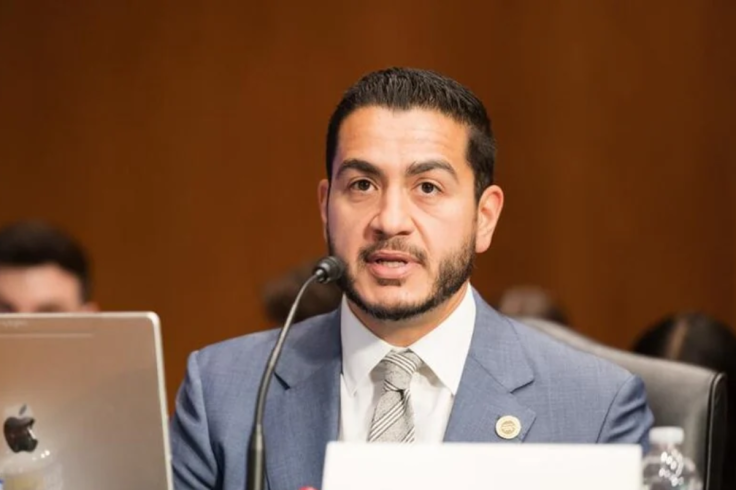
Michigan senator-elect Abdul El-Sayed, who is set to become the first Muslim to serve in the US Senate, has insisted that 'you have to have borders that you can control' even as he defends his call to abolish US Immigration and Customs Enforcement (ICE).
In a widely shared interview with Stephen A. Smith, recorded before and circulated after the 3 November midterm elections, the Democrat said immigration laws could be enforced without retaining ICE in its current form.
El-Sayed defeated Republican former congressman Mike Rogers in Michigan's Senate race. His term begins in January 2027, following a victory speech delivered early on 4 November.
Smith pressed him over his earlier declaration that 'The only way forward is to abolish ICE and start from scratch.' Their exchange centred on how border security and domestic immigration enforcement would function if the agency ceased to exist.
Abdul El-Sayed Rejects Open Borders While Criticising ICE
In the interview clip, El-Sayed said he supported a 'safe, secure southern border' and immigration enforcement. But he objected to what he described as 'masked men with AR-15s acting against the Constitution.'
Stephen A. Smith PRESSES Abdul El-Sayed on Abolishing ICE — Then Gets a Firm Answer on Open Borders
— Jeff (@_Jeffery0) November 6, 2026
Stephen A. Smith: You’ve said the only way forward is to abolish ICE and start from scratch. What does that mean?
Dr. Abdul El-Sayed: Let me be clear: I believe we ought to have… pic.twitter.com/uUMjS5Q09A
He then declared that 'ICE is not about immigration', depicting it as an agency that normalised paramilitary-style force on American streets. These were political criticisms of its methods, not legal findings about the agency's authority.
ICE was established in March 2003 following the post-9/11 reorganisation of federal agencies. Its responsibilities include immigration arrests, detention and removals, as well as investigations into customs offences and transnational crime.
Smith asked whether El-Sayed would accept open borders under any circumstances. 'No. You have to have borders that you can control,' he replied.
El-Sayed distinguished US Customs and Border Protection (CBP), which primarily secures borders and ports of entry, from ICE's domestic immigration operations. That description reflects their principal roles, although ICE also investigates offences linked to borders and international trade.
The clip did not set out a detailed transition plan. However, in a Michigan Public interview published on 28 October, El-Sayed proposed an enforcement system resembling the former Immigration and Naturalization Service (INS).
He also advocated investment in southern border security and a clearer pathway to citizenship. Those proposals indicate he is not calling for an end to border controls.
Operation Metro Surge Experience Fuels His Critique
El-Sayed cited a visit to Minneapolis during Operation Metro Surge, saying he had witnessed scenes he never expected to see in the United States. The excerpt did not identify particular incidents or independently establish misconduct.
In January, Minnesota's attorney general and the cities of Minneapolis and St Paul sued federal authorities over the operation, alleging unlawful and unconstitutional practices. The lawsuit's allegations do not establish what El-Sayed personally observed.
His victory has intensified scrutiny of both his policies and his identity. During his 4 November victory speech, after a campaign marked by attacks involving his Muslim faith, he declared, 'My name is Abdulrahman Mohamed El-Sayed.'
That confrontational approach has not ruled out cooperation with Republicans. Asked by CNN on Thursday, 5 November, about working with Vice President JD Vance, El-Sayed criticised him but said he was willing to work with political leaders for Michigan.
'If they're serious about doing that, let's get some stuff done,' he said.
© Copyright IBTimes 2026. All rights reserved.