

Michigan GOP Cited Synagogue Remarks to Defend 'SAFE HARBOR TO TERRORISTS' Claim Against El-Sayed
The allegations centred on El-Sayed's response to a synagogue attack, although no evidence showed he had provided aid or sanctuary to terrorists
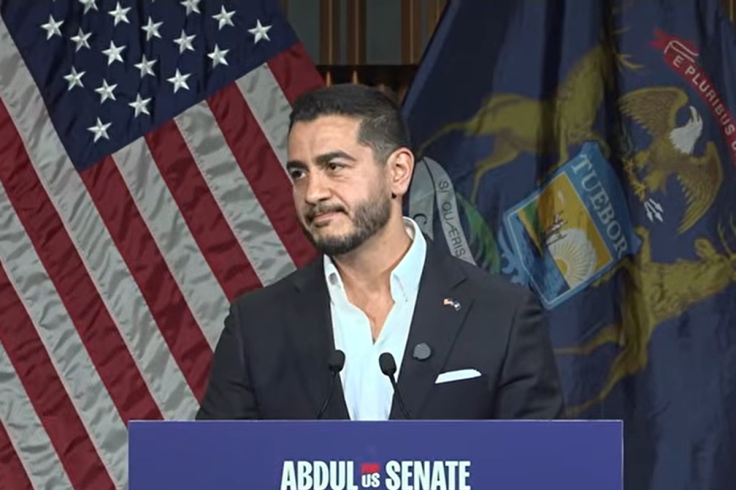
Michigan Republicans accused Democratic Senate candidate Abdul El-Sayed of offering 'SAFE HARBOR TO TERRORISTS' at a press conference before the 3 November election. When challenged to substantiate the accusation, party spokesman Ted Goodman cited El-Sayed's remarks following an attack on a synagogue earlier this year.
El-Sayed had condemned the violence but later apologised for additional comments criticised by some Jewish leaders. The dispute followed months of Republican attacks questioning his loyalty and portraying him as a national security threat.
El-Sayed defeated Republican Mike Rogers in Michigan on Tuesday, becoming the first Muslim elected to the US Senate.
The controversy unfolded during the final stages of a closely watched race in which religion and national identity became major campaign issues. Rogers maintained that his objections to El-Sayed were ideological rather than religious.
However, prominent Republicans repeatedly linked the Democrat to extremism despite his rejection of those allegations.
Michigan GOP Defends Its Accusation Against Abdul El-Sayed
The Michigan Republican Party displayed its accusation on a large red sign at an election-eve press conference. Jewish and Black community leaders opposed to El-Sayed appeared alongside party representatives.
Asked by Reuters to provide evidence supporting the allegation, Goodman pointed to El-Sayed's response to the March attack on Temple Israel synagogue in Michigan.
Goodman argued that the Democrat's comments amounted to justifying a terrorist attack against children. However, his interpretation did not establish that El-Sayed had provided assistance, protection or sanctuary to terrorists.
No independent evidence substantiating the broader accusation was identified in the report.
El-Sayed had explicitly condemned the synagogue attack but drew criticism after saying 'hurt people hurt people' while discussing a cycle of violence.
Some Jewish leaders interpreted the additional remarks as an attempt to rationalise antisemitic violence. El-Sayed subsequently apologised, acknowledging that his comments could have been misconstrued and that 'it wasn't the time for context'.
Despite the apology, Republicans continued invoking the controversy in the campaign's final hours. The dispute became part of a wider effort to challenge El-Sayed's political positions and suitability for public office.
Abdul El-Sayed Faced Separate Allegations Involving Extremism
Republicans also attempted to associate El-Sayed with the Muslim Brotherhood, citing older writings about political developments in Egypt and social media posts by his half-sister.
El-Sayed denied having any association with the organisation, and no evidence had emerged linking him to it. Those allegations were separate from the controversy surrounding his synagogue remarks.
President Donald Trump repeatedly described El-Sayed as a 'jihadist' and compared him to the September 11 hijackers.
Republican Senator Ted Cruz called him a 'jihadist leprechaun' and warned that Americans would die if he won. Senator John Kennedy claimed El-Sayed slept 'in a bin Laden jersey'.
Rogers maintained that his criticism concerned ideology rather than religion, although he campaigned alongside Republicans who made those statements.
Nazita Lajevardi, a University of Michigan associate professor who studies politics, race and religion, criticised both the rhetoric and its acceptance among senior Republicans.
'This is the most egregious and most bigoted Islamophobic campaign I have seen,' she said.
Lajevardi argued that Republican leaders had shown little willingness to challenge the attacks, contrasting their response with earlier controversies surrounding anti-Muslim policies.
El-Sayed, a 42-year-old Michigan-born Egyptian American and former Detroit health director, had focused his campaign on healthcare and the cost of living.
Those priorities remained important to voters despite the attention devoted to his faith and alleged extremist associations.
Abdul El-Sayed's Historic Victory Draws Mixed Reactions in Michigan
Following his election victory, El-Sayed criticised the campaign waged against him and delivered a pointed message to his Republican opponent.
'You chose hate, and Michigan chose hope,' he told supporters.
Interviews with roughly 30 voters in the Detroit area revealed contrasting reactions. Five said El-Sayed's Muslim faith or perceived connections to extremism strongly influenced their decision to support Rogers.
Most of those interviewed, however, dismissed the attacks or described economic concerns as more important. The interviews were not a representative statewide survey and cannot establish how the rhetoric affected the overall result.
In Dearborn, business owner Imad Soofi, 49, said he had supported Trump in three previous elections. He described increasing anti-Muslim hostility, including remarks directed at women wearing hijabs.
Soofi said he might have backed Rogers had the Republican distanced himself from Trump's rhetoric. Instead, he voted for El-Sayed, illustrating how the campaign affected at least one previously Republican-supporting voter.
Other residents questioned the focus on religion. Music teacher David Kolar said the campaign reminded him of the backlash Muslims experienced after the September 11 attacks.
'We have freedom of religion, and if he is of the Muslim faith, so be it,' Kolar said.
Michigan state Representative Alabas Farhat, whose district includes parts of Dearborn and Detroit, said Muslim and Arab American communities had faced similar questions about their national identity for years.
'There has been this constant questioning of how American can you be as a Muslim? How American can you be as an Arab American?' Farhat said.
'It happens, but time and again, we show how American we are.'
El-Sayed's victory marked a historic milestone in American politics, but the campaign also exposed continuing tensions over religious identity, political rhetoric and national belonging.
While some voters expressed concerns about his faith and alleged extremist associations, others rejected those attacks and prioritised healthcare, affordability and other economic issues.
The election result does not establish how much the Republican campaign's accusations influenced voters statewide. However, accounts from Dearborn residents illustrated how the rhetoric affected some members of Michigan's Muslim and Arab American communities, including those who had previously supported Trump.
© Copyright IBTimes 2026. All rights reserved.