

Italian Priest Alberto Ravagnani Quits After 7 Years Over Celibacy and Says 'Theoretically I Can Have Sex'
Ravagnani says he remains Catholic despite leaving ministry
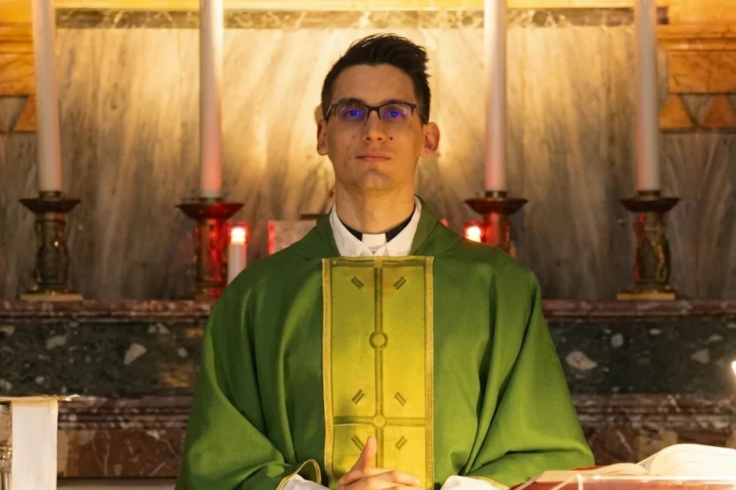
Italian priest Alberto Ravagnani has explained why he left Catholic ministry after seven years, saying celibacy prevented him from feeling fully human and conflicted with his personal needs. 'Theoretically I can have sex,' he said, while making clear that leaving the priesthood did not mean abandoning Catholicism.
Ravagnani announced his decision to leave the Catholic priesthood in February 2026 after approximately seven years of ministry. In a subsequent interview with ABC's triple j Hack, published in March, he explained that the Church's celibacy requirement had become increasingly difficult to reconcile with his personal needs.
Although he said he had never been in a relationship and remained single, he expressed hope of eventually sharing his life with someone.
Alberto Ravagnani Explains Life After Priesthood
Ravagnani, identified as 32 at the time of the interview, spent six years studying at a seminary before serving for seven years as a Catholic priest in Italy. He initially believed celibacy was the right path for him but eventually questioned whether he could continue living under its restrictions.
'While I'm still a Catholic, I am no more a priest, so theoretically I can have sex,' he told ABC's triple j Hack in the March interview. Asked about his reputation as the 'hot priest', he added: 'I've never had any kind of relationship with anybody ... so it's surprising what people are saying about me.'
Celibacy Became His Most Personal Concern
For Ravagnani, the difficulty was not simply about abstaining from marriage and sexual relations. He viewed sexuality as closely connected to identity, self-expression and the human need to feel loved, making the expectation of lifelong celibacy increasingly difficult to reconcile with his personal feelings.
'I wanted to become a priest, but I didn't actually want to be a celibate man,' he said, identifying the restriction as the concern he felt most personally.
He also recalled feeling guilty about masturbation and confessing it to another priest. The apparently unconcerned response he received made him question whether other members of the clergy experienced similar struggles.
Relationship Advice Left Him Feeling Hypocritical
His personal conflict became particularly difficult when young worshippers turned to him for advice about love, sex and relationships. Although he was comfortable discussing those subjects, he struggled with the contradiction between guiding others and being unable to apply the same advice to his own circumstances.
'I was good at talking but I couldn't apply all of this stuff to myself,' he said, describing why counselling young people sometimes left him feeling 'like a hypocrite'.
His concerns also extended beyond relationships to the way priests presented themselves to the public. He recalled a gay worshipper telling him that black clerical robes 'scared' him when he approached a priest for help, reinforcing his questions about whether traditional Church clothing created unnecessary distance between clergy and the people they served.
Social Media Brought Attention and Friction
Ravagnani's unconventional approach to priesthood also attracted attention online. He amassed hundreds of thousands of followers after posting his first social media video during Italy's coronavirus lockdowns in 2020, sharing religious messages alongside photographs of himself at the gym.
His online popularity brought him into contact with influencers and famous people, while he also acknowledged using ChatGPT to help write his sermons.
As his public profile grew, Ravagnani became increasingly outspoken about Church practices. He questioned whether traditional clerical clothing helped priests connect with worshippers, arguing that Christian behaviour should matter more than how someone dressed.
He acknowledged that challenging established expectations had created friction, describing himself as a priest who kept breaking the rules.
Criticism and an Uncertain Future
His approach attracted criticism from people who questioned his theological education, accused him of wanting money, claimed social media had spoiled his life and suggested that the devil had stolen his vocation. Ravagnani rejected those accusations and defended his studies, maintaining that his departure was a decision he had made for himself.
'This choice was not to escape but to try to live the change I want to see for the church,' he said, expressing hope for greater inclusion within Catholicism.
Although he no longer serves as a priest, Ravagnani said he wanted to continue helping young people. He also faced the practical challenge of supporting himself without the financial security that came with priestly life, while looking towards the possibility of a future relationship.
© Copyright IBTimes 2026. All rights reserved.