

'We Will Kill Trump': Threatening Billboard Appears in Tehran Amid Ongoing Peace Negotiations
The installation appeared in Enghelab Square after reported clashes in the Strait of Hormuz, although its organisers and any official authorisation remain unknown
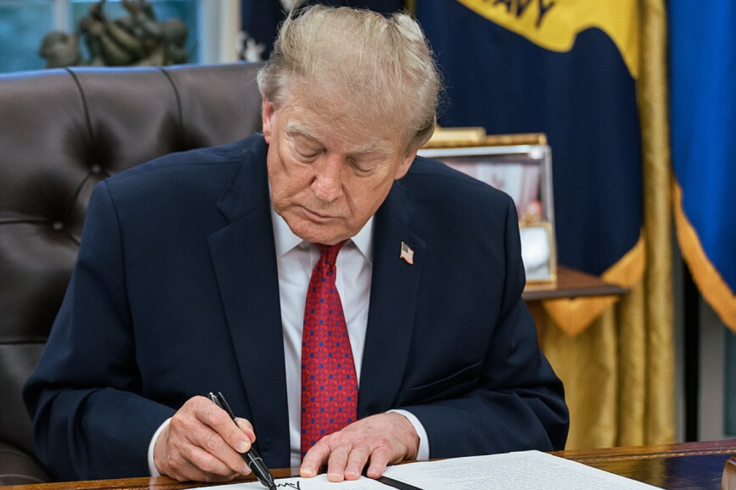
A billboard in central Tehran declaring 'We Will Kill Trump' and depicting the former US president as a prisoner reportedly appeared in Enghelab Square on Tuesday, 3 November, amid fresh clashes in the Strait of Hormuz and ongoing US-Iran peace efforts.
The display followed a series of hostile representations of Trump in the Iranian capital. Images associated with his death or capture have reportedly appeared in public spaces since the war began in February, placing the latest installation within a sequence of displays that preceded the most recent military exchange in the Strait of Hormuz.
The threatening message does not, by itself, establish an operational threat or an official plan to attack Trump. Who commissioned the installation, and whether it reflects a decision by Iranian authorities, remain unestablished in the available account.
Enghelab Square's Latest Trump Image
The billboard portrays Trump with his head bowed, presenting the president as a captive. It was installed in Enghelab Square, a public space in Tehran where protesters also reportedly gathered to demand revenge over an earlier event in the conflict.
Another nearby billboard depicts four figures associated with the negotiations and war. Trump appears alongside US Vice President JD Vance, special envoy Steve Witkoff and Israeli Prime Minister Benjamin Netanyahu, with their faces bloodied and their clothes tattered.
The nearby image extends the hostile portrayal beyond Trump to the other three figures linked to the conflict and negotiations. Its depiction of injuries does not establish that an attack against those individuals is being prepared.
Other installations described in the account include a billboard depicting Trump inside a coffin and a recreated cell containing an actor dressed as the president. Paintings have also portrayed him bloodied or with his face covered by a bomb.
The identity of those responsible for each installation is not established. Their presence in public spaces does not alone demonstrate that the Iranian government commissioned or authorised their content.
Hormuz Clashes and Rising Tensions
The new billboard appeared a day after reported US attacks against Iranian targets in the Strait of Hormuz, a strategic route for transporting oil. The operation took place on Monday, 2 November, according to the account.
A US official attributed the operation to shots fired by the Iranian Revolutionary Guard against a US aircraft. That explanation represents the American official's account of the confrontation. No Iranian response to the allegation appears in the supplied material.
Washington described its attacks as limited defensive actions rather than the announced start of a new military offensive. The description sets out Washington's stated position on the scope of the operation. It does not resolve the allegation concerning Iranian fire, for which the account provides only the US official's explanation.
The reported sequence places the billboard's appearance after the military incident. It does not establish whether the display was commissioned in response to those attacks, or whether its timing was connected to the negotiations.
Trump Still Talking up a Deal
Despite the military incidents, Trump maintained that an agreement with Tehran remained possible. He stated that Iran was seeking a quick solution, although demands on both sides continued to hinder conversations.
The available account does not specify proposed settlement terms or a timetable for reaching an agreement. It also leaves unresolved how the latest military exchange might affect those diplomatic efforts.
The billboard appeared on the same day as the US legislative elections, held halfway through Trump's second term. The coincidence is reported, but no explanation is provided for the choice of date.
Protesters in Enghelab Square reportedly demanded revenge for the death of Ali Khamenei, described in the account as Iran's supreme leader at the time. The account attributes his death to US and Israeli attacks in February, months before the latest reported operation in Hormuz.
© Copyright IBTimes 2026. All rights reserved.