Apple's $1,999 Foldable iPhone Ultra Drops Face ID and Adds Touch ID — Six Things You Need to Know Before You Buy
Premium iPhone lineups completely dropped fingerprint scanning after the iPhone 8 series

Apple is building its most expensive iPhone ever, and it won't unlock with your face.
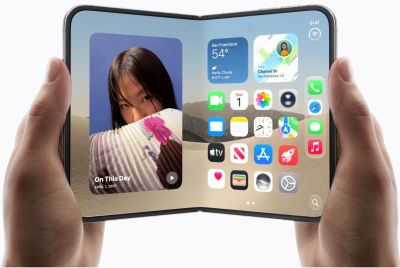
The iPhone Ultra, Apple's first foldable smartphone expected in September 2026, will start at $1,999 (£1,478) and ship without Face ID, a telephoto camera, or a physical SIM slot. At nearly double the price of a standard Pro model, the foldable carries a striking set of trade-offs that every buyer on an upgrade cycle should understand before putting down a deposit.
Touch ID Returns After a Decade
The Ultra's chassis measures just 4.5mm when unfolded, making it Apple's thinnest iPhone by a wide margin. That slimness can't accommodate the TrueDepth camera array required for Face ID. Apple will instead use a Touch ID sensor built into the power button, similar to the iPad Air.
While budget models like the iPhone SE kept the fingerprint sensor around for years, the premium iPhone flagships completely abandoned the technology after 2017's iPhone 8 series.
For the first time in exactly ten years, Apple's absolute highest-priced, top-tier device will rely on a fingerprint to unlock.
Glaring Camera Compromises
The foldable will carry two rear cameras, both 48MP wide and ultrawide sensors, with no telephoto lens for optical zoom. Apple's US imaging team reportedly tested telephoto capabilities on rival foldables from Huawei and Samsung, but couldn't fit the hardware into the Ultra's thin frame. Buyers hoping to zoom in on distant subjects will have to rely strictly on digital cropping.
Squeezing in Camera Control Forced an eSIM-Only Future
What made the cut was Camera Control, the dedicated shutter button first introduced on the iPhone 16. According to leaker 'Instant Digital' on Weibo, Apple made deliberate engineering compromises to include the button, believing it solves the 'cumbersome' one-handed photo experience on large foldable screens. To fit Camera Control, Apple dropped the physical SIM slot entirely and adopted eSIM-only connectivity across all regions.
Limited to Just Two Colour Options
The iPhone Ultra will launch in just two finishes. A Macworld supply chain source identified the options as a silver and white model and an indigo shade similar to the iPhone 17 Pro's Deep Blue.
Severe Launch Shortages and Tight Supply
Supply chain analyst Ming-Chi Kuo has warned that early-stage yield and ramp-up challenges could lead to shortages through the end of 2026, with smooth shipments unlikely before 2027. Kuo noted that Apple's widely reported component order of 15 to 20 million units actually covers the device's full two-to-three-year lifecycle, not a single launch year. Recent supply chain adjustments suggest first-year production will scale down, targeting roughly 8 to 10 million units.
A Staggering $800 Price Premium
At $1,999 (£1,580) for a 256GB model, the Ultra will cost roughly $800 (£591) more than the $1,199 (£886) iPhone 17 Pro Max. That Pro Max already includes Face ID, a telephoto camera, MagSafe, and a wider range of colour choices.
Should You Wait or Grab the iPhone 18 Pro?
The iPhone 18 Pro and Pro Max will launch alongside the Ultra in September and are expected to retain Face ID, telephoto cameras, and more colour options at significantly lower prices. For buyers who don't need a foldable screen, the 18 Pro lineup will offer a more complete everyday phone.
The Ultra's 7.8-inch (19.8-cm) inner display, 5.5-inch (14-cm) outer screen, A20 Pro chip on a 2nm process, and titanium frame with a crease-minimising hinge make it a genuine engineering achievement. But it is also a first-generation device that removes features most iPhone users depend on daily, both unlocking with a glance and zooming into distant subjects, while carrying the highest price Apple has ever asked.
Apple has not confirmed any specifications. All details are based on supply chain reporting and analyst forecasts. The company typically announces its new iPhone lineup at a September event, with pre-orders opening the following week.
© Copyright IBTimes 2026. All rights reserved.
- Recommended For You