Australia's Social Media Ban for Under-16s Isn't Working, Study Suggests—Just as Britain Plans Its Own
New research questions the effectiveness of Australia's social media restrictions for under-16s, as Britain moves to do the same.

Australia's social media ban for under-16s has failed to make a meaningful dent in teenage use of major platforms, according to new research published on 25 June in The BMJ, raising fresh questions as the UK prepares to introduce its own restrictions on children's access to social media.
The study, conducted by researchers at the University of Newcastle in Australia, found that 85% of under-16s were still using social media months after the country's landmark ban came into force in December.
For context, Australia became the first country to implement a nationwide social media ban aimed at children under 16, requiring platforms to take 'reasonable steps' to prevent underage users from accessing their services. The policy was closely watched by governments around the world, including Britain, where ministers are considering similar measures amid growing concerns about online harms, mental health, and youth safety.
The latest findings suggest the Australian experiment has produced far more complicated results than policymakers may have hoped.
Australia's Social Media Ban Faces Early Questions
Researchers found that daily social media use remained largely unchanged among younger teenagers despite the legislation. Among children aged 12 to 13, daily use showed no significant decline. Usage among 14 to 15-year-olds fell from 78% to 69%, while social media engagement among those aged over 16 actually increased by 9%.
Perhaps more striking was how many underage users continued accessing platforms through their existing accounts. The study found that between 54% and 68% of underage participants were still using accounts they already owned, despite the legal restrictions. Around two-thirds reported being asked by platforms to verify their age.
Those figures point towards a challenge confronting governments worldwide. Passing legislation is one thing. Enforcing it across sprawling global technology platforms is another.
Andy Burrows, chief executive of the Molly Rose Foundation, said the research indicated Australia's world-first ban had not made 'any meaningful difference to how long teenagers spend using high-risk sites'.
The findings also challenge assumptions about how young people might circumvent restrictions. Prior to implementation, many experts predicted widespread use of virtual private networks, or VPNs, similar to the behaviour seen after Britain introduced stricter age checks for adult websites.
Researchers reported that VPN use was 'rarely reported' among participants. Instead, teenagers who bypassed restrictions were more likely to use another person's account or create a new account using a false age.
That distinction matters because it suggests the issue may not primarily be technologically sophisticated workarounds. Rather, it appears that many platforms have struggled to remove underage users from their ecosystems fully.
UK Social Media Ban Underway
The study arrives at a sensitive moment for the UK government, which is advancing plans for stronger protections aimed at limiting children's exposure to potentially harmful online content.
Recent polling and government consultations have shown strong public support for tougher online safety measures. Yet the Australian experience is likely to fuel debate over whether outright bans can deliver the outcomes politicians promise.
Three months after Australia's law took effect, seven in ten parents told the country's eSafety Commissioner that their underage child still maintained a social media account. The new academic research appears to reinforce those earlier warning signs.
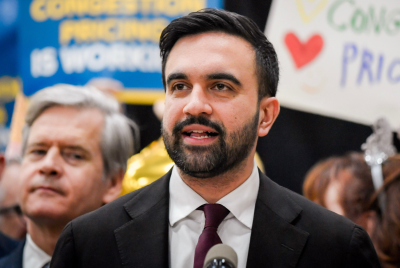
When questioned about adopting a similar approach despite mixed evidence from Australia, UK Online Safety Minister Kanishka Narayan argued Britain intends to impose stricter requirements than those currently operating under the Australian model.
A Strict Alternative to Australia's Social Media Ban
According to Narayan, the UK wants platforms to implement 'highly effective age assurance' measures rather than simply taking 'reasonable steps' to identify and remove underage users.
That distinction could prove critical.
Potential solutions include more rigorous age-verification systems similar to those already used for adult-content websites. Researchers behind the Australian study also suggested device-level age verification may ultimately be necessary if governments want such restrictions to achieve their intended effect.
Not everyone believes the Australian results should be interpreted as evidence that bans are inherently flawed. Writing separately in The BMJ, Louise Holly, policy and research coordinator at the University of Geneva, described the findings as 'worrying' but argued the focus should remain on platform compliance rather than children's behaviour.
'The law was not designed to change the habits of children, but the practices of selected social media platforms,' she wrote.
That observation cuts to the heart of the upcoming social media ban in Britain. If platforms cannot effectively enforce age restrictions, even the most ambitious legislation risks becoming symbolic rather than transformative.
The Australian findings do not definitively prove that youth social media bans cannot work. What they do suggest is that lawmakers hoping for rapid behavioural change may face a far tougher challenge than anticipated as the UK moves closer to introducing its own restrictions.
© Copyright IBTimes 2026. All rights reserved.
- Recommended For You