Are Aliens Even Real? Harvard Physicist Avi Loeb Details Upcoming Historical Cosmic Revolution
For Avi Loeb, the real upheaval will not come from our wars or politics, but from the moment the cosmos finally answers back.

Harvard physicist Avi Loeb says humanity is on the brink of a 'major revolution' as advances in artificial intelligence and the search for alien life accelerate, telling a reporter in Athens this week that the coming decades could make our future 'completely different' from our past if evidence of extraterrestrial intelligence is finally found.
Loeb, who teaches at Harvard University and has become one of the most prominent academic voices arguing that the alien question deserves serious attention, was responding to a series of written questions about the state of the world and the universe. His answers, published on Medium, range from fresh results from his Galileo Project observatories in Nevada to his long-running fascination with interstellar visitors such as Oumuamua and a 2014 meteor known as IM1. His more speculative claims have not been independently verified, and he repeatedly stresses that hard data, not belief, must ultimately decide whether aliens are even real.
Avi Loeb's Cosmic Revolution
Loeb's starting point is a bleakly familiar one. He lists wars, the climate crisis, political polarisation and runaway technology as defining features of the present moment. Against that, he argues, stand two disruptive forces that could jolt human history off its current path: the exponential growth of AI and the potential discovery of alien intelligence in our 'cosmic neighbourhood.'
He likens the moment of contact to 'hearing a knock on the door by a neighbour.' In his view, the recognition that we are not the only technological civilisation would be so profound that it might push humanity away from conflict and towards cooperation. If interstellar visitors turn up, he suggests, we are all in the same boat, and it suddenly matters that no one behaves irresponsibly.
🚨 Harvard astrophysicist Avi Loeb says humanity may be on the verge of the biggest discovery in history: proof we are NOT alone. 👀
— 3I/ATLAS updates (@Defence12543) May 28, 2026
Loeb claims the search for alien intelligence could completely transform civilization — ending wars, reshaping religion, and forcing humanity to… pic.twitter.com/tyN2gHbxGv
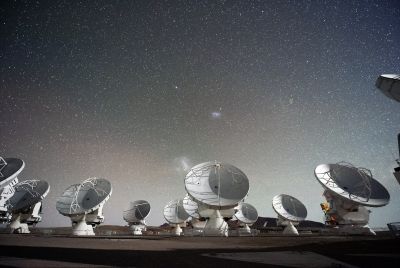
To try to answer whether aliens are even real in any practical sense, Loeb founded the Galileo Project five years ago. The initiative uses cameras and sensors to monitor the sky in real time, looking for what he calls 'rare outliers' that do not fit standard categories such as aircraft, satellites, insects or natural atmospheric phenomena.
He says the project has now tracked millions of objects and confirmed that 'the vast majority of them are human made or natural phenomena.' The point, he argues, is not quantity but the one exception. 'Even if one object is extraterrestrial,' he says, 'it would be the biggest discovery that humanity ever made. We only need to find one.'
UFO Files And Interstellar Visitors
The technical work behind that search has quietly stepped up. Loeb says the Galileo Project now operates three observing units in Nevada, separated by 10 kilometres. Watching the same object from three slightly different angles allows his team to triangulate its distance and reconstruct its position, speed and acceleration in three dimensions with 'better than 10%' accuracy.
He draws a sharp contrast with recent UFO files released by the Pentagon, which lacked basic distance information. From a single vantage point, he notes, a nearby bug can look like a large fast-moving craft. Without knowing how far away an object is, he argues, it is impossible to say whether it is performing beyond human-made technology.
After reviewing the newly declassified military videos, Loeb's team concluded that none of the objects required an 'exotic origin.' That did not satisfy him. He says he was 'disappointed by the lack of sufficient information' and insists that better data are needed. His answer, rather than waiting for further government releases, is blunt: 'We can simply look up.'
His interest in anomalies predates Galileo. He remains preoccupied by Oumuamua, the first known interstellar object to pass through the Solar System in 2017. The data were sparse, but he points to two striking features. Its reflected sunlight varied by a factor of 10 every eight hours, suggesting an unusually elongated or flat shape, and it appeared to accelerate slightly away from the Sun without any detectable gas or dust tail.
Loeb proposed that sunlight pressure on a very thin object might explain the force, which led him to ask whether Oumuamua could be artificial. He later pointed to 2020 SO, a piece of a 1966 NASA lunar mission that showed a similar light-sail effect once correctly identified, as proof that human technology can mimic such behaviour.
More recently, he has tried to bring order to these mysteries with what he calls the Loeb Classification Scale. On that scale, a 0 is a definitely natural rock or iceberg and a 10 is confirmed alien technology posing a threat. He says both Oumuamua and another interstellar object, 3I/ATLAS, score a 4, meaning they are interesting anomalies but not proof of anything extraterrestrial.
He is more concrete about IM1, a meteor that hit the Pacific in 2014. Loeb's team led an expedition to its crash site and recovered tiny molten droplets less than a millimetre across. He says about a tenth of these spherules show chemical and isotopic signatures that deviate from known Solar System materials and are 'most likely extrasolar.' If that holds up under wider scrutiny, he argues, it would be the first time scientists have studied material from a large object that arrived from outside our planetary system.
What If Aliens Are Real?
Pressed on what would actually change if IM1 or Oumuamua were proved to be artificial, Loeb suggests a slow-burn revolution rather than an instant transformation. A confirmed piece of alien technology, he says, would force us to rethink our place in the universe, push more investment into space exploration and perhaps even reshape some religious thinking. He imagines believers recognising that 'God is not a parent who attends to a single child.'
He is blunt about his critics. Many of his academic colleagues remain sceptical of his focus on aliens, but he says he has 'learned to ignore the audience.' The job of a good scientist, he argues, is to keep their eyes on the ball, not the crowd. In his view, real progress comes from chasing anomalies in the data, while clinging to untestable ideas such as string theory and the multiverse is the real irresponsibility.
On the classic Fermi paradox, if intelligent life is common, where is everyone, Loeb's answer is characteristically direct. 'They might be right here,' he writes, arguing that humanity may simply not have searched its own cosmic backyard carefully enough.
If that ever changes and aliens are even real, he is confident it will be 'good news.' He compares it to discovering a more accomplished sibling. Jealousy is possible, he admits, but so is inspiration.
© Copyright IBTimes 2026. All rights reserved.
- Recommended For You