SpaceX at $2.1 Trillion Is 'Still Cheap', Investor Claims in $50 Trillion Thesis as Musk Responds
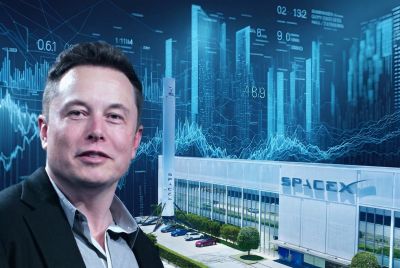
SpaceX is now valued at $2.1 trillion, but one investor argues the company remains significantly undervalued


SpaceX has reached a staggering valuation of $2.1 trillion, making it one of the most valuable companies in the world. Yet for some investors, the number is not nearly high enough.
A viral social media post by French entrepreneur and investor Brivael Le Pogam has captured attention across the technology and finance worlds after he argued that SpaceX could eventually be worth between $30 trillion and $50 trillion. The post gained even more traction when Elon Musk responded with a brief comment, writing: 'Interesting analysis.'
The exchange has sparked fresh discussion about how investors should value a company that aims not only to launch rockets but also to reshape humanity's future beyond Earth.
The Argument Behind the $50 Trillion Prediction
Le Pogam's central claim is that many analysts are approaching SpaceX in the wrong way. According to his thesis, traditional valuations focus primarily on the company's launch services and Starlink satellite internet business. While both operations are already highly valuable, he argues they represent only a fraction of SpaceX's long-term potential.
In his view, the real story lies in Starship, the company's next-generation reusable rocket system. If Starship succeeds in dramatically reducing the cost of reaching orbit, entirely new industries could emerge.
Le Pogam compared the situation to the early days of the internet. He argued that valuing SpaceX solely on its current business would be similar to valuing the internet in the 1990s based only on existing communications technologies, without considering the industries that would later develop around it.
A Bet on Lower Costs and Bigger Markets
The investor's thesis is built on a simple economic principle. When the cost of a critical technology falls dramatically, new markets often emerge. Cheaper computing helped create the internet economy. Falling costs in mobile technology led to the smartphone revolution. Supporters of the bullish SpaceX case believe lower launch costs could have a similar effect on space-related industries.
Among the opportunities frequently discussed by advocates are orbital data centres, microgravity manufacturing, large-scale space tourism, and rapid point-to-point transport on Earth using rocket technology. Some proponents also point to longer-term possibilities, including asteroid mining and infrastructure projects linked to future missions to Mars. Many of these industries remain speculative. However, supporters argue that they could become commercially viable if access to space becomes significantly cheaper.
Why Some Investors See SpaceX as Infrastructure
A key part of the argument is that SpaceX may ultimately be more than a transportation company. Rather than participating in future space markets, supporters suggest SpaceX could provide the infrastructure that enables those markets to exist.
The comparison is often made with major technology platforms that benefited from becoming essential infrastructure for broader economic activity. Under this view, SpaceX would earn value not only from its own operations but also from serving as the gateway for countless businesses operating in space. That belief underpins forecasts that appear extraordinary by today's standards.
Significant Challenges Remain
Despite the enthusiasm surrounding the company, substantial hurdles remain. Starship is still undergoing development and testing. Regulatory requirements, technical challenges, and safety considerations will continue to influence the pace of progress.
Many of the industries cited by supporters do not yet exist on a meaningful commercial scale. Their economic viability remains uncertain. History is also filled with examples of transformative technologies that took longer than expected to reach widespread adoption. For these reasons, many investors remain cautious about assigning valuations based on industries that have yet to materialise.
Musk's Brief Response Fuels Debate
Musk's response was short, but it ensured the discussion reached a much wider audience. His comment neither endorsed nor rejected the prediction. Instead, it highlighted the growing debate over how investors should think about SpaceX's future.
For supporters, the company's valuation reflects the possibility of a future defined by expansion, technological progress, and a thriving space economy. For sceptics, trillion-dollar projections depend on assumptions that remain far from certain.
What is beyond dispute is that SpaceX has already transformed the aerospace industry through reusable rockets, commercial launch services, and satellite connectivity. Whether it can become the foundation of entirely new industries and justify the enormous valuations proposed by its most enthusiastic supporters remains one of the most closely watched questions in global business. For now, investors have placed a significant bet on SpaceX's future. The debate is over just how large that future could become.
© Copyright IBTimes 2026. All rights reserved.
- Recommended For You