

'You Are a Parasite': Elon Musk Humiliated After Attacking NYC Mayor Over Secret $38 Billion Government Handouts
The debate between Mamdani and Musk highlights contrasting views on wealth, government support, and economic policy.
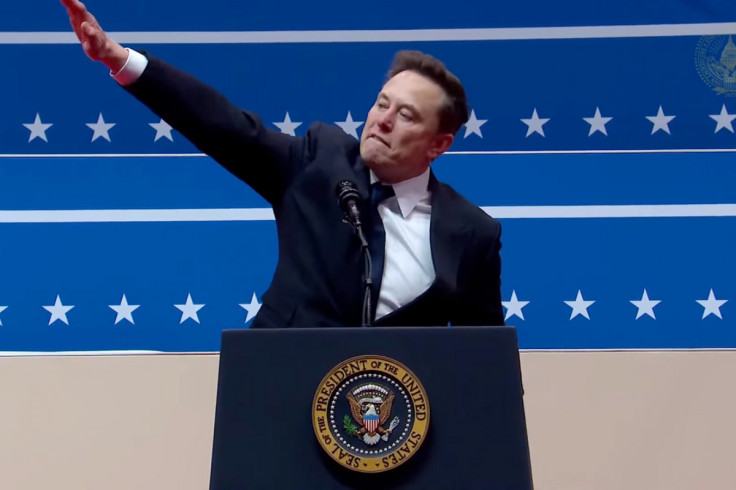
Zohran Mamdani's criticism of extreme wealth has sparked a public clash with Elon Musk, quickly turning into a wider debate over the billionaire's own reliance on government support. After the New York City mayor accused America's richest individuals of benefiting while inequality persisted, Musk fired back on social media, only for critics to respond by highlighting the billions of dollars his companies have received from taxpayers over the years.
The exchange gathered momentum after a Washington Post investigation resurfaced, reporting that Musk's businesses had received at least $38 billion in government contracts, loans, subsidies and tax credits. The findings became a central point of criticism as users challenged Musk's description of himself as a 'maker' rather than a 'taker.'
Musk's Response Sparks Online Backlash
Musk responded directly to Mamdani's remarks on X. 'Mamdani has built nothing,' Musk wrote. 'He is a taker, never a maker.'
Mamdani has built nothing. He is a taker, never a maker.
— Elon Musk (@elonmusk) July 3, 2026
The post quickly drew widespread attention, with many of the most widely shared replies pointing to the extensive public support received by Musk's companies. One user described Musk as the 'biggest single recipient of US taxpayer dollars of all time,' while others argued that government assistance had played a significant role in building Tesla and SpaceX into two of the world's most valuable companies.
Government Support Becomes the Focus
Government funding helped support the early growth of several of Musk's businesses through a combination of contracts, loans, subsidies and tax incentives.
Exclusive: Over the years, Elon Musk and his businesses have received at least $38 billion in government contracts, loans, subsidies and tax credits, a Post analysis has found, helping seed the growth that has made him the world’s richest person. https://t.co/URhMXm1pZ2
— The Washington Post (@washingtonpost) February 26, 2025
The newspaper reported that the combined value of those programmes had reached at least $38 billion, making the issue an enduring point of debate whenever Musk presents himself as an entrepreneur who succeeded without government assistance. Grassroots organiser Jay Ponti was among those who challenged Musk's post. Referring to Tesla's origins, he noted that the company was founded by Martin Eberhard and Marc Tarpenning before Musk became involved.
Eberhard and Tarpenning founded Tesla. You didn’t invent eBay or Twitter. Your wealth is from acquisitions, hostile takeovers, and stealing credit. Everything you have was built by workers and you fight to keep from unionizing while you receive govt welfare. You are a parasite.
— Jay Ponti (@jayponti) July 7, 2026
'You didn't invent eBay or Twitter,' Ponti wrote. He continued: 'Your wealth is from acquisitions, hostile takeovers, and stealing credit. Everything you have was built by workers and you fight to keep from unionizing while you receive [government] welfare.' Ponti ended with the line that became one of the most widely circulated responses to Musk's post: 'You are a parasite.'
Mamdani Highlights a Different Economic Vision
The exchange also underscored the contrasting political philosophies of the two men.
Mamdani has built much of his political platform around expanding the role of government in reducing living costs. His administration has proposed measures including expanded affordable childcare, stronger enforcement against wage theft affecting gig workers, city-run grocery stores and a tax on second homes owned by wealthy New Yorkers.
After Musk briefly became the world's first trillionaire following SpaceX's public listing, Mamdani reinforced his position with another post on X. 'Reason #1,000,000,000,000 why we should tax the rich,' he wrote.
Reason #1,000,000,000,000 why we should tax the rich. https://t.co/ELgIUwwXns
— Mayor Zohran Kwame Mamdani (@NYCMayor) June 12, 2026
The differing responses reflect a broader ideological divide, with Musk frequently arguing for a smaller role for government in the economy while Mamdani advocates greater public investment and redistribution through public policy.
Debate Extends Beyond a Social Media Exchange
The disagreement has also highlighted how government spending remains a point of contention in American politics.
Mamdani recently announced the creation of the Commission on Government Efficiency, an initiative intended to modernise city services, improve accountability and streamline municipal administration. Although the name echoes Musk's former Department of Government Efficiency, the New York programme is focused on improving public services rather than reducing the size of government.
What began as a brief exchange on social media has therefore evolved into a wider debate over wealth, taxpayer support and the role government should play in shaping the American economy.
© Copyright IBTimes 2026. All rights reserved.