

How Elon Musk Turned Tesla Into a $1 Trillion Carmaker Worth More Than the Next 10 Rivals Combined
Investors treat it as an AI and robotics firm, but sceptics warn the sums look impossible for a company that builds cars
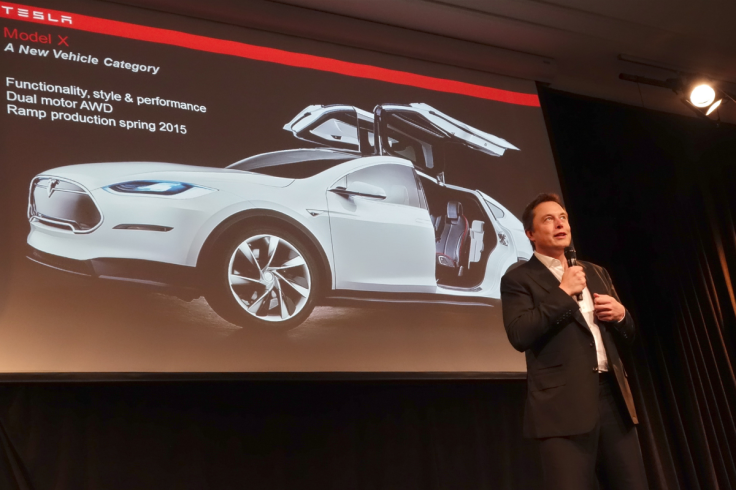
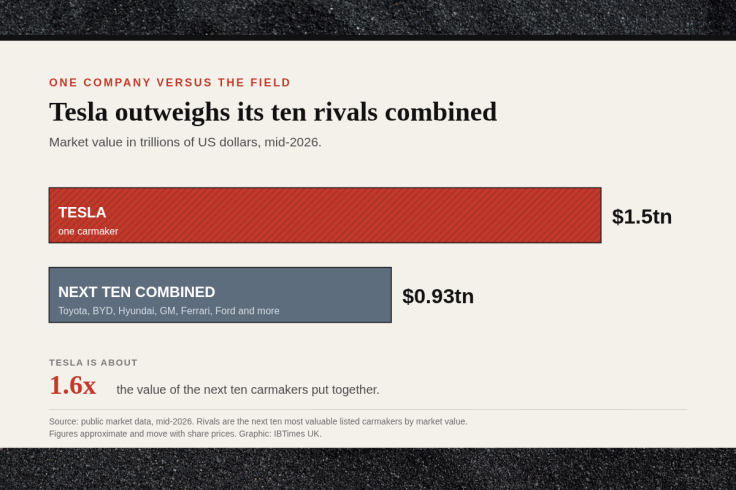
Elon Musk has built Tesla into a company worth around $1.5 trillion (£1.1 trillion), a valuation so large that it exceeds the combined worth of the next 10 most valuable carmakers on the planet. Tesla passed the $1 trillion mark in 2021 and, after a turbulent 2025, now sits far beyond it, even though it sells a fraction of the cars its rivals do.
The gap is stark. Toyota, the world's biggest carmaker by sales, is valued at roughly $225B (£168B), while China's BYD, which outsells Tesla in electric vehicles, sits near $124B (£93B). Add Ferrari, General Motors, Ford, Hyundai, Porsche, Mercedes-Benz, and the rest of the top 10 together, and the total still falls short of Tesla alone, according to market data. The scale of the gap is easier to grasp on a chart, as the graphic below shows.
The headline number only makes sense once the buyer accepts what investors are really acquiring. Tesla trades on a price-to-earnings ratio of well over 200, a multiple no traditional carmaker comes close to and one normally reserved for fast-growing technology firms. Toyota, by contrast, trades in the single digits.
Musk argues that Tesla should be judged as an artificial-intelligence and robotics company that happens to make cars. The value, on this view, lies in its self-driving software, its robotaxi service, and its Optimus humanoid robot, not in the metal on the forecourt. Investors who buy the stock at these levels are betting on that future, not on the roughly 1.6 million vehicles Tesla delivered in 2025.
Why the Market Believes the Story
There is substance behind the pitch. Tesla generated close to $98B (£73B) in revenue in 2025, runs some of the most advanced battery and energy-storage operations in the world, and has begun rolling out a paid robotaxi service in a handful of US cities. It's full self-driving software, while still supervised, has millions of users feeding it data no rival can match.
Musk's showmanship has also proved a genuine financial asset. Time and again, he has convinced markets to price Tesla for a future few can see, from the early Model 3 gamble to the current robotics push. That credibility, rebuilt after his political entanglements rattled the shares in early 2025, is a large part of why the company recovered and pushed higher.
The Case That It Is Wildly Overvalued
Not everyone is convinced, and the doubters are neither few nor quiet. Investor Michael Burry, who famously bet against the 2008 housing market, has publicly branded Tesla's valuation absurd and criticised Musk's pay. The blunt objection is simple: no carmaker in history has earned enough to justify a $1.5 trillion price tag, and Tesla is still, by revenue, mostly a carmaker.
The warning signs are real. Tesla's annual deliveries fell for the first time in 2024, BYD has overtaken it in global EV sales, and the robotaxi and Optimus products that supposedly justify the valuation remain early and unproven. If self-driving approval drags on, or the robotics promise slips, the gap between the share price and the underlying business could close painfully.
A Bet on Musk as Much as on Tesla
What the valuation ultimately reflects is confidence in one man's ability to keep delivering the improbable. Tesla is priced not as a car company but as a wager that Musk will turn it into something far larger, an autonomy and robotics giant with reach well beyond the road.
Whether that bet pays off will define the next decade for Tesla and for the investors along for the ride. For now, the company stands as the most valuable carmaker in history by a wide margin, carrying both the ambition and the risk that come with being priced for a future that has not yet arrived.
© Copyright IBTimes 2026. All rights reserved.