Elon Musk's SpaceX Is Buying Cursor For 60 Billion Making Four Young Friends Billionaires
Elon Musk's SpaceX strengthens its AI ambitions with the acquisition of Cursor, marking a significant move in the enterprise software market.
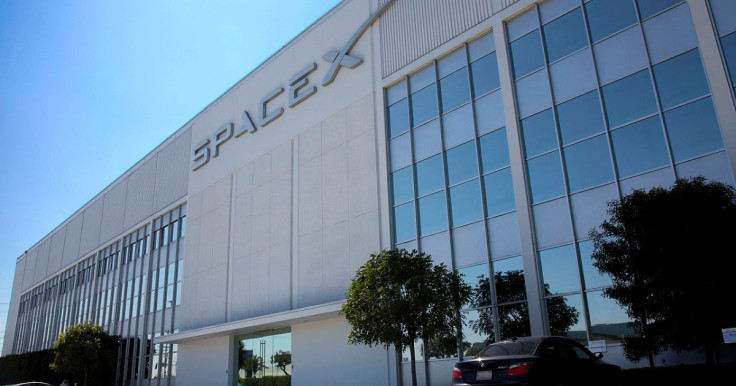
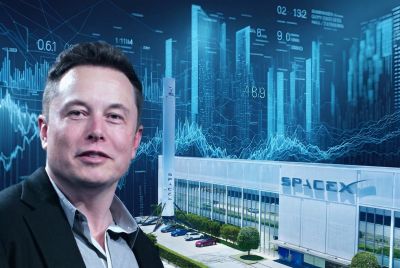
Elon Musk's SpaceX has agreed to buy Cursor, the fast-growing AI coding startup behind Anysphere, in a $60 billion (£44.75 billion) all-stock deal that ranks among the largest artificial intelligence acquisitions to date.
The transaction hands Cursor's four young founders a billionaire windfall, strengthens SpaceX's position in enterprise AI and signals that Musk sees software and developer tools as a major part of the company's future beyond rockets and satellites.
BREAKING: SpaceX is acquiring Cursor in a $60 billion all-stock deal.
— DogeDesigner (@cb_doge) June 16, 2026
• Cursor is being valued at $60 billion
• Cursor will become a wholly owned SpaceX subsidiary
• Cursor shareholders will receive SpaceX Class A shares
• The exchange ratio will be based on SpaceX’s 7-day… pic.twitter.com/pAIHBieOf8
The deal comes only days after SpaceX's blockbuster Nasdaq debut pushed its valuation above $2 trillion (£1.49 trillion). By moving from partnership to ownership, the company is using its soaring stock price to secure one of the most sought-after assets in artificial intelligence.
From Coding Assistant To AI Expansion
The acquisition is about more than a popular coding tool. SpaceX has told investors it sees a total addressable market worth $28.5 trillion (£21.26 trillion), with a significant share tied to artificial intelligence and enterprise software.
According to Reuters, Cursor's rapid growth has been constrained partly by limited access to computing power despite strong demand from developers. For SpaceX, the startup offers both a proven product and a fast-growing customer base in one of the few AI segments already generating substantial revenue.
Cursor's developer market share dropped from 41% to 26% in the last twelve months. And revenue doubled to $4B ARR in the same period.
— Aadit Sheth (@aaditsh) June 16, 2026
Both are true at the same time.
The $4B is real but it's mostly enterprise contracts that Fortune 500 companies signed months ago. And now… https://t.co/ZSuNUvN1QS
The move also suggests SpaceX is willing to accelerate its AI ambitions through acquisitions rather than relying entirely on internal development.
Four Founders Become Billionaires
The human story behind the deal is difficult to ignore.
Cursor co-founders Michael Truell, Aman Sanger, Sualeh Asif and Arvid Lunnemark are expected to become billionaires once the acquisition closes. Forbes estimates each founder's stake will be worth roughly $2.7 billion (£2.01 billion) under the terms of the agreement.
What began in 2022 as a project built by four MIT friends has become one of the AI boom's most remarkable success stories. In less than four years, Cursor moved from startup status to the centre of a bidding contest involving some of the technology industry's biggest players.
The company's growth helps explain the interest. Forbes reported in June that Cursor's annualised revenue had surpassed $4 billion, up from $3 billion (£2.24 billion) in April and $2 billion (£1.49 billion) in February, making it one of the fastest-growing software businesses in the sector.
Compute And Competition
Revenue is only part of Cursor's appeal.
SpaceX has indicated that Cursor's developer ecosystem and usage data could help improve AI products such as Grok, while giving the company a coding platform already embedded in developers' daily workflows.
The companies have also been working together on AI model development using SpaceX's Colossus supercomputer. Jointly developed models are expected to appear in both Cursor and Grok products, creating potential benefits for both platforms.
For SpaceX, the acquisition could shorten the path towards competing more aggressively with rivals such as OpenAI and Anthropic in coding tools and enterprise AI, two of the industry's fastest-growing markets.
Why The Numbers Matter
The structure of the transaction is almost as important as the technology.
By paying with stock rather than cash, SpaceX is using its post-IPO valuation as acquisition currency. Shares rose about 10% after the announcement, adding billions in market value and reinforcing the logic of an all-stock purchase.
🚀 Four MIT students started Cursor as a side project…
— Wilson Ye (@wilsonye2025) June 17, 2026
Now it’s worth $60 Billion+.
We’ve been using Cursor for more than a year — and it’s still blowing our minds.
Insane what happens when you build something people actually love.#Cursor #Vibecoding pic.twitter.com/oVdYUFel74
There are still risks. Reuters reported that SpaceX could face a $10 billion (£7.46 billion) termination fee if the agreement collapses under certain conditions, or $4 billion (£2.98 billion) if regulatory concerns derail the transaction. Those figures suggest the company expects close scrutiny as regulators continue examining consolidation in the AI sector.
More Than A Startup Deal
Cursor's rise, and SpaceX's decision to buy it outright, says something larger about where Musk believes the AI market is heading.
This is not simply a purchase of a successful software company. It is part of a broader effort to bring together computing infrastructure, AI models, developer data and software distribution under one corporate umbrella.
That ambition helps explain why the $60 billion (£44.75 billion) price tag has attracted so much attention. SpaceX is betting that the companies best positioned to dominate artificial intelligence will be those that control the entire chain, from training systems to the products developers use every day. With Cursor now part of the company, Musk is signalling that SpaceX intends to be one of them.
© Copyright IBTimes 2026. All rights reserved.
- Recommended For You