

California Law Taking Effect Jan. 1 Requires Teens up to 16 To Use Booster Seats Unless They Pass Test
The new standard makes proper seat belt fit central to deciding when children can safely move out of a child restraint
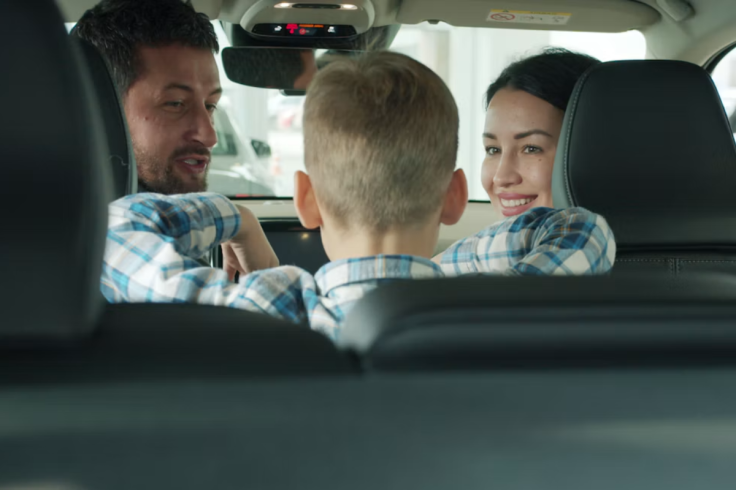
California's booster seat law will introduce stricter child passenger safety requirements on 1 January 2027, affecting children aged eight to 15. Parents, legal guardians and drivers must ensure that children meet five seat-belt fit criteria before travelling without an appropriate child passenger restraint system.
California Governor Gavin Newsom signed Assembly Bill 435 (AB 435), introduced by Assemblymember Lori Wilson, into law on 7 October 2025. Although the legislation took effect on 1 January 2026, its revised restraint requirements take effect a year later.
The legislation aims to reduce serious injuries and deaths among young passengers. However, it does not impose a universal booster seat mandate for teenagers or prescribe a specific type of restraint for every child.
California Booster Seat Law Introduces Five-Step Safety Test
Under the amended California Vehicle Code Section 27360.5, children must sit fully against the vehicle seat, with their knees bent over its edge.
The shoulder belt must fit snugly across the centre of the chest and shoulder, away from the neck. The lap belt must sit as low as possible, touching the thighs.
Children must also maintain this seating position throughout the journey. Those who do not meet all five criteria must generally use an appropriate child restraint system that complies with federal motor vehicle safety standards.
The test is a statutory seat belt fit standard, not a formal examination requiring certification. It accounts for differences in vehicle interiors that height measurements alone may not capture.
Earlier versions of AB 435 proposed raising the minimum age for child restraints to 13 and modifying front-seat restrictions. Senate amendments removed those provisions before the legislation was enacted.
Why California Is Tightening Its Booster Seat Law
Research indicates that many American children are travelling in improperly fitted restraints or moving to standard seat belts prematurely.
The National Highway Traffic Safety Administration (NHTSA) published findings in 2015 from a nationally representative study conducted in 2011. The study found significant installation or usage errors in 46% of car seats and 46% of booster seats.
In September 2021, AAA and the National Safety Council reported that 73% of inspected forward-facing car seats were improperly installed.
Their findings also indicated that more than 90% of children under 10 who were using lap-and-shoulder belts should still have been using a car seat or booster seat.
The Automobile Club of Southern California and AAA Northern California, Nevada & Utah supported the legislation, emphasising the importance of properly fitted child restraints.
California Booster Seat Law Carries Financial Penalties for Violations
Under California Vehicle Code Section 27360.6, a first conviction carries a statutory fine of $100 (€91 and £76). A second or subsequent conviction carries a fine of $250 (€228 and £190).
A proposed 2027 court penalty schedule lists a total bail of $486 (€443 and £370) for a first violation, including additional assessments.
The schedule is awaiting the Judicial Council's consideration on 11 December 2026. Courts may also reduce or waive statutory fines for qualifying economically disadvantaged defendants referred to community education programmes.
Existing safety requirements for younger passengers remain in force. Children under eight generally must use appropriate restraints in the rear seat, except as provided by law.
Children under two must use rear-facing restraints unless they weigh at least 40 pounds or are at least 40 inches tall. Manufacturer-specified height and weight limits must also be observed.
Both the NHTSA and the American Academy of Paediatrics recommend that children under 13 sit in the back seat to reduce the risk of airbag-related injuries.
UC Davis Health offers free car seat checks conducted by child passenger safety specialists, enabling families to assess restraint suitability before the January changes.
© Copyright IBTimes 2026. All rights reserved.