

Charlie Kirk Case Update: DNA Found on Trigger But Autopsy Bullet Match Is Inconclusive
In the absence of a clean ballistic match, the Charlie Kirk case is being stitched together from damaged metal, engraved casings and the messy traces people leave behind.
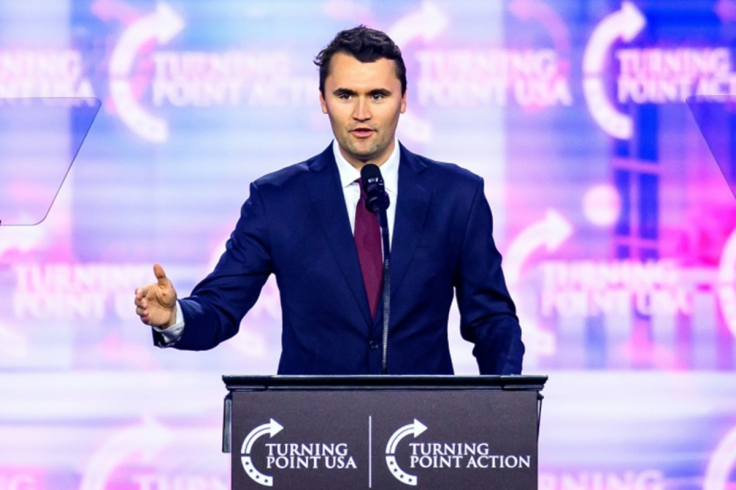
Charlie Kirk was shot dead on stage at Utah Valley University in Orem in September 2025, and now a preliminary hearing for the man accused of killing him has heard that bullet fragments taken from Kirk's body cannot be conclusively matched to the alleged murder weapon, according to forensic testimony. Yet prosecutors insist the rifle remains central to their case, pointing to DNA from defendant Tyler Robinson reportedly found on the trigger, fired cartridge casing and several unfired rounds.
The months of scrutiny around the high‑profile killing of Kirk, who was speaking at a Turning Point USA event when he was hit in the neck by a single round and later died at Timpanogos Regional Hospital despite emergency efforts. The attack, carried out as he addressed supporters, was immediately treated by Utah authorities as a targeted shooting, with investigators later alleging that Robinson had positioned himself as a sniper on or near the campus before opening fire.
Forensic Doubt Around Rifle in Charlie Kirk Hearing
At the hearing, prosecutors walked the court through a series of exhibits, including images of five bullet fragments removed from Kirk's body during the autopsy. What they did not have was a clean forensic link tying those fragments back to the rifle they say Robinson used.
A firearms expert with the Utah Bureau of Alcohol, Tobacco and Firearms, Samantha Karner, told the court the fragments were too damaged to deliver a firm conclusion. Only a bullet jacket, rather than an intact bullet, had been recovered. Under questioning, she described her findings as 'inconclusive,' explaining she was 'unable to say one way or another' whether the fragments were fired from Robinson's alleged rifle.
Defence lawyers seized on that phrasing, citing the inconclusive result as the basis for a motion to delay proceedings and implicitly to cast doubt on the strength of the state's case. If the science cannot say that rifle fired the fatal shot, their argument runs, then the prosecution's narrative rests more on inference than on hard ballistics.
Prosecutors pushed back hard. Utah County Attorney's Office prosecutor Christopher Ballard told the court that an inconclusive match did not equate to an exoneration of the weapon. In his words, 'When the results of a bullet fragment analysis come back as 'inconclusive,' that does not mean that the rifle did not fire the bullet. There just aren't enough marks on the fragment to conclude one way or the other as to whether the particular rifle fired the bullet fragment.'
The damaged state of the fragments, described by the coroner as 'severely' compromised, has become a hinge point. It limits what modern forensics can say with certainty about the gun that killed Kirk, while also leaving room for prosecutors to argue that physical degradation, not investigative failure, is what keeps them from drawing a straight ballistic line.
DNA, Engraved Casings and Surveillance in Charlie Kirk Case
If the bullet cannot clinch it, prosecutors are signalling they will lean heavily on the surrounding web of evidence to tie Robinson to the killing of Kirk.

They told the court that Robinson's DNA was recovered on the rifle's trigger, on the fired cartridge casing and on additional unfired cartridges. Those cartridges themselves are alleged to carry another grim detail. According to the state, Robinson engraved derogatory messages on the casings, a detail that, if proven, paints the shooting as premeditated and ideologically charged rather than impulsive.
The rifle at the heart of the case did not belong to Robinson, but to his grandfather. It was reported missing by Robinson's father the day after the shooting, prosecutors said, a report that appears to have been the first formal flag to authorities that a family firearm had gone astray. Investigators later located the rifle abandoned in nearby woods, allegedly hidden under a towel.
A more intimate strand of evidence came from Robinson's roommate and partner, Lance Twiggs. Twiggs testified that nearly a month before Kirk was shot, Robinson asked to borrow a Dremel tool, saying he wanted to engrave shell casings. Twiggs told the court he believed at the time that Robinson planned only to decorate casings for a forthcoming hunting trip, a detail that, if accurate, suggests the same equipment could have been used either for a hobbyist project or as part of a deadly plan.
Investigators also outlined Robinson's movements on the day Kirk died. Surveillance cameras on the Utah Valley University campus allegedly captured him making four separate trips to the area before the shooting. A campus officer testified that a sniper pad and a screwdriver were later found at the spot from which the shot was believed to have been fired, reinforcing the state's depiction of a deliberate set‑up rather than a chaotic encounter.
What the court does not yet have is a definitive scientific bridge between those meticulously described preparations and the shattered metal pulled from Kirk's body. For now, the case sits in that uncomfortable space familiar to modern criminal trials, where fractured forensics, digital traces and human testimony all collide, but nothing is entirely beyond dispute. Nothing in the most recent hearing confirms the full sequence of events, and, as ever with a case of this complexity, every claim still has to be taken with a measure of caution until tested in open court.
© Copyright IBTimes 2026. All rights reserved.