

Preliminary Hearing Begins for Tyler Robinson: Erika Kirk Sees Shooter for the First Time, Trump Attends Case
The atmosphere inside the court was deeply sombre as family members, including Kirk's widow, Erika, and his parents, Robert and Kathryn, faced the man accused of the crime for the first time.
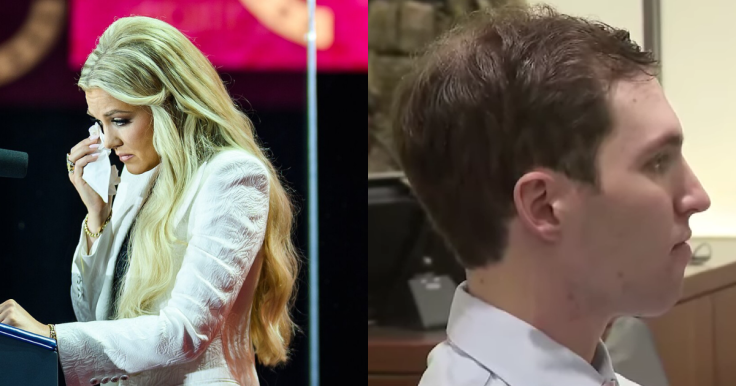
For the first time since the fatal shooting of Charlie Kirk at a Utah university event, his widow has sat in a courtroom directly opposite the man accused of carrying out the killing. The opening day of Tyler Robinson's preliminary hearing in Provo, Utah, provided an initial glimpse into the prosecution's case against the 23-year-old, who faces charges of aggravated murder. If convicted, Robinson could face the death penalty.
The hearing, scheduled for one week, is a pivotal moment in one of the most high-profile criminal cases in recent American history. Kirk, the founder of Turning Point USA, was killed on 10 September 2025, while addressing an audience at Utah Valley University. Prosecutors maintain the incident was a calculated assassination, and the proceedings this week aim to convince Judge Tony Graf that sufficient evidence exists to proceed to a full trial. If convicted, the 23-year-old could face the death penalty. Prosecutors allege the killing was a deliberate assassination.
A Courtroom Marked by Grief and Security
The emotional weight of the hearing was evident before testimony even began.
Erika Kirk arrived at the courthouse under escort, accompanied by security personnel. Charlie Kirk's parents, Robert and Kathryn Kirk, also attended. It marked the first time family members had shared a courtroom with Robinson since the shooting.
At one point during testimony describing the moments surrounding the attack, Kirk's widow and parents quietly left the courtroom. According to reporters inside, Kathryn Kirk held a packet of tissues while Erika Kirk leaned on a companion for support.
Outside, the atmosphere was equally tense. Armed officers monitored the courthouse roof, surveillance teams were visible around the building, and a drone periodically flew overhead. Media crews crowded the surrounding streets, while members of the public competed for a limited number of seats inside.
Among those attending were Donald Trump Jr. and conservative commentator Jack Posobiec, highlighting the national political significance the case has acquired.
Investigators Detail Early Evidence
The prosecution's first witness was former Utah Valley University police officer Chris Bagley, who described the chaos that unfolded after a gunshot rang out during Kirk's appearance on campus.
Bagley testified that he heard a single shot before panic spread through the crowd. Believing a suspect had already been detained, he initially focused on identifying injuries and securing the scene.
According to Bagley, he discovered what appeared to be a disturbance in the gravel consistent with a 'sniper pad'. He described impressions resembling elbow and knee marks, along with a location where a firearm may have been placed.
The officer also told the court he found a red-and-black screwdriver on the roof and later reviewed surveillance footage that allegedly showed an individual leaving the rooftop area.
What makes this testimony notable is that prosecutors appear intent on establishing a carefully planned attack rather than a spontaneous act of violence. The rooftop evidence forms a central part of that argument.
Defence lawyers, however, pressed Bagley on security arrangements at the event. He acknowledged there were only six officers working despite thousands attending and confirmed there were no metal detectors, drones or officers positioned on the roof before the shooting.
Disputes Over Video Evidence
Much of Monday's proceedings centred on evidentiary disputes rather than dramatic courtroom moments.
Judge Graf temporarily rejected one video exhibit after defence lawyers argued it had been altered through zooming, blurring and other modifications. Prosecutors said they would prepare a revised version without those edits and attempt to reintroduce it later in the hearing.
The footage is considered important because investigators claim it tracks Robinson's movements on campus before and after the shooting.
Former State Bureau of Investigation agent David Hull, who later led the investigation, testified that authorities reviewed hundreds of hours of surveillance footage in an effort to identify a suspect seen on the rooftop. He also described receiving numerous public tips and cellphone recordings from witnesses.
Another point of contention involved witness identification. Defence attorney Kathryn Nester argued that asking a witness to identify Robinson in court would be unfairly suggestive because he was seated at the defence table. Following a private discussion with attorneys, Judge Graf allowed the identification to be entered into the court record.
Death Penalty Questions Loom Over Case
Although the hearing is not a trial, its outcome could shape the future of one of the most closely watched criminal cases in the US.
Prosecutors need only show there are reasonable grounds to believe Robinson committed the crime. The burden is significantly lower than the standard required for a conviction.
Court filings released before the hearing indicate prosecutors intend to rely on DNA evidence, surveillance footage, witness testimony and alleged statements attributed to Robinson. Authorities have previously said DNA matching Robinson was found on the rifle used in the shooting and on related evidence recovered during the investigation.
Robinson has not entered a plea. His lawyers have not publicly commented on his guilt or innocence.
The hearing resumes Tuesday, when prosecutors are expected to renew efforts to introduce surveillance footage and continue presenting evidence they believe links Robinson to the killing of one of America's most prominent conservative activists. The focus will remain on whether the evidence presented is sufficient to move the case forward to a capital trial.
© Copyright IBTimes 2026. All rights reserved.