Will Donald Trump Fire Pete Hegseth Next? Jimmy Kimmel Mocks Defence Secretary After Shambolic European Troop Blunder
White House says President Trump appreciates all the Secretary Pete has done and will continue to do in executing the America First agenda within US military.

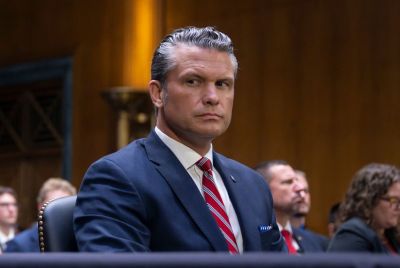
Donald Trump's latest foreign policy row spilt into late-night television on Wednesday, when Jimmy Kimmel used his ABC monologue to predict that Defence Secretary Pete Hegseth could be the next senior official to be fired after abruptly cancelling a major US troop deployment to Poland last week.
Hegseth stunned both the Pentagon and allies in Europe when he scrapped a planned nine‑month deployment of 4,000 US troops to Poland. The move appeared to be a response to an earlier decision by Trump to pull 5,000 troops out of Germany after Chancellor Friedrich Merz publicly criticised the President's war in Iran. Trump has repeatedly signalled irritation with Berlin, but has not voiced the same anger towards Warsaw, a distinction that would soon prove awkward.
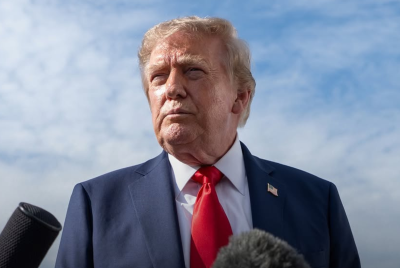
According to the Wall Street Journal, Trump was furious when he learned that Hegseth had cancelled the mission to Poland. The paper reported that the President berated his defence secretary in an angry phone call, then quickly reversed the decision himself. Within days, Trump had not only restored the original deployment but increased it, announcing on Truth Social that 5,000 US troops would be sent to Poland instead.
Jimmy Kimmel Twists The Knife Over Donald Trump Troop U-Turn
Kimmel clearly relished the confusion. On his show, he branded Hegseth a 'bigger screw-up than Eric' and mocked the idea that cancelling the Poland deployment had been some kind of clever loyalty play designed to 'please Mar-a-Lardo,' his mocking nickname for Trump. In Kimmel's telling, Hegseth tried to impress his boss and instead triggered one of the sharpest foreign policy reversals of Trump's post-presidency.
Secretary of War Pete Hegseth praised President Donald Trump on Tuesday for giving the order early in his administration to protect Christians being targeted in Nigeria by Islamic militants. "Maybe a year ago, he heard the call of Nigerian Christians who… https://t.co/QTzmHHIsuV pic.twitter.com/XDE3stt9vX
— The Western Journal (@WesternJournalX) May 27, 2026
Quoting unnamed sources, Kimmel told viewers that after the pull-out was announced, Hegseth received a heated call in which Trump allegedly had to spell out that 'Poland was not the country he was mad at.' The image of a President explaining basic European geography to his own defence secretary was too good for the comedian to pass up.
'We've all made mistakes,' Kimmel said, before twisting the knife, 'but only Pete Hegseth can make a 'Donald Trump knows more about Poland than I do' calibre mistake.' For a host who has made a running joke of Trump's shaky grasp of world affairs, the line landed with obvious relish.
Kimmel also leaned into long‑running rumours about Hegseth's alleged drinking, which have circulated in US media but remain unproven. Treating the allegation as a set‑up for another gag, he offered what he called 'an easy way to remember what's what' when deploying troops. If you want to send them to the Netherlands, he quipped, use the code word 'Heineken'. For Germany, say 'Jägermeister'. 'Stoli is Russia,' he continued, 'and France is the gay wine one.'
Those lines will read to some as cheap shots rather than serious critique, but late‑night television has become one of the most reliable barometers of how Trump's inner circle is perceived in the wider culture. A defence secretary being reduced, in a few punchlines, to a punch-drunk geography student is not a flattering look for an administration that insists it is laser‑focused on its 'America First' military strategy.
Donald Trump Allies Insist Hegseth Is Safe For Now
Despite the speculation fuelled by Kimmel's monologue, Trump's team has been at pains to project unity. White House spokesperson Anna Kelly told the Wall Street Journal that 'President Trump appreciates all the secretary has done and will continue to do in executing the America First agenda within our military.' That future‑tense phrasing was echoed at the Pentagon, where spokesperson Sean Parnell said Trump and Hegseth 'communicate constantly' and are 'in lockstep' on US troop levels in Europe.
On paper, those are the sort of boilerplate assurances any embattled official would hope to hear. In practice, Trumpworld watchers have learned to treat them warily. Critics have pointed out that similar language was used shortly before other senior figures were shown the door.
Homeland Security Secretary Kristi Noem, for instance, was praised by Trump on Truth Social in late January, when he declared she had 'done a really GREAT JOB!' She was fired less than five weeks later. Attorney General Pam Bondi, another high‑profile loyalist, was also lauded by the administration before being removed in April. The pattern is not statistically rigorous, but it is noticeable enough that every warm statement now invites a double-take.
Jimmy Kimmel relished making fun of President Donald Trump for missing his son's wedding. https://t.co/0StJYuPJRQ pic.twitter.com/6ESavozunK
— Irish Star US (@IrishStarUS) May 27, 2026
None of this proves that Hegseth is about to be marched out of the Pentagon. There has been no official indication that his job is on the line and no formal move to replace him, so talk of an imminent firing remains speculative and should be taken with a grain of salt. Still, Kimmel's description of him as a 'soon‑to‑be former secretary' taps into a wider sense that senior roles around Trump can become precarious quickly, especially when foreign policy blunders make it to the front pages.
Whether the Poland episode ultimately goes down as a brief misstep or the start of another Trumpworld resignation saga, it has already provided one clear lesson. In this version of Republican politics, a defence secretary can be mocked on national television for making Trump look like the careful one on European troop deployments, and that might be the most dangerous part of the job.
© Copyright IBTimes 2026. All rights reserved.
- Recommended For You